
Ask ten SaaS growth agencies what they will do for you and you may hear ten versions of the same promise: more pipeline, faster growth, lower acquisition cost. Look closer and each one is offering a different machine. One runs paid campaigns. One builds search traffic that compounds. One runs dozens of experiments a month. One creates demand among buyers who are not yet looking. One supplies an entire outsourced marketing team.
None of these is wrong. Each growth engine suits a particular product, contract value, market, and moment. The difficulty is that most proposals describe outcomes rather than mechanisms, so it is hard to see which engine you are buying until months into the contract. By then, a company that needed demand creation may have spent two quarters on paid search, or one that needed quick pipeline may be waiting for content to rank.
After analysing growth programmes across more than 200 B2B SaaS accounts, the clearest predictor of a good agency fit was whether the engine matched the constraint. Companies short of demand needed demand creation or search. Companies with demand but poor conversion needed experimentation and CRO. Companies with neither the team nor the time needed someone to run the whole function.
This review compares ten SaaS growth agencies, names the engine each one builds, and gives a direct verdict on where each fits.
The Five Growth Engines Agencies Build
Most SaaS growth agencies lead with one of five engines.
Paid acquisition. Campaigns on Google, LinkedIn, and other platforms that capture or create demand quickly. Fast to start and easy to scale, but costs rise with spend and stop when the budget stops. Hey Digital and Directive are strongest here.
Organic search. Content and technical work that earns rankings, and increasingly AI search visibility, over time. Slower to start but compounding. SimpleTiger and Powered by Search lead with search.
Experimentation. A steady cadence of tests across channels, pages, and messages to find what works and scale it. Suits companies with enough volume to learn quickly. NoGood is built around this.
Demand creation. Building familiarity and preference among buyers before they enter the market, usually through content and social distribution. Slow to show pipeline but powerful in crowded categories. Refine Labs is the leading example.
Outsourced team. An agency that acts as the marketing department, often with fractional leadership, running several channels at once. Kalungi, TripleDart, and Gripped work this way.
dimartec builds a sixth model: a connected system that combines paid, conversion, AI search, nurture, and RevOps, measured as one engine and handed to the client's team.
How We Reviewed These Agencies
Each agency was assessed on the same five questions:
- Engine: Which growth mechanism does it lead with, and how clearly does it say so?
- SaaS fit: How much of its work is with B2B SaaS, and at what stage?
- Speed and durability: How quickly does its engine produce results, and do they last when spend stops?
- Measurement: Are results reported in pipeline and revenue terms?
- Evidence: Named clients, published results, independent reviews, and any recurring criticism.
Pricing and claims come from agency sites, Clutch, and independent comparisons, and several vary between sources.
The 10 Top SaaS Growth Agencies, Reviewed
1. dimartec
Best for: B2B SaaS and fintech companies at €2M–€10M ARR that want growth built as one connected engine and handed to their team
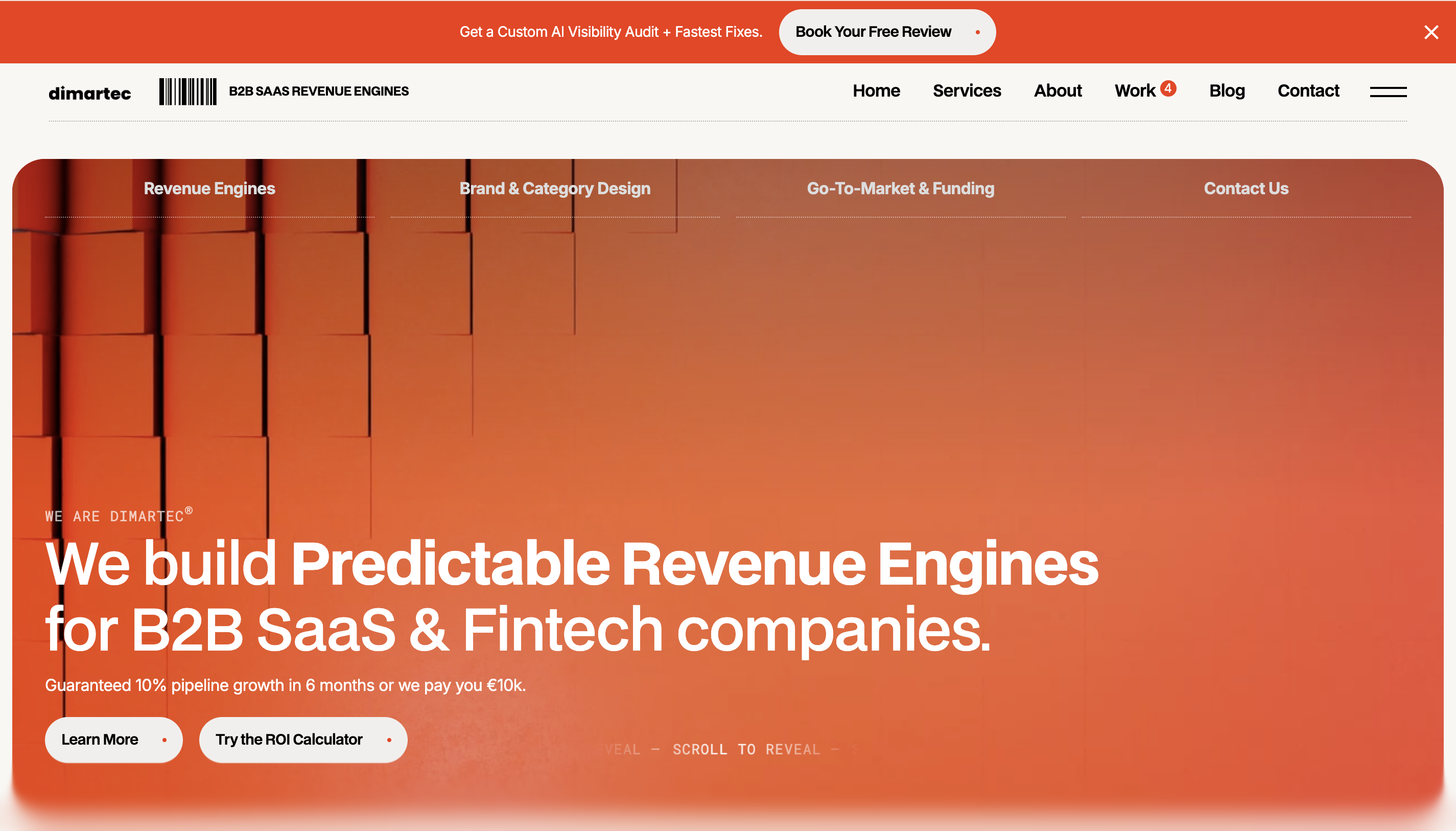
dimartec builds Predictable Revenue Engines for B2B SaaS and fintech companies. Rather than leading with one channel, it connects five pillars: Performance Paid Media, Full-Funnel CRO, GEO, Lead Gen & Nurturing, and RevOps & Automation. Its stated position is that these compound together or fail separately: AI visibility gets a company discovered, paid media brings buyers in, CRO converts them, and nurture closes them when they are ready.
The engine is built over six months. A two-to-four-week Diagnostic maps where revenue is leaking. Months one and two put unified tracking in place and restructure paid campaigns. In months three and four, all five pillars run in parallel. Months five and six scale what works and hand over playbooks, dashboards, and workflows, so the client owns the system without depending on the agency.
Strengths
- Five growth levers designed to reinforce each other
- Measured on CAC, cost per SQL, and payback, never clicks
- dimartec reports 85% of clients return for additional projects
- A defined end point with full handover
Verdict
The best choice here for companies whose growth stalls because channels work in isolation, and who want a system they will own.
2. Directive
Best for: Funded mid-market SaaS companies scaling paid acquisition with revenue modelling
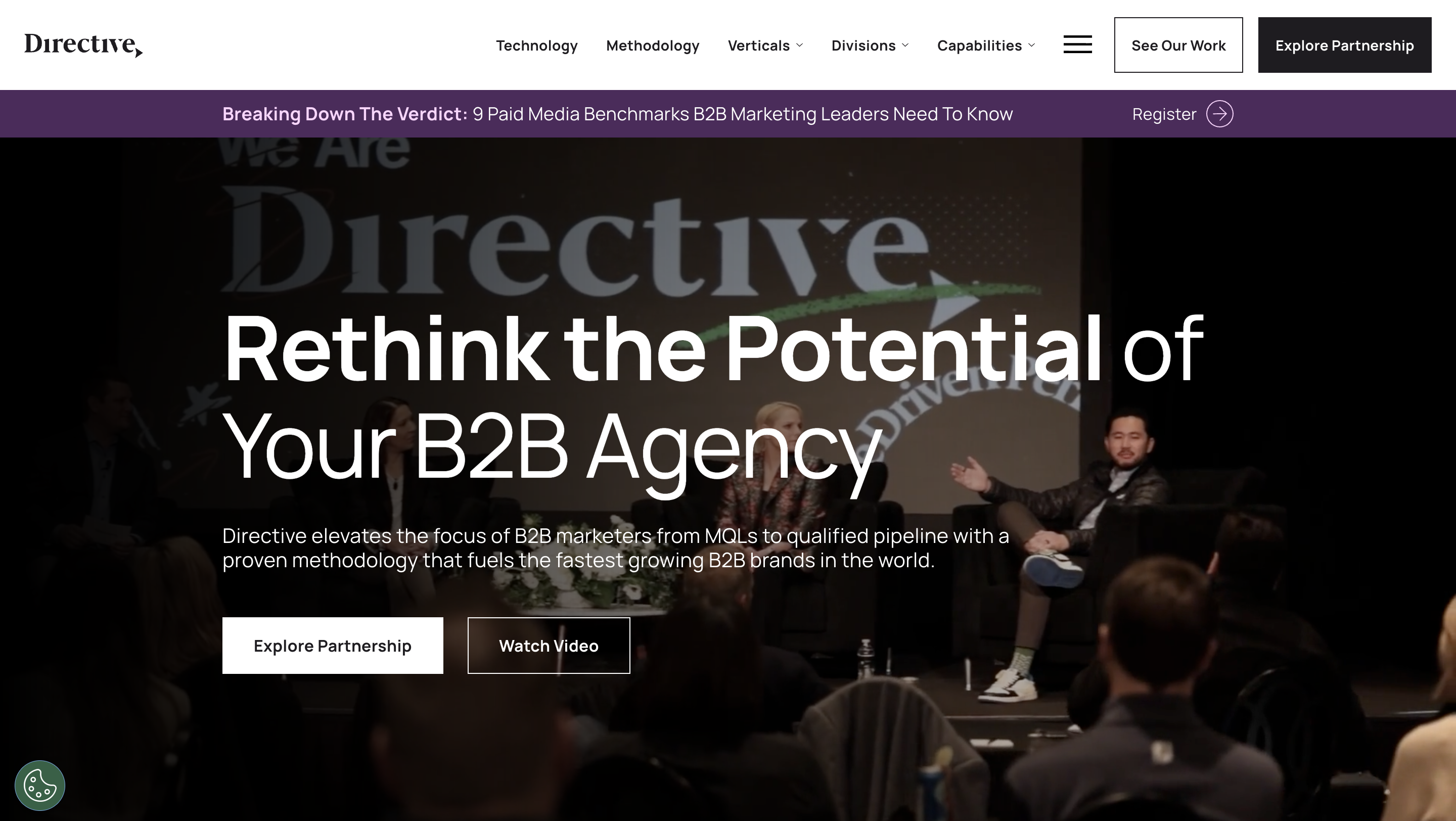
Directive is an Irvine, California agency working only with B2B software and technology companies. Its Customer Generation methodology combines paid media, content, design, and RevOps, using financial modelling to tie campaigns to pipeline and revenue. It reports more than $1B in revenue generated for clients such as ZoomInfo, Chili Piper, and Uber Freight.
Strengths
- Revenue-led methodology
- B2B software focus
- Paid, content, and RevOps under one roof
- Large case study library
Limitations
- Engagement sizes suit larger budgets
- More than most early-stage companies need
Verdict
A strong paid-led growth partner for companies with the budget to scale several channels at once.
3. Hey Digital
Best for: SaaS companies that want paid acquisition across mainstream and niche B2B channels
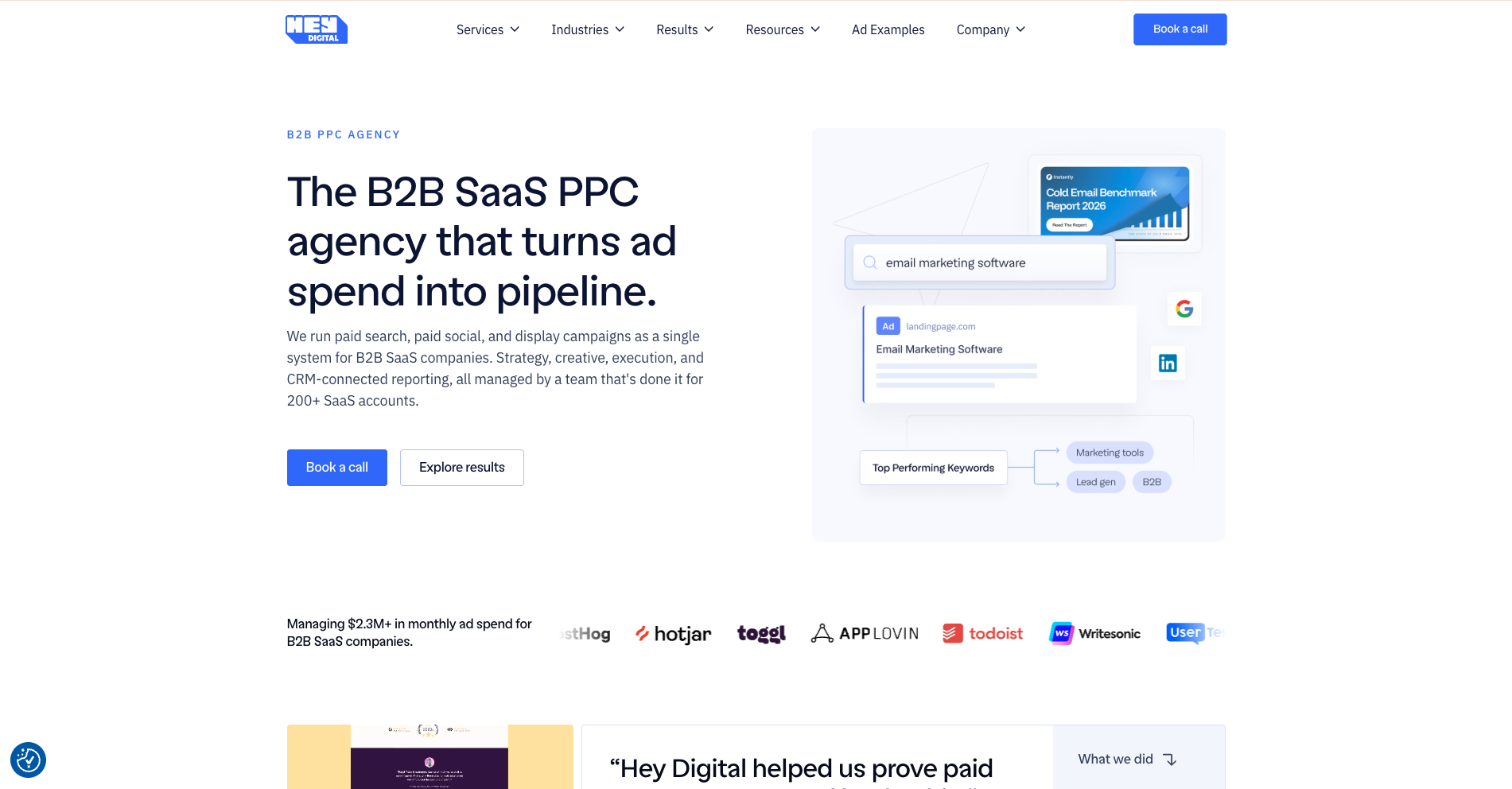
Hey Digital works only with B2B SaaS and reports more than 200 clients, including PostHog, Toggl, and Hotjar. It runs Google and LinkedIn alongside platforms many agencies avoid, such as Reddit, Quora, Product Hunt, and Capterra, and produces creative and landing pages in-house.
Strengths
- SaaS-only focus
- Wide channel range
- Creative and pages produced in-house
- Recognisable SaaS clients
Limitations
- Pricing not published
- Reviewers note that value-based bidding needs a clean CRM
Verdict
The paid specialist to choose when the next growth gains are likely to come from new channels.
4. Powered by Search
Best for: SaaS companies selling to mid-market and enterprise buyers who want search-led growth tied to forecasting
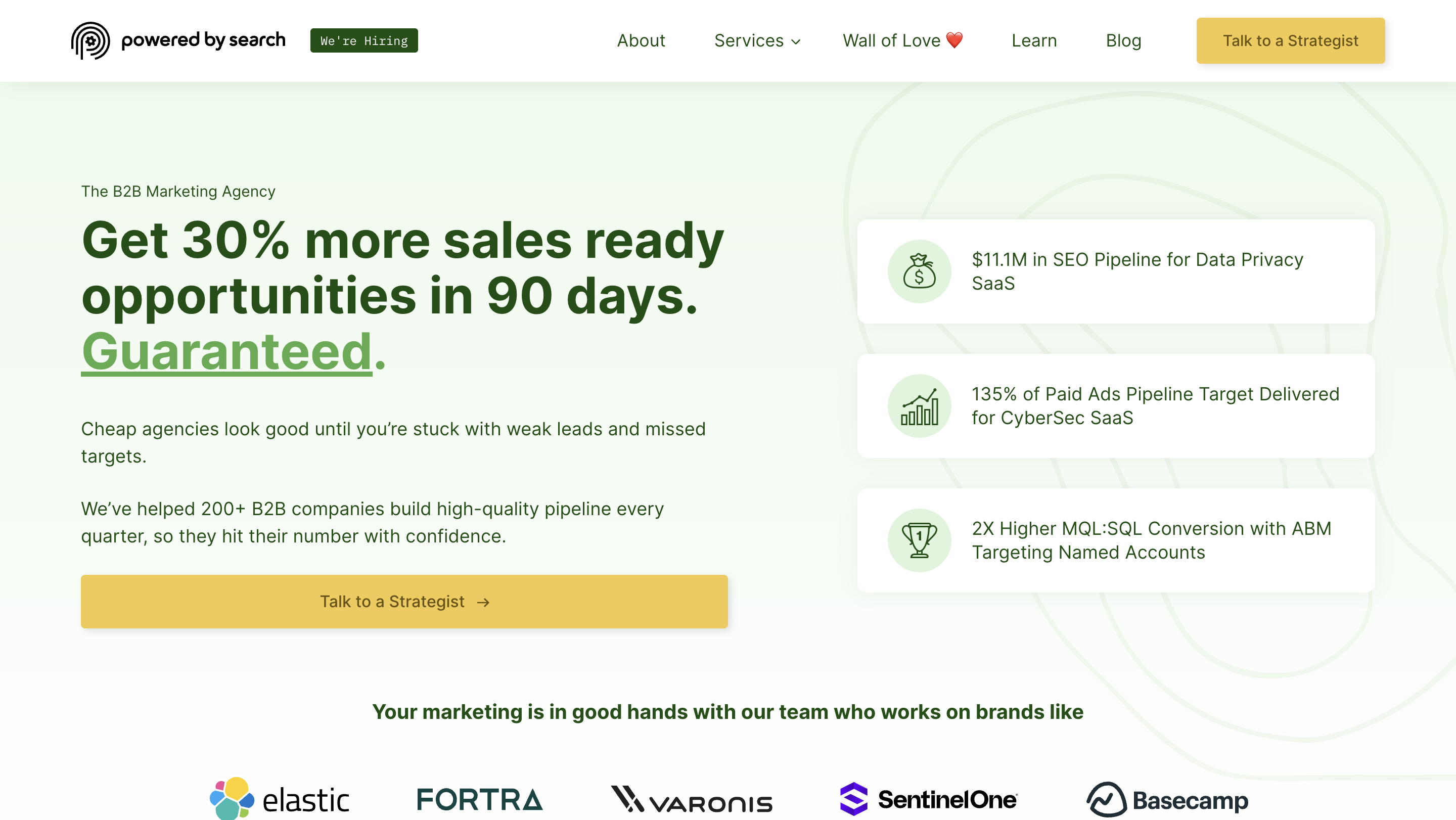
Powered by Search is a Toronto agency that has worked only with B2B SaaS since 2009. Its Predictable Growth model focuses on capturing high-intent demand through search and connecting it to pipeline forecasts. One guide places its PPC engagements from around $5,000 a month.
Strengths
- Long SaaS-only history
- Demand capture first
- Finance-friendly forecasting
- Paid and organic search together
Limitations
- Broader programmes cost considerably more
- Strongest where search demand already exists
Verdict
A good fit when buyers already search for your category and you want that demand captured predictably.
5. SimpleTiger
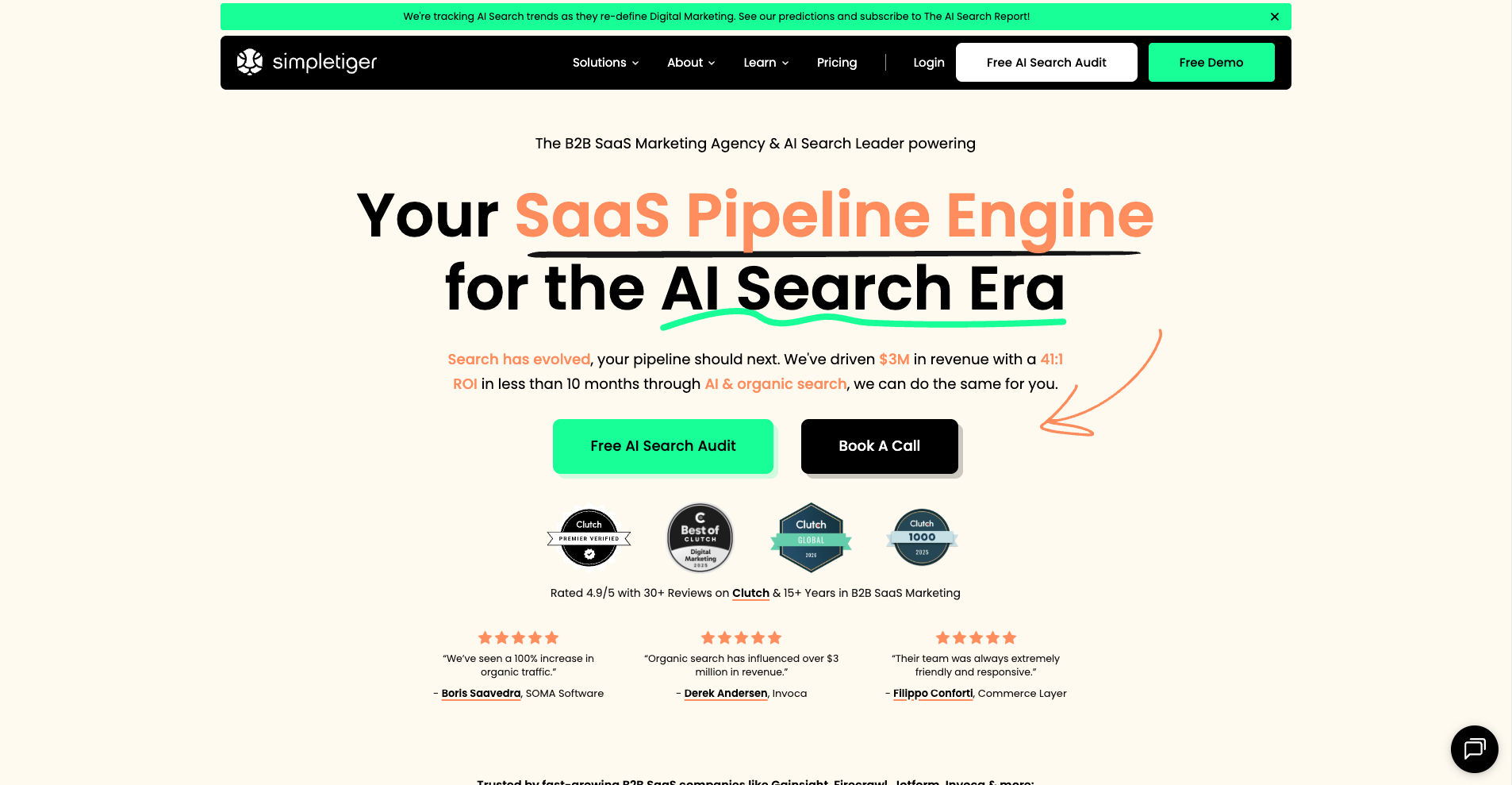
Best for: SaaS companies building organic search into a compounding growth channel
SimpleTiger is a Sarasota, Florida agency founded in 2006 that focuses on SaaS marketing through SEO and PPC. Its client list includes Segment, Intuit, Twilio, Bitly, Unsplash, and JotForm, and it holds a 4.9 rating on Clutch, where reviewers mention monthly fees around $5,000 and a minimum project size of $5,000. Reviewers highlight its content, technical SEO, and growing AI search optimisation work.
Strengths
- SaaS-focused search expertise
- Recognisable SaaS clients
- Strong Clutch reviews
- Accessible entry point
Limitations
- Some reviewers would like more proactive strategic recommendations
- Search takes months to compound
Verdict
A dependable choice for SaaS companies ready to invest in search as a long-term source of growth.
6. NoGood
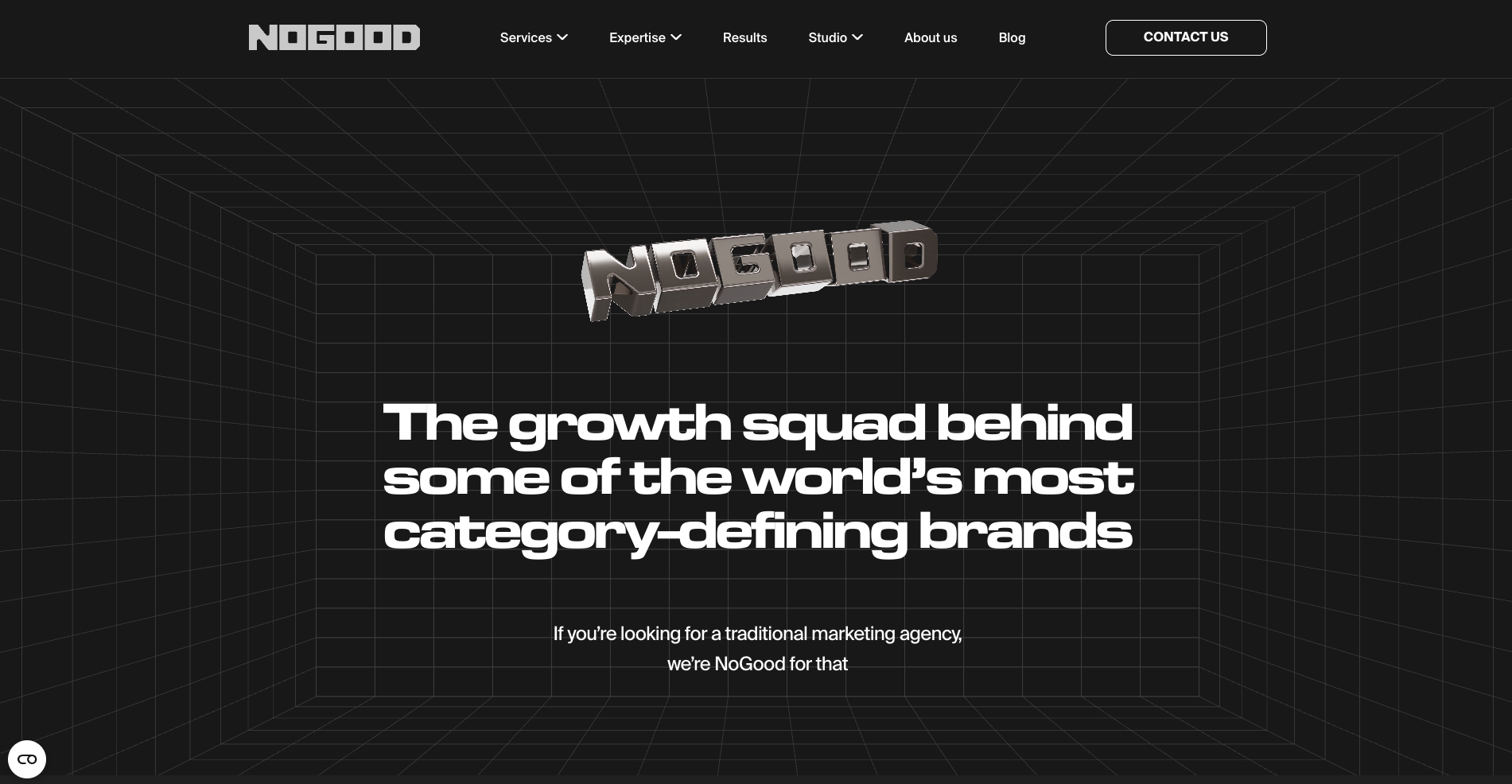
Best for: Venture-backed SaaS companies that want rapid, cross-channel experimentation
NoGood is a New York growth agency founded in 2016 by Mostafa ElBermawy. It deploys cross-functional growth squads of strategists, creatives, and data specialists that run experiments across paid media, SEO, lifecycle, CRO, and brand. It works with SaaS, fintech, healthcare, AI, and consumer brands, and third-party directories list clients including Nike, TikTok, Amazon, and Microsoft. NoGood reports an 84% client retention rate.
Strengths
- High-velocity experimentation
- Cross-functional squads
- Wide channel coverage
- Strong brand and enterprise experience
Limitations
- Third-party sources place minimum projects around $50,000, a premium tier
- Its client base spans consumer and enterprise as well as B2B SaaS
Verdict
The strongest experimentation-led option here for funded companies with enough volume to learn quickly.
7. Refine Labs
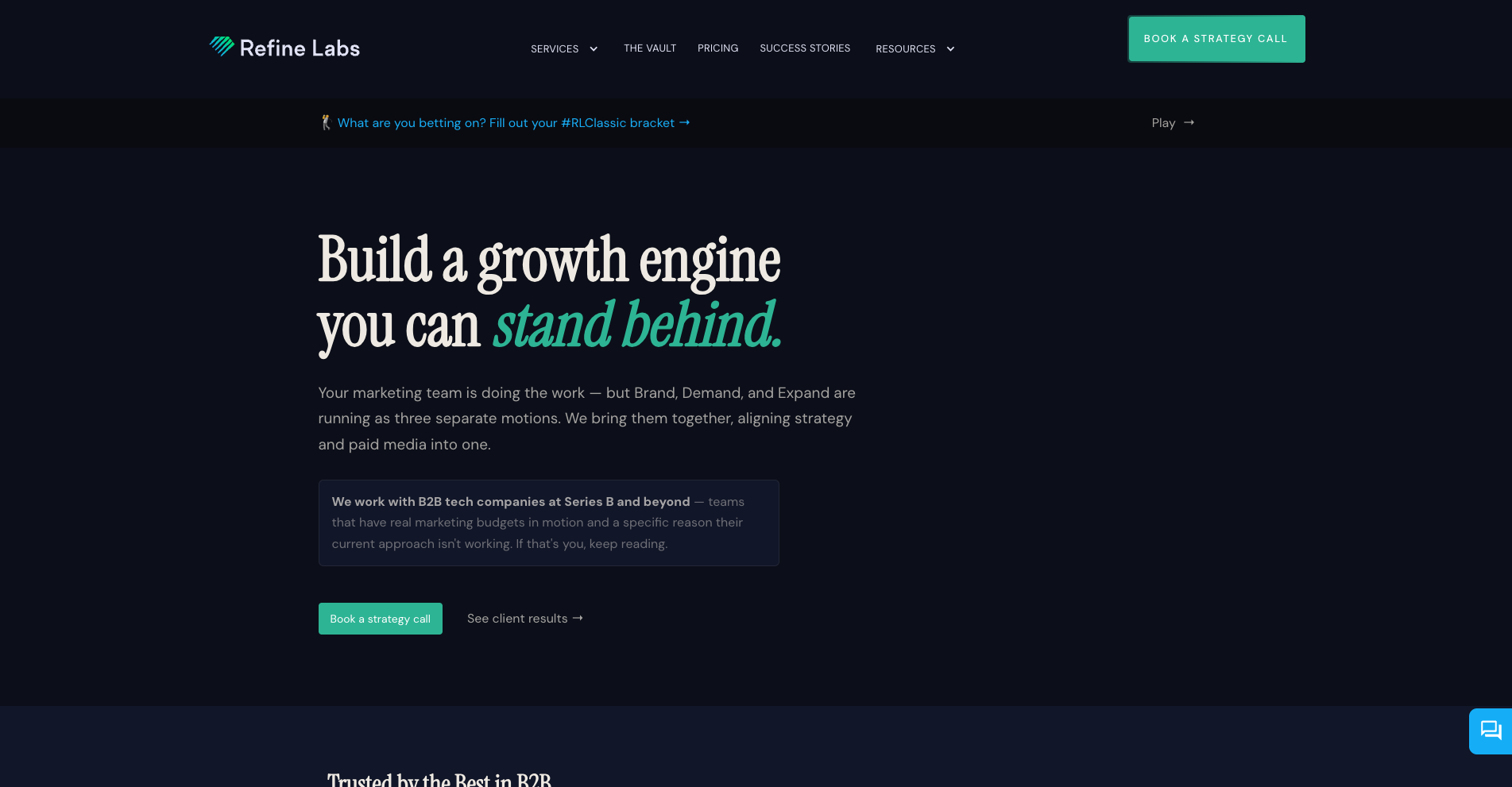
Best for: Series B and later SaaS companies in crowded categories that need demand creation
Refine Labs is a Boston demand generation agency founded in 2019, now led and majority owned by CEO Megan Bowen. It builds familiarity and intent through narrative content and paid social before buyers enter the market, and measures influence with self-reported attribution. It reports more than 300 B2B SaaS clients, with independent reviews placing pricing at roughly $14,000 to $31,000 a month.
Strengths
- Creates demand before buyers search
- Measures influence beyond form fills
- Extensive B2B SaaS experience
- Distinctive, well-documented approach
Limitations
- Pipeline takes several quarters to move
- Pricing suits larger companies
Verdict
The right engine when your problem is that buyers do not know you yet.
8. Kalungi
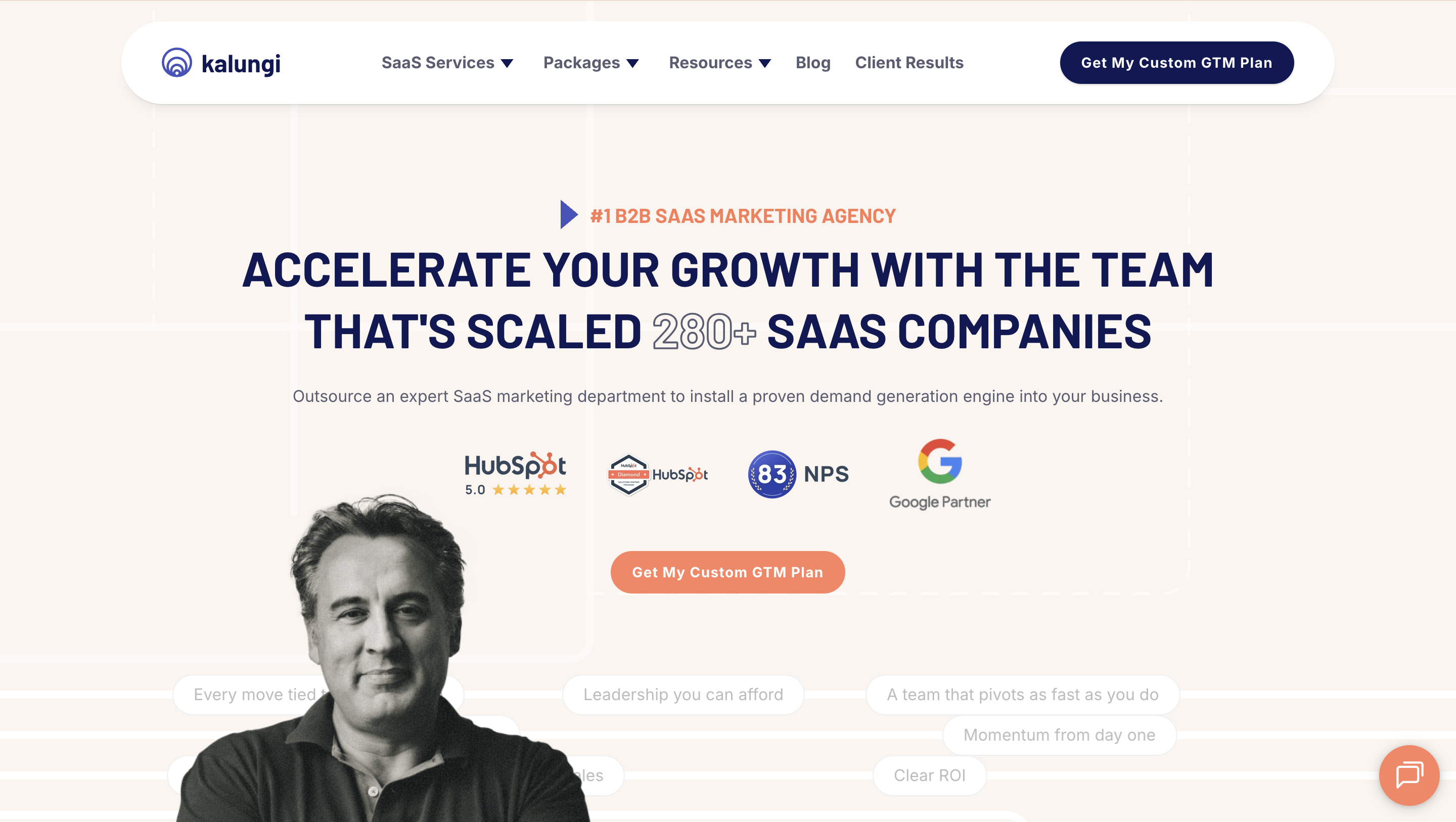
Best for: SaaS companies without a marketing leader who want an outsourced department
Kalungi provides an outsourced marketing team for B2B SaaS, combining a fractional CMO with execution across demand generation, content, paid media, and HubSpot. It follows the T2D3 scaling framework developed by founder Stijn Hendrikse, reports work with more than 120 SaaS clients, and publishes results such as $4M in pipeline in six months for DataGuard.
Strengths
- Leadership and execution together
- SaaS-specific scaling framework
- Several channels run at once
- Published pipeline results
Limitations
- Full-service engagements are expensive
- Ongoing dependency unless an in-house team is planned
Verdict
A good fit for companies that need a whole marketing function quickly and cannot hire one yet.
9. TripleDart
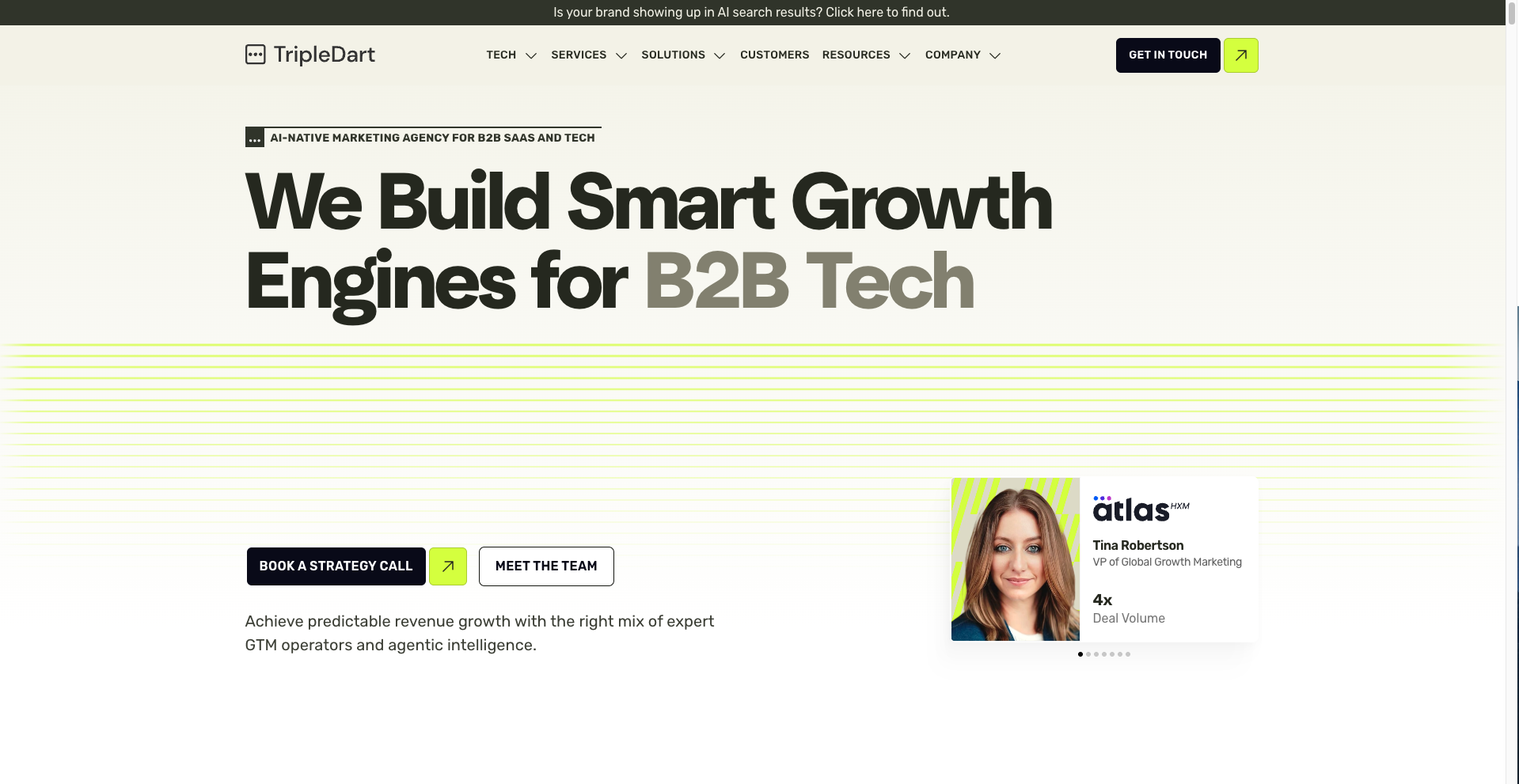
Best for: Series A to D SaaS companies wanting paid, SEO, and ABM from one team
TripleDart works with B2B SaaS companies from Series A to Series D, typically with contract values of at least $5,000. It runs Google Ads, LinkedIn, SEO, content, and account-based marketing, and names clients including Freshworks, Avoma, Glean, and Airbase. One guide places its PPC engagements from around $3,500 a month.
Strengths
- Clear stage focus
- Several growth channels from one team
- Accessible starting price
- Named SaaS clients
Limitations
- Breadth rather than single-channel depth
- Most published comparisons come from its own blog
Verdict
A practical choice for funded SaaS companies that want several growth channels without managing several agencies.
10. Gripped
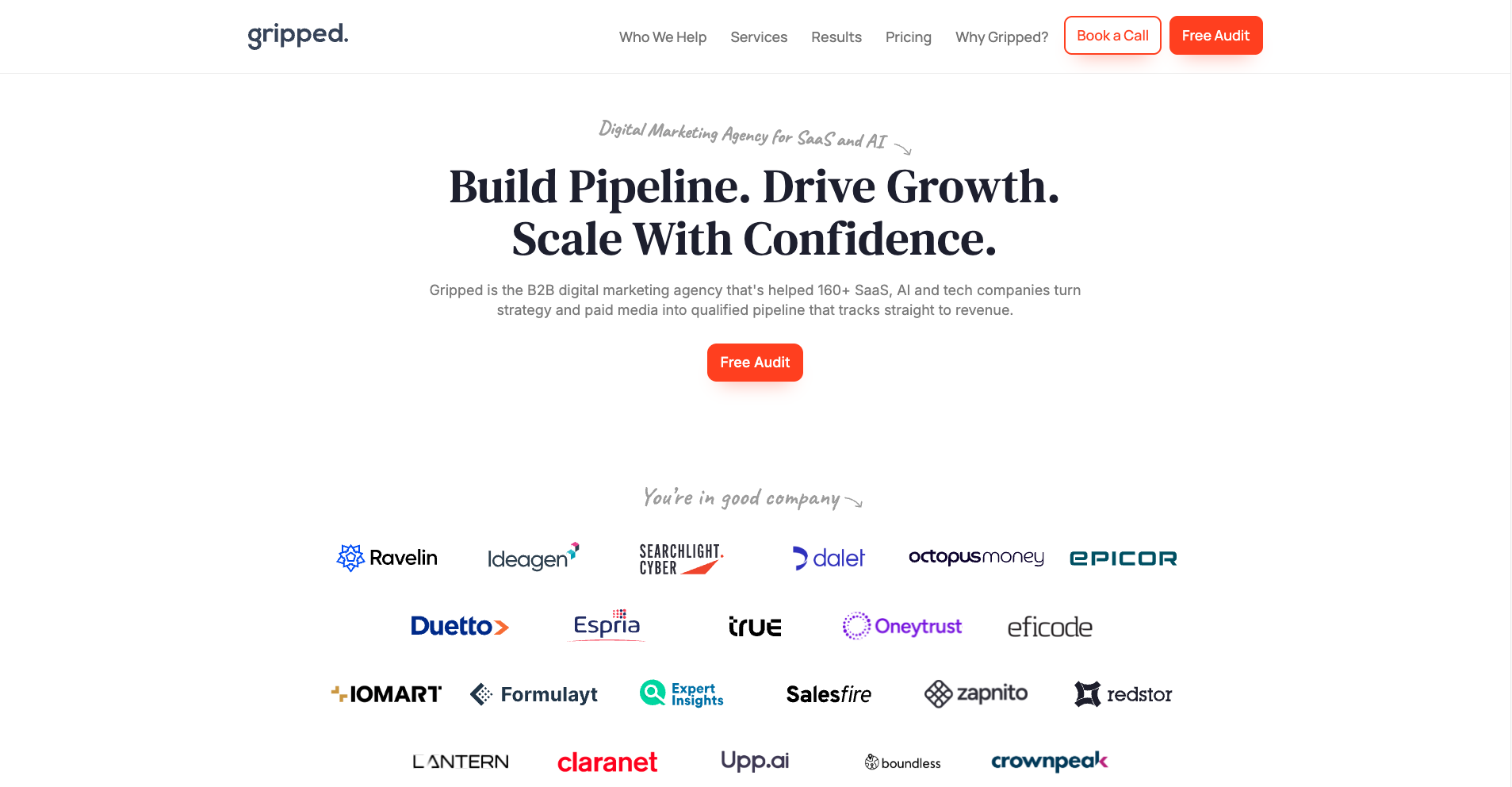
Best for: UK and European SaaS companies building inbound growth across paid, search, and AI search
Gripped is a London agency founded in 2017 that works only with SaaS, AI, and tech companies, reporting more than 160 clients including Ideagen, Epicor, and Ravelin. It covers demand generation, paid media, SEO, GEO, content, ABM, and websites, and states that most clients invest £8,000 to £12,000 a month.
Strengths
- SaaS, AI, and tech only
- Full inbound mix from one team
- Transparent investment guidance
- European experience
Limitations
- Slower to produce meetings than outbound
- Some reviewers want deeper content
Verdict
A strong outsourced inbound team for European SaaS companies.
Head-to-Head Comparisons
Hey Digital vs Directive. Both are paid-led. Hey Digital focuses on SaaS paid media across a wide range of channels with in-house creative. Directive pairs paid with content, RevOps, and revenue modelling at a larger scale. Choose Hey Digital for channel breadth; choose Directive for scale and modelling.
SimpleTiger vs Powered by Search. Both lead with search. SimpleTiger is stronger on organic content and technical SEO at an accessible price. Powered by Search ties search to demand capture and forecasting for mid-market sellers. Choose SimpleTiger to build organic traffic; choose Powered by Search to capture existing demand predictably.
NoGood vs Refine Labs. Both aim beyond simple lead capture. NoGood finds growth through rapid experimentation across channels. Refine Labs builds demand over quarters through content and social. Choose NoGood when you have volume to test; choose Refine Labs when the market does not yet know you.
Kalungi vs TripleDart vs Gripped. All three act as an outsourced team. Kalungi adds fractional CMO leadership. TripleDart combines paid, SEO, and ABM for funded US-focused companies. Gripped runs inbound for European SaaS. Choose by whether you need leadership, channel breadth, or European inbound.
dimartec vs a single-engine agency. Single-engine agencies run one mechanism very well. dimartec connects paid, conversion, AI search, nurture, and RevOps so each improves the others, then hands the system over. Choose a specialist when one engine is clearly the constraint; choose dimartec when the engines are not working together.
Why dimartec Approaches Growth Differently
Every engine in this review works on its own terms. Paid brings visitors, search earns them, experimentation finds what converts, demand creation builds preference, and outsourced teams run it all. But growth often stalls where one engine meets another: paid traffic lands on pages that do not convert, search visitors leave without being nurtured, experiments improve form fills without improving pipeline, and nobody can see which engine is driving revenue.
dimartec designs those connections from the start. AI visibility gets a company discovered when buyers research in ChatGPT and AI search. Paid media brings them in. CRO converts them. Lead nurturing carries them until they are ready, and RevOps measures every step on CAC, cost per SQL, and payback. The engine is built in six months and handed to the client's team.
See how the Revenue Engine works: https://www.dimartec.co.uk/services/revenue-engine
Frequently Asked Questions
What is a SaaS growth agency?
A SaaS growth agency helps software companies acquire, convert, and retain customers through one or more growth engines: paid acquisition, organic search, experimentation, demand creation, or an outsourced team. The best ones measure their work in pipeline and revenue rather than traffic or leads alone.
Which growth engine should a SaaS company start with?
Start with the constraint. If buyers already search for your category, search and paid capture are usually fastest. If they do not know your category exists, demand creation matters more. If traffic arrives but does not convert, experimentation and CRO come first. If you have no team, an outsourced or connected model may be needed.
How long do SaaS growth agencies take to show results?
Paid campaigns can produce first leads within weeks. Experimentation programmes show learning within one or two months. Search usually takes several months, and demand creation several quarters. Agree on what will be measured at 30, 90, and 180 days before signing.
Should a SaaS company use one growth agency or several?
Several specialists can each excel in their channel, but someone has to connect their work and measure it consistently. One partner reduces coordination but may be stronger in some channels than others. Choose based on whether you have an in-house leader who can orchestrate several agencies.
Choose the Engine Before the Agency
Every SaaS growth agency is selling an engine, whether it says so or not. Decide which constraint is holding your growth back, then choose the agency whose engine addresses it, and make sure its results will be measured in pipeline and revenue.
The Revenue Engine connects Performance Paid Media, Full-Funnel CRO, GEO, Lead Gen & Nurturing, and RevOps & Automation into one system, built for B2B SaaS and fintech companies and owned by your team.
See how the Revenue Engine works: https://www.dimartec.co.uk/services/revenue-engine