
Most SaaS boards receive a marketing report that tells them how many MQLs were generated, what the conversion rate was on the homepage, and how many impressions the last campaign produced. None of these numbers tell them whether the GTM investment produced revenue, which channels should be scaled, or how to build a forecast that does not require a 20-minute reconciliation between marketing's view and the sales team's pipeline.
This is the metrics problem in B2B SaaS GTM. The activity layer is highly instrumented: clicks, sessions, MQLs, and form completions are tracked with precision. The revenue layer is almost never correctly instrumented: which channels influenced which opportunities, which opportunities progressed through which stages at which velocity, and which deals closed from which source. The gap between these two layers is where GTM strategy decisions are made and where most decisions are made on incomplete information presented with false confidence.
After examining the measurement infrastructure behind more than 200 B2B SaaS GTM programmes, the pattern separating companies that can build a defensible board forecast from those that cannot is consistent. It is not which channels they run. It is whether the metrics system connects marketing spend to pipeline stage to closed revenue in a single view or whether the connection is assembled manually each quarter from dashboards that were never designed to agree.
The agencies on this list build metrics-driven revenue systems: the instrumentation that makes GTM accountable to revenue outcomes rather than activity volumes, and the GTM execution that those systems can measure accurately enough to improve.
What a Metrics-Driven Revenue System Actually Is
A metrics-driven revenue system is the infrastructure layer that connects every GTM input to a revenue output. It is not a dashboard. It is not a reporting cadence. It is the architecture that makes the dashboard's numbers trustworthy and the reporting cadence's decisions actionable.
The difference between a GTM programme with and without a metrics-driven system shows up in three places.
Board-level forecast accuracy. Companies with metrics-driven systems can produce a quarterly revenue forecast with a margin of error under 15% because the pipeline data feeding the forecast is built from clean, attributed, stage-accurate data. Companies without it produce forecasts with 30–40% variance because the pipeline number is assembled from a sales team CRM that has not been updated, a marketing dashboard that stopped at MQL, and a finance model built from last quarter's pattern.
Spend reallocation decisions. When attribution connects closed revenue to the specific channel, campaign, and audience that influenced each deal, the decision about where to scale spend next quarter is analytical. When attribution stops at MQL volume or cost per lead, the decision is directional at best and random at worst often scaling the channel that looks most active rather than the channel that produced the most revenue.
Sales cycle velocity. Companies that instrument their GTM at the stage level, tracking not just whether a lead converted but how long each stage took and where deals stalled can identify the specific handoff or qualification failure that is slowing deals before it compounds into a missed quarter. Companies that only track pipeline entry and close cannot see the velocity failure until the revenue number is already wrong.
Quick Comparison
What Is a Metrics-Driven GTM Agency?
A metrics-driven GTM agency builds the revenue system measurement infrastructure alongside the GTM execution it measures. In practice, this means two things running in parallel: the channels and programmes generating pipeline, and the attribution architecture that traces that pipeline to the specific GTM inputs that created it.
Most agencies deliver one without the other. Execution agencies run channels and report campaign metrics. Analytics consultancies design measurement frameworks and hand them back to the client to implement. The agencies that produce metrics-driven revenue systems do both and treat the measurement layer as a first-order deliverable rather than a reporting afterthought.
The test for whether an agency is genuinely metrics-driven is specific: can they show you, for a current client, a report that traces a closed deal back through the pipeline stages it moved through, through the qualification events that advanced it, to the specific channel and campaign that created the first meaningful touchpoint? If the answer starts with "we use a last-touch model" or ends at demo volume, the agency is instrumenting activity, not revenue.
Why B2B SaaS GTM Needs a Metrics System, Not Just Metrics
The metrics that are easy to measure are rarely the metrics that matter
Cost per click, session volume, and MQL count are easy to measure because they happen at the top of the funnel where instrumentation is simplest. Revenue attribution, pipeline velocity, and CAC payback are hard to measure because they require connecting data across three or four systems ad platforms, CRM, product analytics, and finance that were not designed to talk to each other. The agencies that build metrics-driven systems solve this integration problem as a core part of the engagement.
Vanity metrics create misaligned incentives at every level
When the marketing team is measured against MQL volume, the incentive is to produce MQL volume. When the sales team is measured against deal count, the incentive is to accept leads at a lower threshold than they actually convert. When neither team is measured against the same pipeline number, the GTM programme optimises for internal metrics that look healthy while the board receives a revenue forecast that nobody actually believes. A metrics-driven system replaces team-level metrics with shared revenue metrics that both teams are accountable for.
How We Chose These Agencies
Not every agency that claims to be metrics-driven has built its methodology around revenue-connected measurement. This list was evaluated against five criteria specific to the metrics-driven standard.
Revenue attribution depth: Can the agency trace marketing spend to closed revenue through multiple pipeline stages, or does attribution stop at MQL or demo volume?
Measurement infrastructure: Does the agency build the data architecture alongside the GTM execution, or does it hand a reporting brief to the client's analytics team?
Board-grade output: Does the agency produce metrics at the level a CFO or investor can interrogate, or at the level a campaign manager can report on?
Execution alongside instrumentation: Does the agency run GTM programmes or design measurement frameworks? The right answer for this list is both.
Proof: Named clients, specific revenue metrics with timeframes, not activity benchmarks.
Where an agency is the right fit for a specific metrics-driven need, we have said so. Where the scope is narrower than it appears, we have said that too.
The 5 Best GTM Agencies for SaaS for Metrics-Driven Revenue Systems
1. dimartec

Best for: Post-PMF B2B SaaS and fintech at €2M–€10M ARR where the fundamental GTM problem is that the metrics system does not connect marketing spend to closed revenue, producing a board forecast that marketing and sales cannot agree on and a spend allocation decision that is made on incomplete information
dimartec builds Revenue Engines for B2B SaaS and fintech companies. The metrics-driven framing maps directly to how the Revenue Engine is designed: four integrated pillars, Performance Paid Media, CRO, AI Optimization (GEO), and RevOps & Automation, where RevOps & Automation is the measurement infrastructure that makes the other three pillars accountable to revenue outcomes rather than channel metrics.
The Revenue Engine addresses the metrics problem at its root. Performance Paid Media is measured against cost per SQL and pipeline contribution, not cost per click or impression share. CRO improvements are measured against demo-to-SQL conversion rate and cost per qualified opportunity, not page-level conversion rate in isolation. GEO is tracked through brand visibility in ChatGPT, Perplexity, and Claude measured channels rather than assumed ones. RevOps & Automation builds the single source of truth that makes all four pillars measurable against the same closed-revenue outcome: automated lead routing, first-party attribution connecting every channel to closed-won data, and a pipeline model that marketing and sales report against the same number.
The board forecast problem this combination solves is specific: when GA4, the CRM, and the ad platforms all report different numbers for the same period, the forecast is assembled from manual reconciliation rather than from a system. The reconciliation costs senior time every quarter and produces a number that neither team is confident in. RevOps & Automation replaces the reconciliation with a system and the forecast becomes a product of the measurement infrastructure rather than a negotiation between dashboards.
If any of the following describe the current state, dimartec is worth evaluating:
The quarterly board forecast requires a manual reconciliation between marketing's pipeline view and sales' CRM data, and the two numbers rarely agree before adjustment
Spend allocation decisions are made based on which channels look most active in the ad platform dashboards, not on which channels produced the pipeline that closed
CAC payback period cannot be calculated from clean data because the attribution model does not trace closed revenue back to the acquisition channel that influenced it
The sales team and marketing team use different definitions of a qualified lead, and neither definition is enforced by the CRM
Key services
RevOps & Automation: first-party attribution infrastructure connecting every acquisition channel to closed-won revenue, automated lead routing, pipeline model alignment across marketing and sales
Performance Paid Media: acquisition measured by cost per SQL and pipeline contribution, with attribution feeding spend allocation decisions rather than campaign-level reporting
AI Optimization (GEO): AI search visibility in ChatGPT, Perplexity, Grok and Claude tracked through proprietary brand appearance monitoring, not estimated
Conversion Rate Optimisation: CRO programme measured against demo-to-SQL conversion rate and cost per qualified opportunity, not page-level conversion rate in isolation
Why dimartec stands out for metrics-driven revenue systems
RevOps & Automation is a core pillar, not a reporting add-on: the measurement infrastructure is built from the first session rather than retrofitted after the campaigns are running
All four pillars are measured against the same closed-revenue outcome, replacing the four separate dashboards that produce the reconciliation problem
The metrics infrastructure belongs to the client team at the end of the engagement, the measurement system does not disappear when the retainer ends
Best fit: Post-PMF B2B SaaS and fintech where the GTM metrics problem is structural: the data exists across three or four systems, nobody owns the architecture connecting them, and the board is making investment decisions from dashboards that do not agree.
2. NoGood

Best for: VC-backed B2B SaaS at Series A and beyond that need a metrics-instrumented full-funnel growth programme covering paid, content, and AI search with measurement architecture built into the squad model
NoGood is a growth marketing agency structured around senior practitioners with vertical expertise in SaaS, healthcare, and fintech. Their "growth squad" model assigns a small senior team to own measurement, paid, content, and CRO across the full funnel, eliminating the hand-off between channel specialists that typically produces measurement gaps. The squad owns the measurement architecture and the channel execution simultaneously, which is the structural requirement for a metrics-driven programme.
Their AEO (Answer Engine Optimisation) and GEO capability is built into standard engagements: they track brand appearances across ChatGPT, Perplexity, Gemini, and Google AI Overviews as measured channels rather than assumed ones, which makes AI search visibility accountable in the same way paid and organic channels are. For SaaS companies whose buyers are beginning their research in AI search before reaching a website, this instrumentation closes a measurement gap that most agencies leave untracked.
Documented results include a 119% increase in qualified leads for Spring Health, a 35% year-over-year digital revenue lift for SteelSeries, and an 84% client retention rate, the last being a strong proxy for whether the measurement system produces numbers the client can trust well enough to continue investing.
Key services
Full-funnel growth programme: paid, content, lifecycle, and CRO under one senior squad
AEO and GEO tracking: AI search visibility measured across ChatGPT, Perplexity, Gemini, and Google AI Overviews
Measurement architecture connecting channel performance to pipeline and revenue
Growth experimentation with statistical rigour and documented learning cycles
Product-led growth instrumentation for SaaS with self-serve components
Why NoGood stands out for metrics-driven revenue systems
Senior squad model owns measurement and execution simultaneously, eliminating the handoff that creates measurement gaps between channel and revenue
AEO/GEO infrastructure is one of the most developed on this list: AI search is tracked, not estimated
84% client retention rate signals that the measurement system produces numbers clients trust, the most reliable external indicator that a metrics programme is working
65% of clients double revenue within the first six months, a revenue-connected result rather than an activity benchmark
Best fit: VC-backed B2B SaaS at Series A and above with budgets above €20k per month that want a senior-only team owning measurement and execution across the full funnel, particularly where AI search visibility is a growing share of the discovery journey and needs to be instrumented rather than assumed.
3. ColdIQ
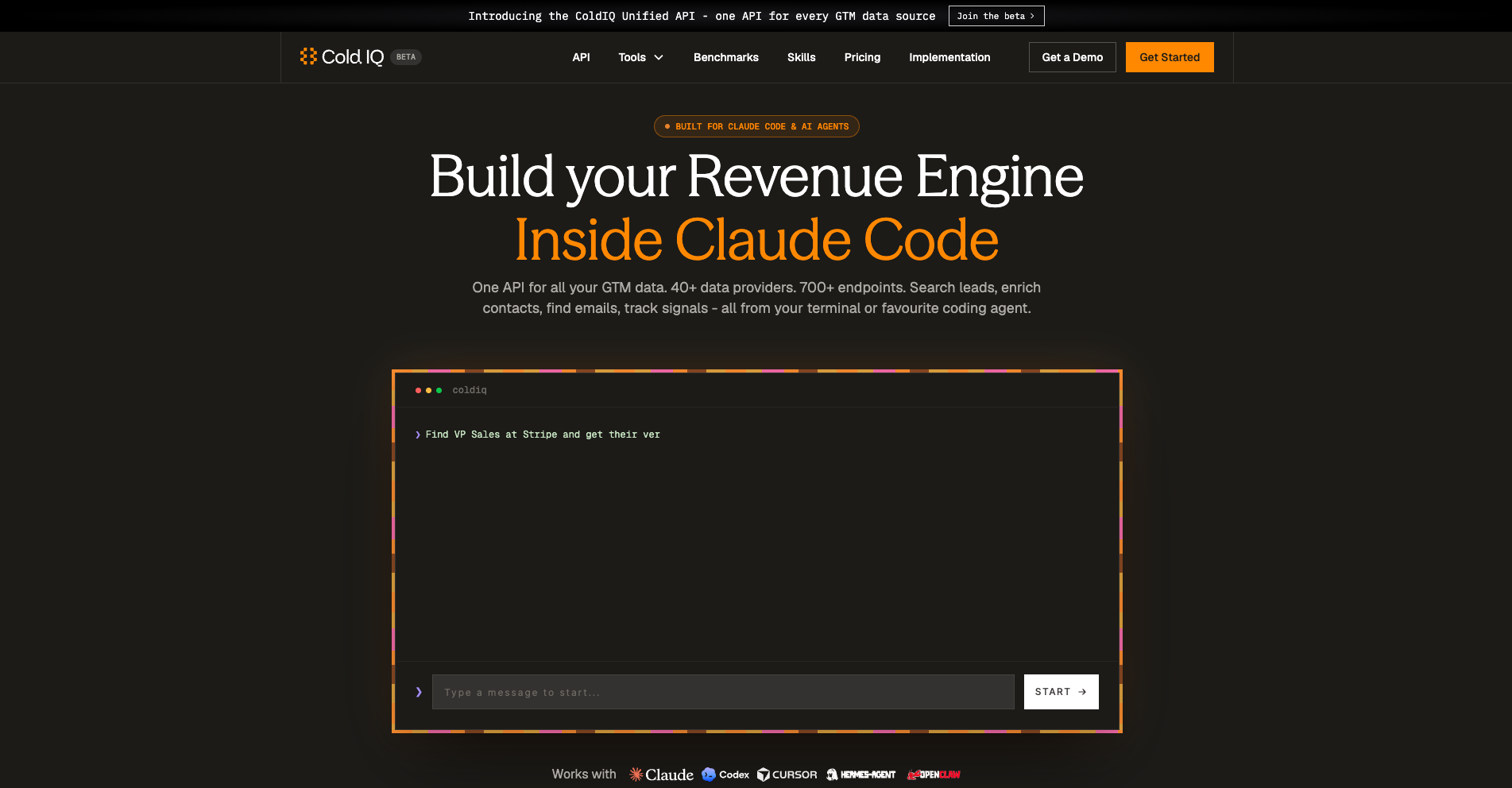
Best for: Series A+ B2B SaaS that want outbound run as a signal-driven, measurable pipeline channel with ICP targeting built from intent signals and results measured at the pipeline stage, not the reply rate
ColdIQ is an AI-native outbound GTM agency that treats outbound as a data problem before it is a volume problem. Their methodology uses 15-plus intent signals job postings, technology stack changes, funding events, competitor searches, pricing page visits to score accounts and sequence outreach only when the signal pattern suggests an active evaluation is underway. The result is a measurable outbound channel where the targeting logic is explicit, the pipeline metrics are trackable, and the decision about whether to scale or recalibrate is data-driven rather than volume-based.
The metrics-driven distinction for outbound specifically is important. Most outbound programmes report reply rate, meeting booked rate, and show rate, activity metrics that do not connect to pipeline quality or close rate. ColdIQ's reporting connects outbound activity to pipeline stage progression: which accounts responded, which converted to qualified opportunities, which advanced to proposal, and which closed. This pipeline-stage reporting makes outbound a manageable, optimisable revenue channel rather than a volume programme that either works or does not.
Their documented results include consistent qualified pipeline delivery for B2B SaaS clients at Series A through Series C, with particular depth in technology, fintech, and professional services categories.
Key services
AI-native outbound sequencing using 15-plus intent signals for account targeting
Signal-based ICP scoring connecting firmographic, technographic, and behavioural data
Multi-channel outbound execution: email, LinkedIn, and calling
Pipeline-stage reporting connecting outbound activity to opportunity progression
Outbound technology stack design and integration (Clay, Apollo, Smartlead, HubSpot)
Why ColdIQ stands out for metrics-driven revenue systems
Signal-based targeting makes outbound ICP selection explicit and auditable, the decision about which accounts to contact is based on documented intent data rather than list quality
Pipeline-stage reporting connects outbound activity to revenue outcomes rather than stopping at reply rate or meeting volume
AI-native infrastructure scales signal processing across large account universes without proportional headcount increase
Technology stack design means the outbound measurement system is the client's asset, not a proprietary tool that disappears with the retainer
Best fit: Series A+ B2B SaaS that have validated outbound as a channel concept but are running it as a volume programme with opaque metrics, wanting to rebuild it as a signal-driven, pipeline-accountable channel where targeting decisions and performance results are both visible and improvable.
4. Sovyn

Best for: Growth-stage B2B SaaS building long-cycle inbound demand where content and SEO attribution needs to be tracked to pipeline contribution, not just traffic and ranking
Sovyn is an inbound marketing and demand generation agency for B2B SaaS companies. Their methodology is built around connecting inbound investment, content, SEO, and conversion optimisation, to pipeline contribution through closed-loop reporting that traces organic traffic through to CRM opportunity and closed revenue. For B2B SaaS companies with sales cycles above 60 days, this attribution depth is the critical capability: without it, the inbound programme is measured against traffic growth while its actual contribution to pipeline remains invisible.
Their inbound analytics framework covers the full content-to-revenue chain: which search terms are producing traffic from ICP accounts, which content assets are most correlated with pipeline progression, and which organic sources are contributing to the deals that close versus the deals that stall. This granularity makes the inbound investment decision analytical: the content calendar is built from pipeline data, not from keyword volume alone.
Documented results include documented pipeline contribution from inbound programmes for B2B SaaS clients at growth stage, with particular strength in categories with long evaluation cycles, cybersecurity, HR tech, and B2B software.
Key services
Inbound marketing strategy and content programme design
SEO with pipeline attribution: ranking tracked to CRM opportunity, not just traffic
Closed-loop reporting connecting organic and content to pipeline contribution and closed revenue
HubSpot integration and inbound analytics setup
Conversion optimisation for inbound landing pages and trial signup flows
Why Sovyn stands out for metrics-driven revenue systems
Closed-loop reporting architecture connects organic traffic to CRM pipeline, making the inbound programme accountable to revenue rather than traffic benchmarks
Content strategy built from pipeline data: which topics produced opportunities, which produced traffic that never converted
HubSpot integration depth means the inbound attribution is native to the CRM rather than assembled from a separate analytics platform
Strong fit for long-cycle B2B SaaS where the lag between content consumption and deal close is too long for standard attribution tools to capture accurately
Best fit: Growth-stage B2B SaaS at Series A–B with sales cycles above 60 days that are investing in inbound and content but cannot currently demonstrate the revenue contribution of that investment because the attribution model stops at traffic or lead volume.
5. Union Square Consulting

Best for: Series A–C B2B SaaS where the primary GTM problem is that existing dashboards cannot be trusted for strategic decisions, leading to gut-led allocation, misaligned forecasts, and an inability to identify which GTM activities are actually working
Union Square Consulting is a GTM metrics and revenue analytics firm that works with revenue leaders across B2B SaaS companies. Their stated focus is a specific and precise problem: revenue leaders who have dashboards but cannot trust the data in them. Their GTM Metrics and Insights Framework moves from identifying the right metrics to track, through building accurate data for those metrics, through translating that data into actionable insights, to getting the GTM team executing against those insights. The output is not a better dashboard. It is a measurement infrastructure the leadership team can use to make decisions they are confident in.
With over a decade of engagement across more than 1,000 B2B SaaS revenue leaders, Union Square's pattern recognition on what makes GTM data trustworthy or untrustworthy is among the deepest available. Their work addresses the data trust problem upstream of any agency programme: if the measurement architecture is wrong, every insight from every channel is suspect, and the decision-making quality of the leadership team is limited by the quality of the data they are making decisions from.
Their framework is particularly relevant as a first engagement for SaaS companies that have grown through Series A with ad hoc data architecture, CRM records that are inconsistent, attribution models that were never designed for multi-touch B2B journeys, and stage definitions that sales reps interpret differently from the way RevOps defined them.
Key services
GTM Metrics and Insights Framework: structured engagement from metric selection through data accuracy through actionable insight generation
Revenue data audit: identifying where the current measurement architecture is producing inaccurate or untrusted data
Metric definition and alignment: establishing shared definitions across marketing, sales, and customer success
Pipeline data accuracy and CRM hygiene
GTM measurement workshop and leadership team training on metrics-driven decision-making
Why Union Square stands out for metrics-driven revenue systems
1,000-plus B2B SaaS revenue leader engagements over a decade: the pattern recognition on data trust problems and GTM metrics architecture is the deepest on this list
Addresses the data trust problem before the measurement layer is built on top of it, making subsequent agency investment more valuable because the measurement infrastructure is reliable
Framework-based engagement produces a documented measurement architecture the internal team can maintain rather than a configuration that requires the consultancy to interpret
Particularly valuable as a pre-engagement diagnostic for SaaS companies that have grown rapidly and suspect the GTM data is unreliable but cannot yet quantify the extent of the problem
Best fit: Series A–C B2B SaaS revenue leaders who suspect their GTM dashboards are producing misleading or untrustworthy data, and who need to establish a reliable measurement foundation before making or defending significant GTM investment decisions.
Why dimartec Builds Metrics-Driven GTM Differently
Every agency on this list addresses a dimension of the metrics problem. NoGood builds measurement infrastructure into the execution squad model. ColdIQ makes outbound ICP targeting explicit and traceable. Sovyn connects inbound investment to pipeline attribution. Union Square builds the data trust foundation that makes every other agency's metrics reliable.
Each of them instruments a layer. None of them instruments the full chain: from how the first impression is generated, through how the page converts it, through how the CRM qualifies and routes it, through how the attribution model connects it to the deal that closed. When one agency owns paid and another owns CRM and another owns content and no one owns the architecture connecting them, the board forecast is still assembled from three different measurement systems that each tell a slightly different story about the same commercial reality.
The measurement system that produces a defensible board forecast has to be designed as one architecture. Each layer reads from the same ICP definition. Each conversion event is tagged against the same pipeline model. Each closed deal is attributed through the same multi-touch model back to the specific channels that influenced it. When this architecture is built alongside the GTM execution rather than after it, the result is a revenue system the board can interrogate rather than a GTM programme the marketing team reports from.
dimartec builds this as one integrated system. The RevOps & Automation pillar is not a reporting layer added at the end of a campaign, it is the measurement infrastructure designed in the first session, against which every other pillar is held accountable. The forecast is the output of the system. Not a reconciliation.
See how the Revenue Engine works: https://www.dimartec.co.uk/services/revenue-engine
How to Choose the Right Agency for Metrics-Driven GTM
Diagnose which layer of the metrics problem is the constraint
Union Square's framework is the right starting point if the data cannot be trusted. Sovyn's attribution model is the right next layer if inbound is running without pipeline tracking. ColdIQ's signal-based system is the right fix if outbound is running as a volume programme with opaque results. NoGood's squad model is the right partner if the full funnel needs measurement and execution under one owner. dimartec's Revenue Engine is the right architecture if all four layers need to be connected under one measurement system.
Require revenue metrics in every case study, not activity benchmarks
The distinction between a metrics-driven agency and an activity-reporting agency is visible in their case studies. Activity-reporting agencies show MQL growth, impression volume, click-through rates, and session counts. Metrics-driven agencies show pipeline contribution, cost per SQL, CAC payback improvement, and NRR. Ask for case studies that name a client, state a revenue metric, and provide a timeframe. If the evidence stops at MQL volume, the programme stops at MQL volume.
Assess whether the measurement system is the client's asset
The most expensive measurement system failure is the one that disappears when the agency retainer ends. Ask any agency on this list: what does the client own at the end of the engagement from a measurement perspective? Which reports can the internal team run without the agency? Which attribution logic can the RevOps team modify without calling the agency? If the answers are unclear, the measurement system is a service rather than an asset.
Build the measurement architecture before scaling spend
Scaling GTM spend before the measurement architecture is in place amplifies the data quality problem rather than funding a solution to it. More spend into a system that cannot attribute revenue to channels produces more unattributable revenue and more pressure on the board meeting reconciliation that was already taking too long. The sequence matters: measurement architecture first, spend scale second.
Frequently Asked Questions
What is the difference between a GTM metrics system and a marketing dashboard?
A marketing dashboard displays the outputs of a measurement system. A GTM metrics system is the architecture that produces those outputs: the data definitions, the integration layer connecting ad platforms to CRM to finance, the attribution model that determines how revenue is credited to channels, and the pipeline stage logic that tracks how opportunities progress. The dashboard is readable. The metrics system is trustworthy.
Can a SaaS company build a metrics-driven GTM system without an agency?
Yes, but the capability gap is significant. Building first-party attribution infrastructure, CRM stage logic, and multi-touch attribution modelling requires expertise across data engineering, RevOps, and GTM strategy simultaneously. Most SaaS companies at €2M–€10M ARR do not have all three in-house. The agencies on this list provide the expertise across all three as one engagement, which is why the build timeline is typically shorter with an agency than with an in-house team building the capability from scratch.
Replace Dashboards With a Revenue System
The difference between a board that trusts the GTM forecast and one that spends time reconciling it every quarter is the presence of a measurement architecture that connects every GTM input to a revenue output, designed as one system, not assembled from the outputs of agencies that were never told to talk to each other.
The Revenue Engine connects Performance Paid Media, CRO, AI Optimization (GEO), and RevOps & Automation into one build so the metrics are trustworthy, the forecast is defensible, and the spend allocation decision is made from closed-revenue attribution rather than campaign-level activity.
See how the Revenue Engine works: https://www.dimartec.co.uk/services/revenue-engine





.png)
















































.png)
.png)
.png)
.png)
.png)
.png)
.png)
.png)
.png)
.png)