Picture a SaaS sales director summing up her first outsourced lead generation contract in a single line: forty meetings, two deals, one very awkward quarterly review. By every measure in the contract, the supplier had delivered. Meetings were booked, calendars were full, and the monthly report was green. The problem was that most of those meetings were with people who had agreed to a call, not people who had any intention of buying.
That outcome is common because lead generation companies sell very different things under the same label. Some sell booked meetings. Some sell contact data and outreach volume. Some sell a managed SDR team. Some sell demand that builds over months. Some sell a system that captures, nurtures, and measures leads end to end. Each can work well, and each can disappoint badly when the buyer expected one thing and paid for another.
After analysing pipeline sources across more than 200 B2B SaaS accounts, the clearest dividing line between successful and disappointing engagements was not price or channel. It was whether the company and the supplier agreed, before starting, what a good outcome looked like and how it would be measured beyond the first conversation.
This review compares ten B2B SaaS lead generation companies, explains what each one is actually selling, and gives a direct verdict on where each fits.
What You Are Actually Buying
The ten companies in this review sell five different products. Knowing which one you are buying makes every proposal easier to judge.
Booked meetings. The supplier runs outreach and hands over calendar invitations. Belkins, SalesHive, and Martal Group work mainly this way. The key question is how strictly each meeting is qualified before it reaches your sales team.
Outreach capacity. The supplier provides a team, data, and multichannel campaigns at scale, and you judge the output. Sopro and Callbox sit here. The key question is what counts as a lead and how volume translates into opportunities.
A managed SDR function. The supplier provides dedicated SDRs, often with its own data and tools, as an extension of your team. CIENCE is built this way. The key question is ramp time and how the SDRs are managed.
Engineered targeting. The supplier uses data, signals, and automation to decide who to contact and when. ColdIQ leads this approach. The key question is whether your ICP and messaging are clear enough to engineer around.
Inbound demand. The supplier attracts buyers who are already looking or builds awareness among those who soon will be. Gripped and Refine Labs work this way, at different speeds. The key question is how long you can wait for results.
dimartec sits across several of these, building a connected system that captures demand, nurtures it, and measures it against revenue.
How We Reviewed These Companies
Each company was assessed on the same six questions:
- Product: What exactly is delivered: meetings, leads, outreach, SDRs, demand, or a system?
- Qualification: How is quality defined and checked before handover?
- SaaS fit: Does it have B2B SaaS clients and an approach suited to SaaS buying?
- Measurement: Does reporting stop at meetings, or follow through to opportunities and revenue?
- Commercial terms: How transparent are pricing, minimums, and notice periods?
- Evidence: What do independent reviews say, including the critical ones?
Pricing and claims come from company sites, review platforms, and independent comparisons. Several figures vary between sources, and we note where they do.
The 10 Best B2B SaaS Lead Generation Companies, Reviewed
1. dimartec
Best for: B2B SaaS and fintech companies at €2M–€10M ARR that want leads captured, nurtured until they are ready, and measured against revenue
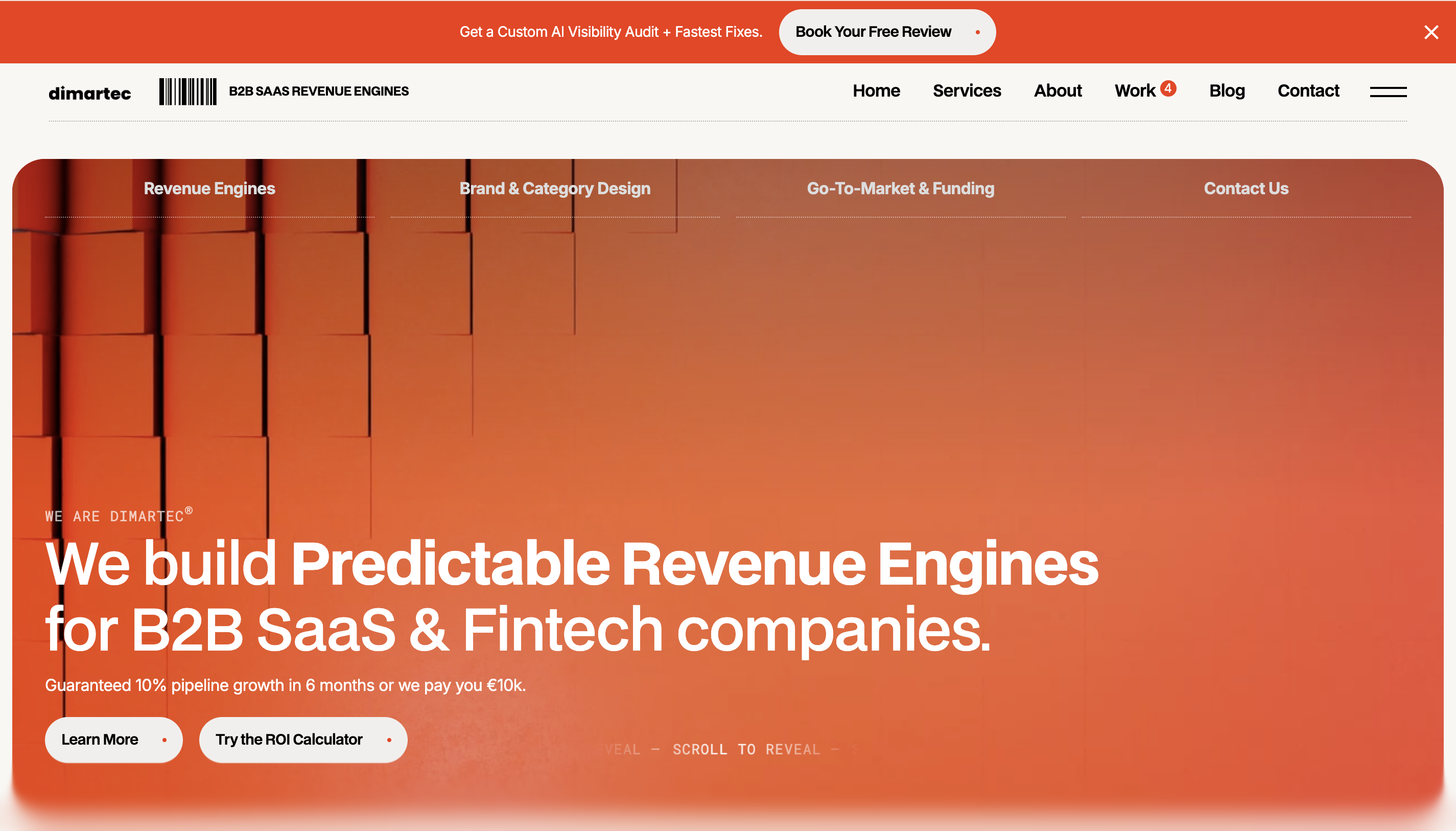
dimartec builds Predictable Revenue Engines for B2B SaaS and fintech companies. Lead Gen & Nurturing is one of five connected pillars, covering demand capture and expansion, nurture journey design, lead qualification and scoring, and reactivation. It works together with Performance Paid Media, Full-Funnel CRO, GEO, and RevOps & Automation, so that the leads generated are also converted, followed up, and reported in one system.
Its starting point is that around 90% of leads are not sales-ready at first contact, and are lost without nurturing. So rather than handing over leads or meetings and stopping there, dimartec builds the journey that keeps prospects engaged until they meet an agreed standard, then routes them to sales and reports cost per SQL by source. Lead generation and automated nurture go live in months three and four of a six-month build, and the system is handed to the client's team at the end.
Strengths
- Nurture and reactivation built in, so fewer good leads are wasted
- Every source measured against cost per SQL and revenue
- dimartec reports 90% of clients see improved lead quality within 90 days
- A payments fintech client describes 40 new clients from a demand engine launched in under a month
2. Belkins
Best for: SaaS companies needing outbound meetings quickly from a large, experienced team
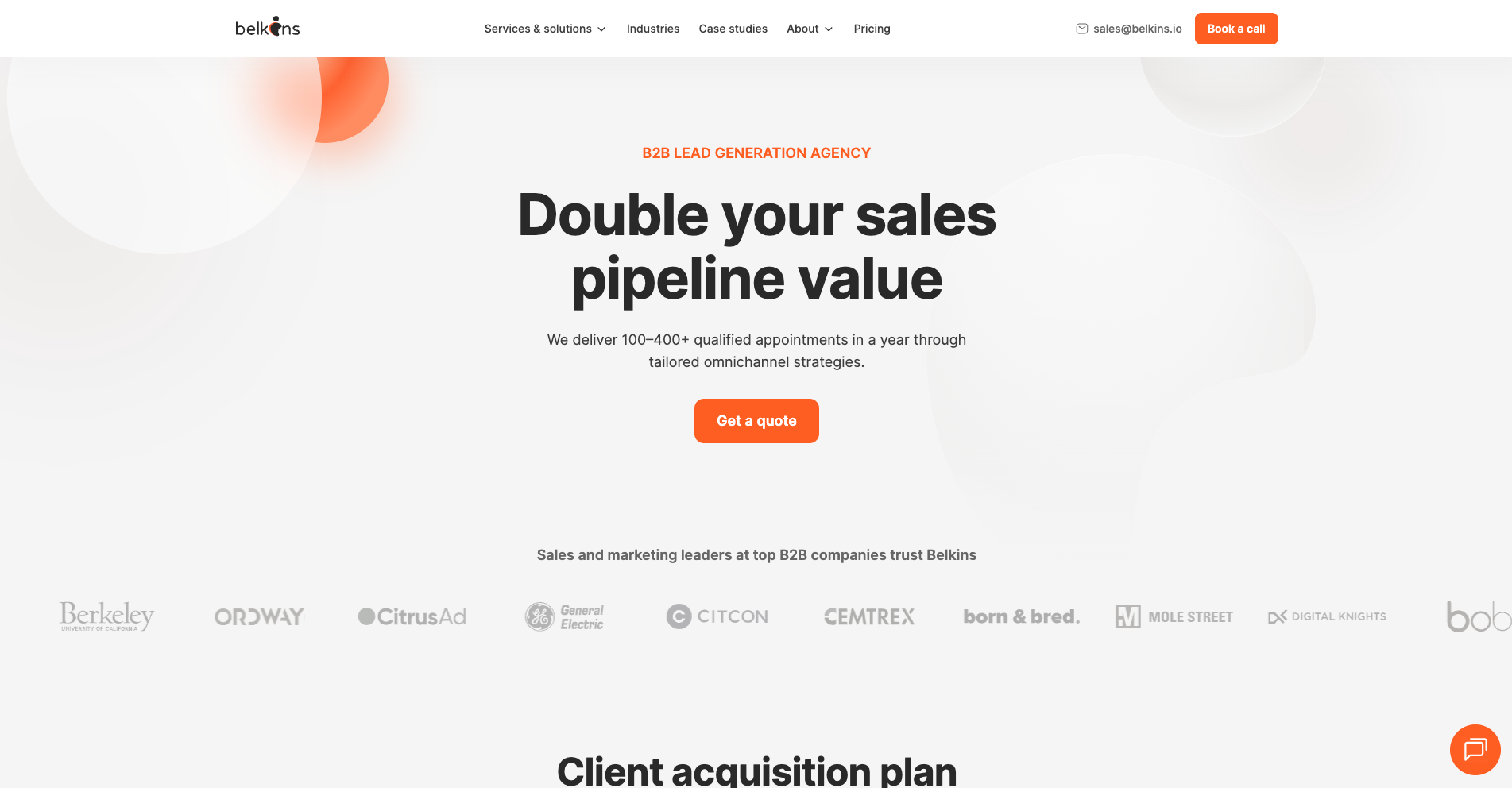
Belkins is a B2B lead generation and appointment setting agency running outreach across email, calling, and LinkedIn. It reports more than 100 SaaS clients, campaigns launched within about 14 days, and a 95% client retention rate. Independent comparisons place its retainers at around $5,000 to $14,800 a month. Its SaaS case studies include $2.2M in pipeline for sustainability platform Terrascope.
Strengths
- Fast launch and a large SaaS track record
- ICP and messaging work included
- Playbooks and sequences stay with the client
- Strong review profile
Limitations
- Results depend heavily on the meeting definition agreed at the start
- Some reviewers note slow early months before campaigns settle
Verdict
A reliable choice for booked meetings, provided qualification criteria are agreed in writing first.
3. SalesHive
Best for: US mid-market B2B teams wanting phone and email SDR capacity on flexible terms
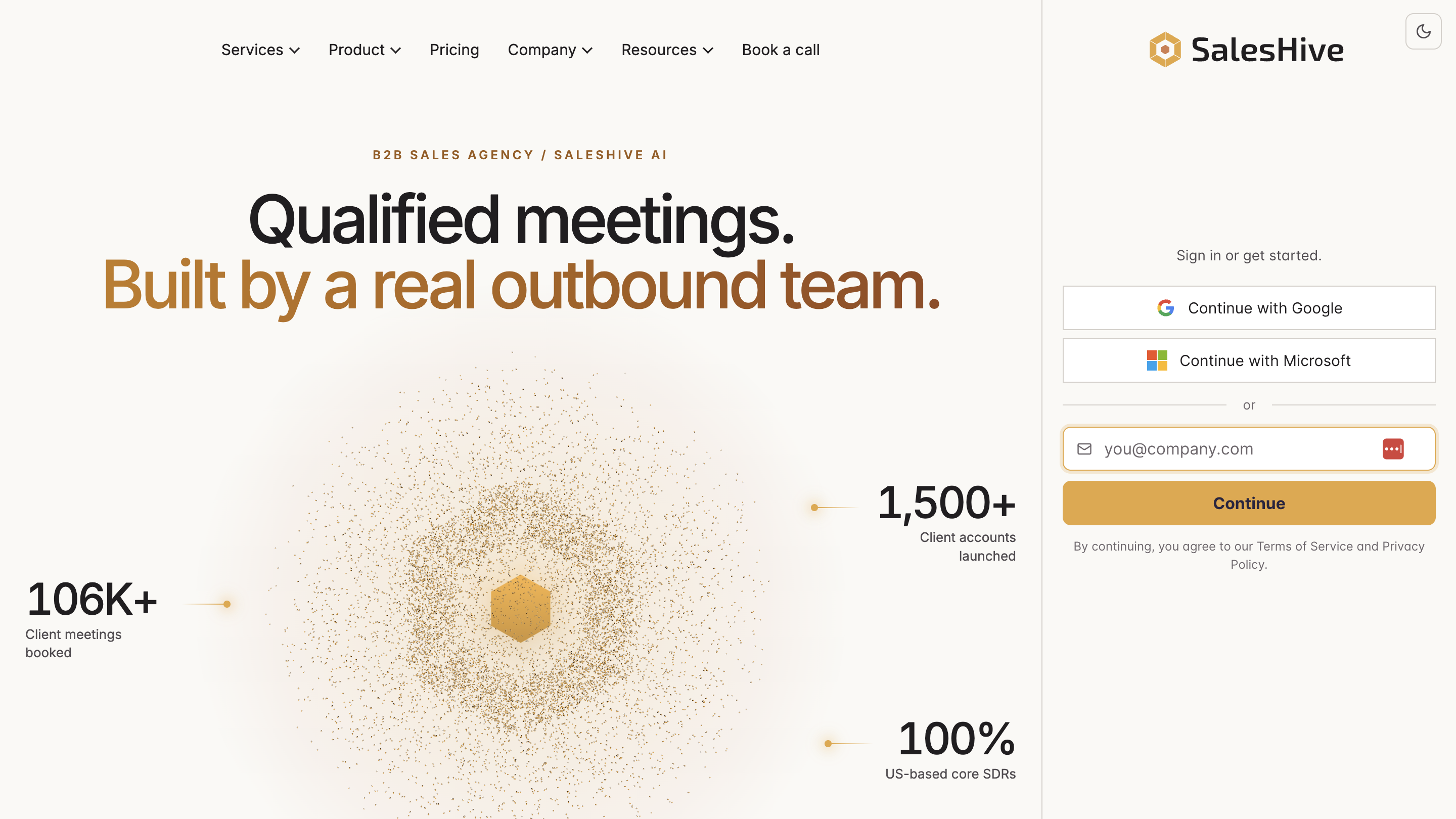
SalesHive, founded in 2016 and based in Denver, provides SDR teams in the US or the Philippines, supported by its own outreach platform. It publishes flat monthly pricing, reported by one independent review at around $4,500 to $12,000 a month depending on SDR location and channels, with month-to-month terms and 30-day notice. It claims well over 100,000 meetings booked for more than 1,500 clients, though the exact figure varies between sources.
Strengths
- Published pricing and month-to-month terms
- Phone-led outreach alongside email
- Choice of US or offshore SDRs
- Large volume of past campaigns
Limitations
- Several recent reviews on G2, Clutch, and Trustpilot raise concerns about targeting and script quality
- US-focused, so less suited to European markets
Verdict
Worth considering for US companies wanting flexible SDR capacity. Run a short pilot with clear acceptance criteria before committing.
4. Martal Group
Best for: Tech and fintech SaaS companies whose account executives waste time on poorly qualified first calls
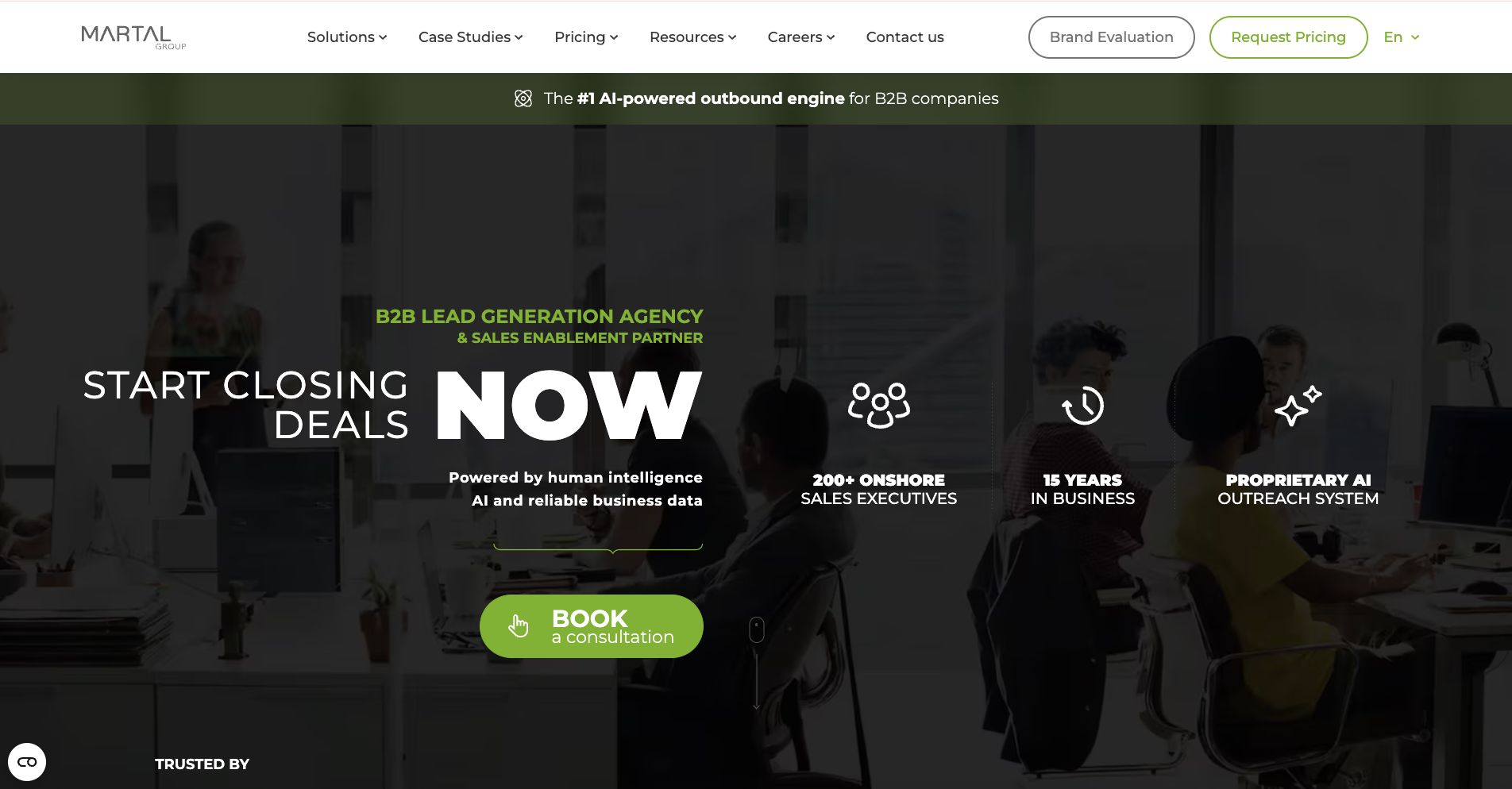
Martal Group provides fractional SDR teams and outbound pipeline generation for B2B technology and fintech companies. Its model confirms ICP fit, intent, and stakeholders before a meeting is placed in the calendar, and it reports work with more than 300 tech and fintech clients. Martal also states that it offers hybrid pay-per-lead options alongside standard engagements.
Strengths
- Qualification before booking
- Long focus on technology clients
- Fractional SDRs with no hiring needed
- Hybrid pricing options
Limitations
- Pricing not published
- Outcomes depend on the SDRs assigned
Verdict
A good choice when meeting quality matters more than volume. Agree acceptance criteria and request named SDRs.
5. Sopro
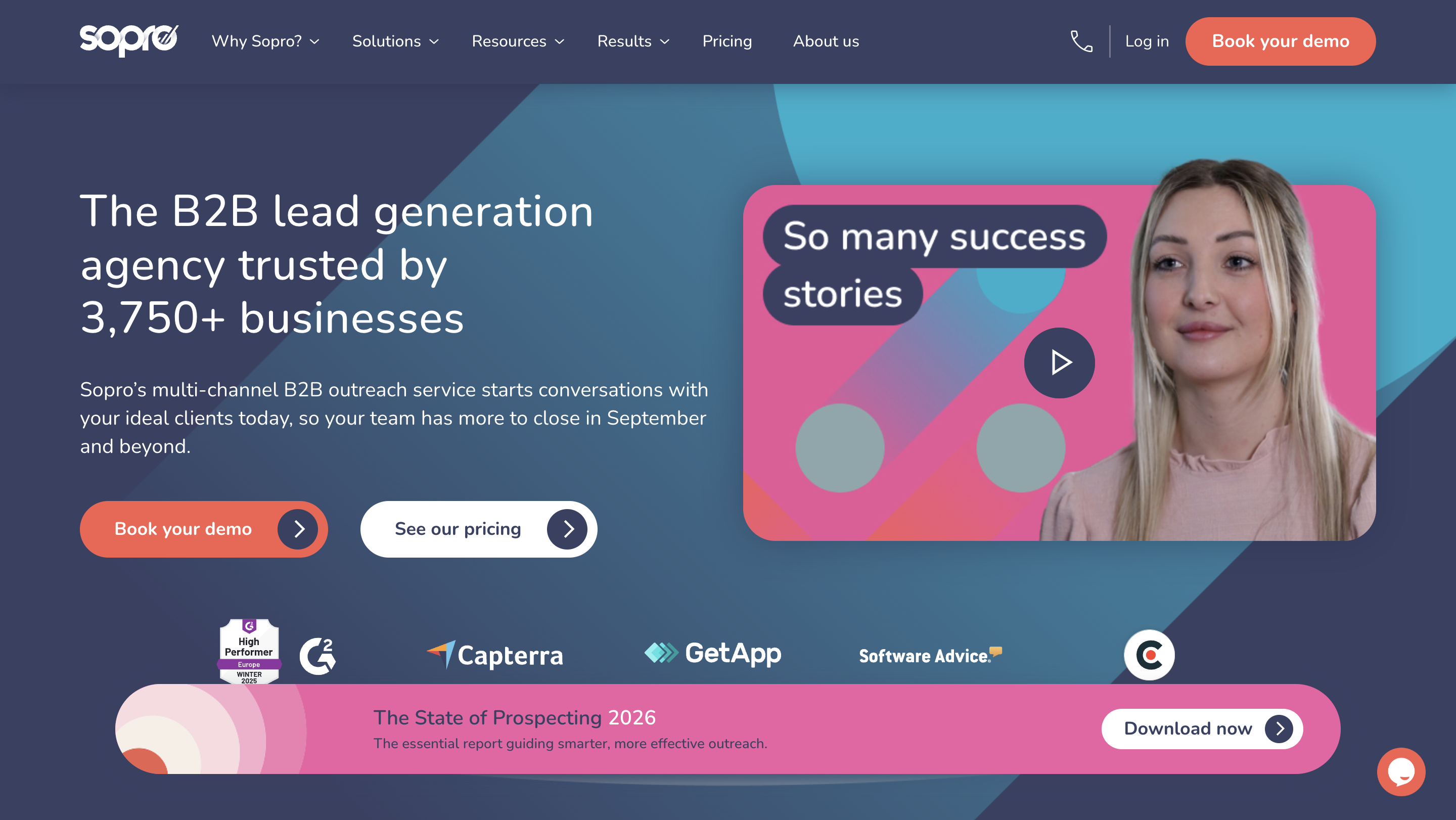
Best for: UK and European SaaS companies wanting managed multichannel outreach at a predictable monthly cost
Sopro is a Brighton-based B2B prospecting company running fully managed outreach across the UK, Europe, and the US. Pricing is based on the number of prospects contacted each month, with a published starting point of around £3,000. Its own example shows roughly 70 qualified leads a month for $4,500 on a three-month commitment, and it holds a 4.8 rating from 186 reviews on Trustpilot.
Strengths
- Transparent starting price
- European coverage
- Fully managed service
- Strong review scores
Limitations
- Independent reviewers advise agreeing the lead definition carefully
- Outreach-led, so nurture and conversion need other support
Verdict
A sensible option for European SaaS companies that want predictable outbound volume without building an SDR team.
6. Callbox
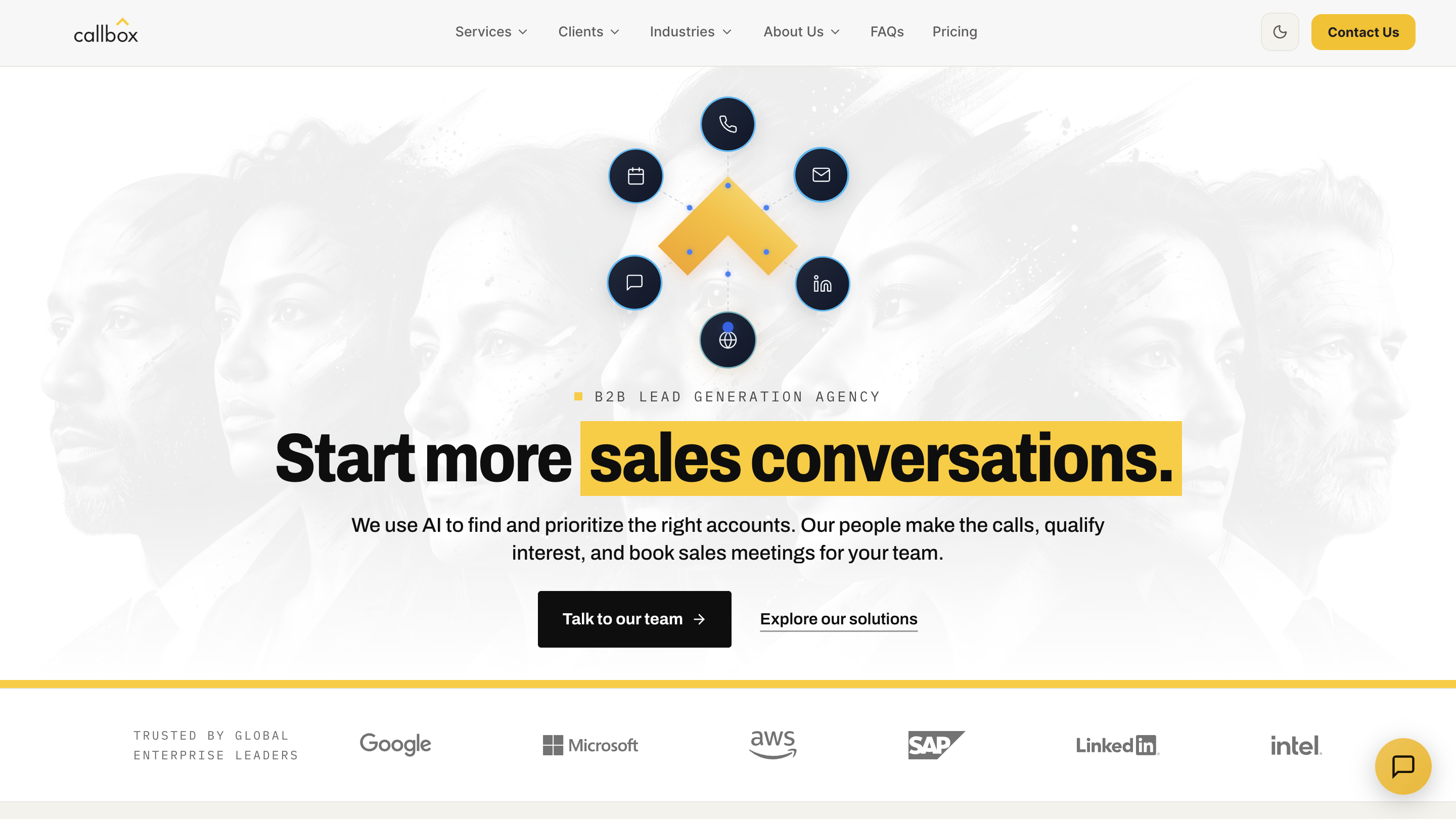
Best for: Larger SaaS companies expanding outreach into several regions and languages
Callbox, founded in 2004 with headquarters in Encino, California, and Singapore, runs multichannel lead generation across phone, email, LinkedIn, chat, and events. It reports serving more than 15,000 companies, and holds ratings of around 4.6 on Clutch and 4.5 on G2. It prices through dedicated campaign teams, which independent reviews place at roughly $15,000 to $30,000 a month for a single region, with most delivery staff based in the Philippines.
Strengths
- Very long track record
- Multichannel, multi-region coverage
- Large volume of reviews
- Suited to APAC, EMEA, and LATAM expansion
Limitations
- High entry point for smaller SaaS companies
- One independent review suggests it is a weaker fit for products below around $50,000 in contract value
Verdict
A strong option for well-funded SaaS companies entering several regions at once. Smaller companies will find more focused partners.
7. CIENCE
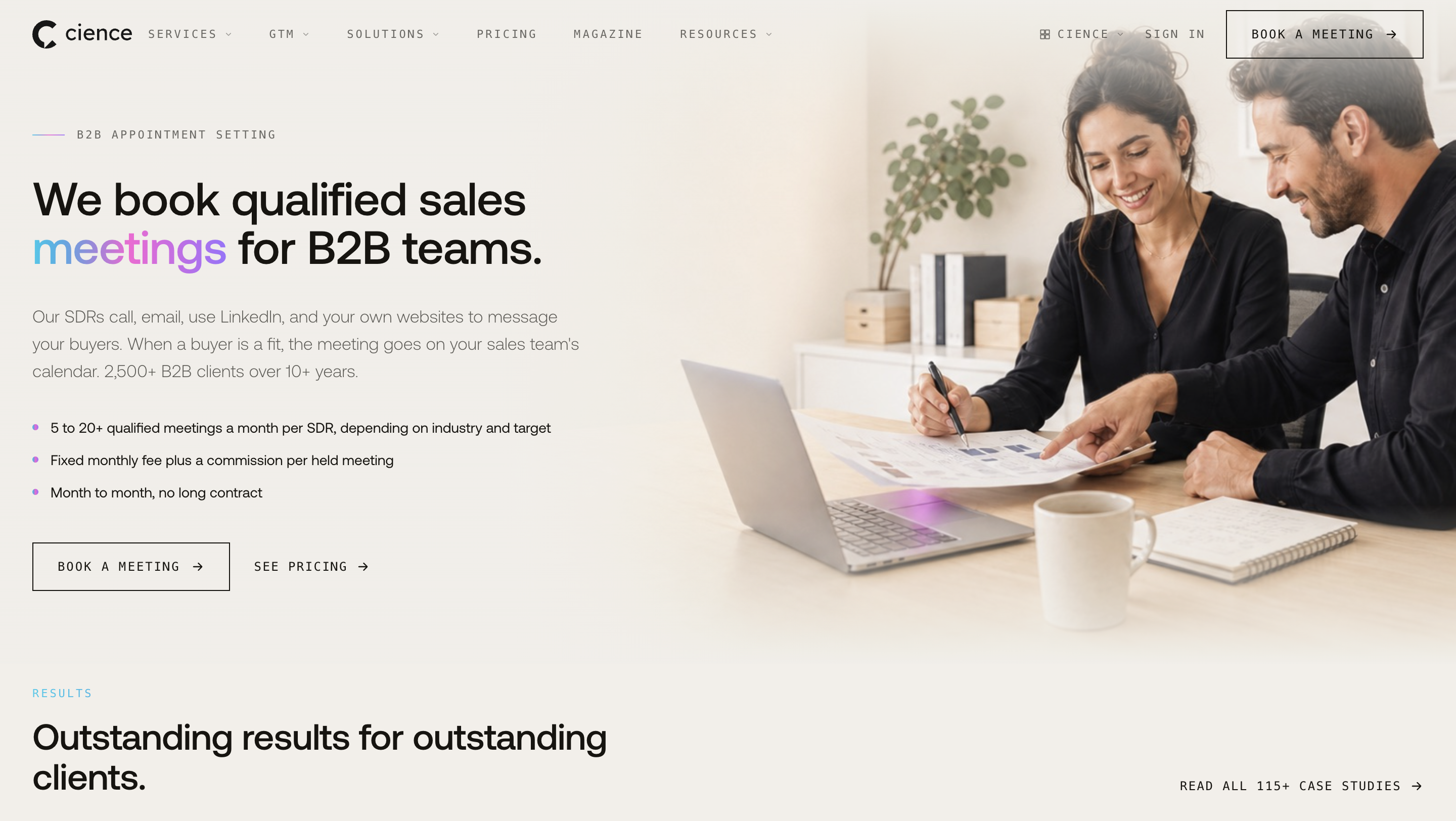
Best for: Companies wanting a complete outsourced SDR function with its own data and tooling
CIENCE, founded in 2015 in Denver and now operating under graph8, provides managed SDR teams supported by its own B2B data and AI tools. It runs coordinated outreach across email, phone, LinkedIn, ads, and SMS, and one independent guide places dedicated US-based SDRs from around $5,999 a month. It reports more than 1,000 B2B teams as clients.
Strengths
- Full SDR function in one supplier
- Own data products
- Coordinated multichannel outreach
- Large client base
Limitations
- Independent reviews mention layered pricing and a ramp-up period of several months
- Better suited to companies with runway to wait for results
Verdict
A solid choice for companies that want to outsource sales development entirely and can allow time for ramp-up.
8. ColdIQ
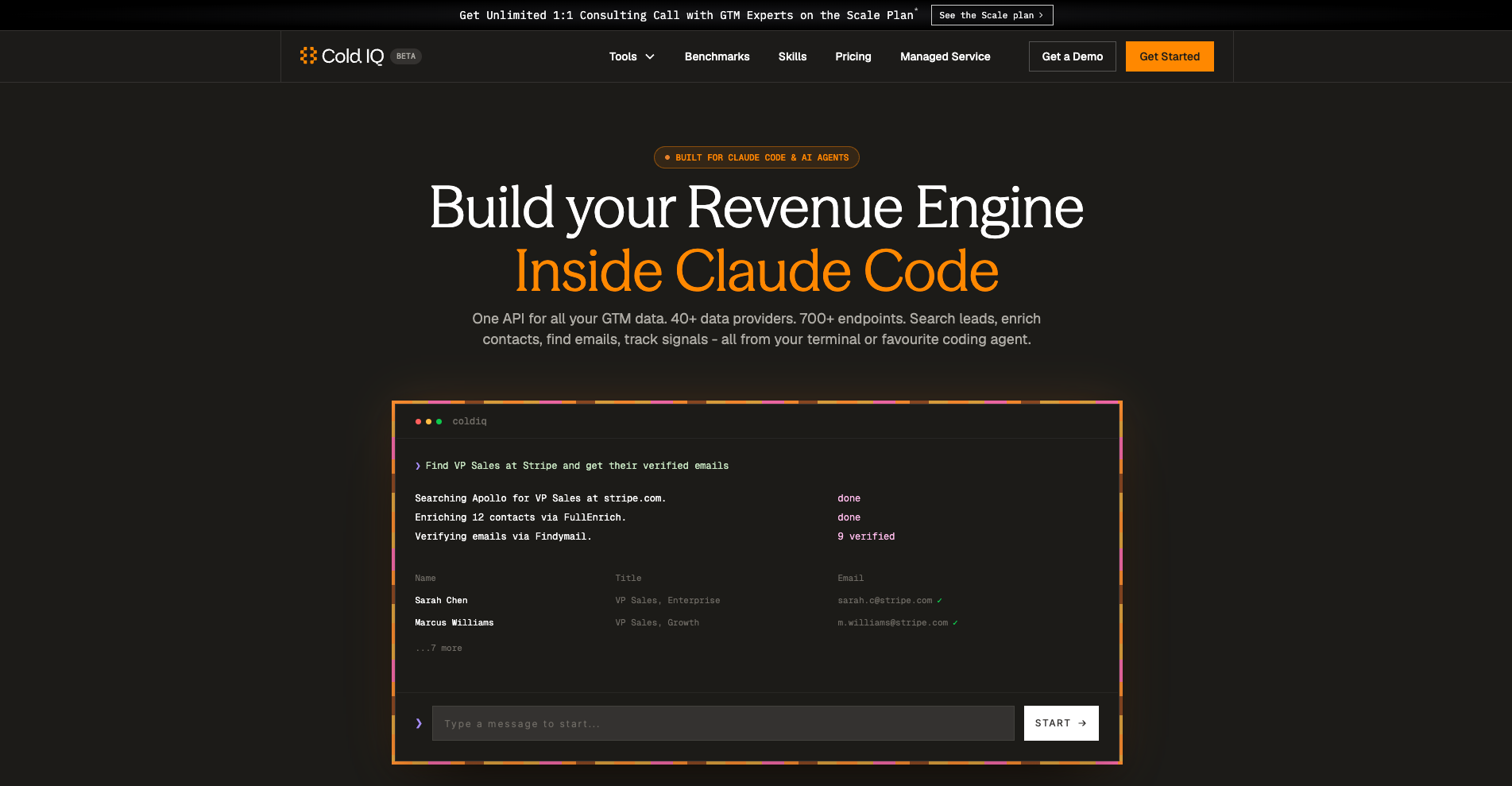
Best for: Early-stage SaaS companies with a clear ICP that want signal-based outbound built on Clay
ColdIQ is a GTM engineering agency founded in 2020 in New York and one of a small number of Clay Elite Studio partners. It builds and runs outbound and account-based systems that use buying signals to decide who to contact and when. It reports more than 70 B2B clients, launches campaigns in around two weeks, and works on a three-month minimum.
Strengths
- Precise, signal-driven targeting
- Fast launch
- Deep data and tool expertise
- Modern outbound infrastructure
Limitations
- Execution-focused; assumes positioning and ICP are already clear
- Outbound only, so inbound and nurture need other partners
Verdict
The most technically advanced outbound option here. Best used once the basics of who you sell to are settled.
9. Gripped
Best for: UK and European SaaS companies building inbound demand across paid, search, and AI search
Gripped is a London agency founded in 2017 that works only with SaaS, AI, and tech companies, reporting more than 160 clients including Ideagen, Epicor, and Ravelin. It covers demand generation, paid media, SEO, GEO, content, ABM, and websites, and states that most clients invest £8,000 to £12,000 a month for full-service demand generation.
Strengths
- SaaS, AI, and tech only
- Several inbound channels from one team
- Transparent investment guidance
- European experience
Limitations
- Slower to produce meetings than outbound
- Some reviewers suggest content could go deeper
Verdict
A good choice for European SaaS companies building inbound as a long-term source of leads.
10. Refine Labs
Best for: Series B and later SaaS companies investing in demand creation over several quarters
Refine Labs is a Boston demand generation agency founded in 2019, now led and majority owned by CEO Megan Bowen. Its approach builds familiarity and intent through narrative content and paid social before buyers enter the market, measured with self-reported attribution. It reports more than 300 B2B SaaS clients, and independent reviews place pricing at roughly $14,000 to $31,000 a month.
Strengths
- Builds demand before buyers start searching
- Measures influence beyond form fills
- Extensive B2B SaaS experience
- Clear, documented philosophy
Limitations
- Pipeline takes several quarters to move
- Pricing and client profile suit larger companies
Verdict
The right partner for larger SaaS companies whose lead problem is awareness, not outreach.
Head-to-Head Comparisons
Belkins vs SalesHive. Both sell booked meetings from outbound teams. Belkins has the stronger SaaS case study record and review profile; SalesHive offers published pricing, month-to-month terms, and phone-led outreach. Choose Belkins for track record; choose SalesHive for flexibility, after a careful pilot.
Sopro vs Callbox. Both sell outreach capacity. Sopro is lighter, cheaper to start, and focused on the UK, Europe, and the US. Callbox is heavier, more expensive, and built for multi-region expansion. Choose Sopro for a European programme; choose Callbox for several regions at once.
Martal Group vs CIENCE. Both provide SDRs. Martal focuses on qualifying meetings before handover; CIENCE provides a fuller SDR function with its own data. Choose Martal when meeting quality is the main issue; choose CIENCE when you want to outsource the whole function.
ColdIQ vs traditional appointment setters. ColdIQ engineers who to contact using data and signals; appointment setters rely more on list-based outreach and SDR effort. Choose ColdIQ if you value precision and can supply a sharp ICP; choose an appointment setter if you need volume quickly.
Gripped vs Refine Labs. Both work on inbound. Gripped captures and converts existing demand across several channels at mid-market budgets. Refine Labs creates new demand over a longer horizon at a higher price. Choose Gripped for inbound leads within months; choose Refine Labs to shape the market over quarters.
dimartec vs buying meetings. Buying meetings fills calendars; dimartec builds the system that decides which leads are ready, nurtures the rest, and proves what each source is worth. Choose meetings for a short-term boost; choose dimartec for a lasting pipeline engine.
Why dimartec Approaches Lead Generation Differently
Most companies in this review are paid for what they hand over: a meeting, a lead, a month of outreach, a team of SDRs, or a programme of content. What happens after the handover is usually the client's job. That is where a large share of the value disappears. Leads that are not ready this month are dropped. Meetings that do not convert are not analysed. Nobody can say which source produced the deals that closed.
dimartec builds lead generation as one part of a connected Revenue Engine. Demand is captured through paid media, converting pages, and AI search visibility. Lead Gen & Nurturing carries prospects forward, scores them, and reactivates those that went quiet. RevOps & Automation routes them to sales and reports cost per SQL by source. Over six months, the system is built and handed to the client's team, so lead generation becomes a capability the company owns, not a supplier it rents.
See how the Revenue Engine works: https://www.dimartec.co.uk/services/revenue-engine
Frequently Asked Questions
Should a SaaS company pay per meeting or per month?
Pay-per-meeting pricing feels safer, but it can encourage suppliers to book meetings that meet the letter of the contract rather than its spirit. Monthly retainers give the supplier room to target carefully. Whichever model you choose, define a qualified meeting in writing and review conversion to opportunity, not just volume.
What should a qualified meeting include?
At minimum: a company within your ICP, a contact with relevant authority or influence, an identified problem your product solves, and willingness to discuss next steps. Many companies also require a time frame or an active evaluation. Agree the definition with your sales leader before signing.
How quickly should a lead generation company produce results?
Outbound programmes often produce first meetings within the first month and settle within two or three. Inbound programmes usually take several months, and demand creation several quarters. Ask any supplier what they expect at 30, 90, and 180 days, and what happens if they fall short.
How do I compare lead generation companies fairly?
Compare cost per qualified opportunity, not cost per lead or meeting. Ask for references from SaaS companies at your stage and contract value, and read critical reviews as carefully as positive ones.
Buy the Outcome, Not the Activity
Lead generation companies sell meetings, leads, outreach, SDRs, demand, or systems. Each has a place. The mistake is buying one while expecting another. Decide what a good outcome looks like, how it will be measured beyond the first call, and who will look after the leads that are not ready yet. The right partner follows from those answers.
The Revenue Engine connects Lead Gen & Nurturing with Performance Paid Media, Full-Funnel CRO, GEO, and RevOps & Automation, so every lead is captured, nurtured, and traced to revenue in one system your team owns.
See how the Revenue Engine works: https://www.dimartec.co.uk/services/revenue-engine