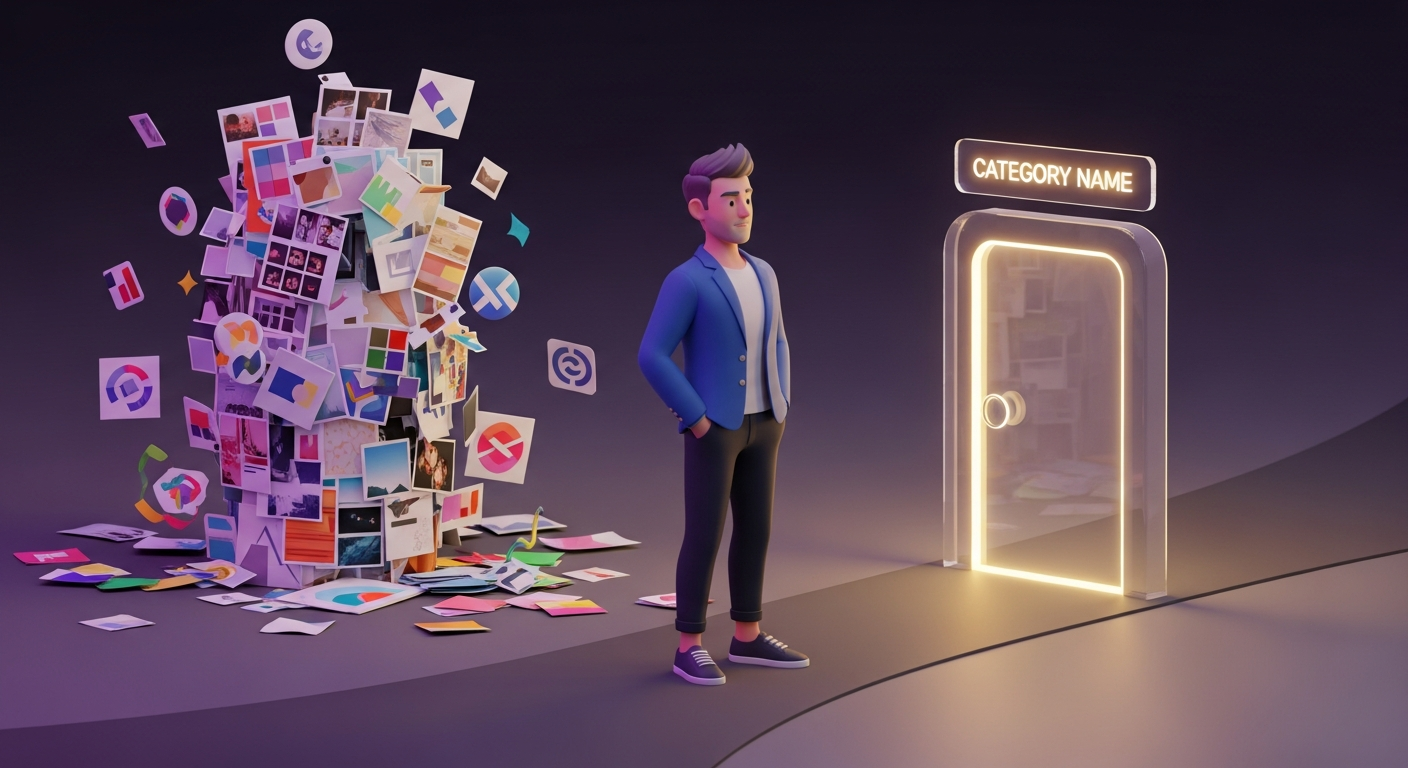
The demo request page is the most important single page in a B2B SaaS website. It is where a visitor who has already evaluated the product, read the case studies, and decided to take the next step either books a conversation or does not. The conversion rate on this page is the direct multiplier on every pound of paid acquisition spend, every article of organic content, and every dollar of GEO investment that brought the visitor there. A page converting at 4% instead of 8% means the acquisition programme needs to work twice as hard to produce the same demo volume.
Most B2B SaaS demo request pages are not optimised. They are designed. A design agency placed a form with six fields on a white background, added a headline promising to "see the product in action," and considered the page done. The result is a page that performs at 1.5 to 3% where a correctly structured demo request page with the same traffic performs at 6 to 10%. The gap is not in the button colour or the headline font. It is in the four structural elements that determine whether a visitor who arrived ready to book actually completes the request: what the page says happens next, whether the proof on the page is specific enough to remove the remaining risk in the buyer's mind, whether the form asks for the right amount of information at the right stage of commitment, and whether the confirmation experience sets up a meeting the buyer will attend.
After reviewing demo request page performance across more than 200 B2B SaaS accounts, the consistent finding is this: the page is almost never the primary conversion failure. The confirmation flow is. The biggest conversion gains in B2B SaaS demo optimisation sit between form submission and attended meeting. A visitor who submits a demo request and receives a generic "we'll be in touch" confirmation page is not converting to a booked meeting. They are converting to a request that may or may not become a meeting depending on how quickly the SDR team follows up, whether the calendar link in the follow-up email is prominent enough, and whether the one email that follows is compelling enough to re-activate the intent that existed at submission. The agencies that produce meaningful demo conversion improvements address the post-submission experience with the same rigour they apply to the pre-submission page.
This guide evaluates the five best CRO agencies for improving demo conversion specifically: the ones whose methodology addresses the full demo conversion chain from page arrival through to attended meeting, not just the form submission event that most CRO programmes treat as the finish line.
What Demo Conversion Actually Means in B2B SaaS
Demo conversion in B2B SaaS is not a single metric. It is a chain of four connected events, and the conversion rate on any one of them determines the output of the chain.
Visitor to demo request submission. The conversion rate most B2B SaaS teams measure and most CRO agencies optimise. The average for a well-structured B2B SaaS demo page receiving high-intent traffic is 6 to 10%. Teams below 3% have a structural problem. Teams between 3 and 6% have an optimisation opportunity. Teams above 10% are approaching the ceiling for this event.
Demo request to booked meeting. The conversion rate almost no B2B SaaS team measures. The gap between a submitted request and a booked calendar slot is where speed-to-lead, routing accuracy, and confirmation page design determine the outcome. RevenueHero's 2026 research identifies this as the highest-impact conversion gap in the B2B SaaS demo funnel: teams converting 85% or more of demo requests to held meetings are operating the confirmation and follow-up experience as a designed conversion step, not as an administrative process.
Booked meeting to attended demo. Show rate is determined by confirmation quality, pre-demo value delivery, and how quickly the booking was confirmed after the request. Teams achieving 75 to 80% show rates use double-confirmation sequences, send a specific case study or insight in the 24 hours before the demo, and book meetings within 48 hours of the request rather than across a three-to-five-day scheduling window.
Attended demo to SQL. The conversion rate that connects demo conversion to revenue. A programme that improves demo request rate from 3% to 6% but sends wrong-fit visitors through to demos that fail to advance to SQL has optimised the page-level metric without improving the revenue metric. Demo-to-SQL conversion is the measure that connects the CRO programme to closed ARR, and it is the metric that determines whether a higher demo volume is producing better pipeline or more unproductive sales conversations.
Quick Comparison
Why Demo Page CRO Requires a Different Methodology
Demo request page CRO is not the same as landing page CRO. The visitor psychology is different at every step.
A visitor who reaches the demo request page in B2B SaaS has already done significant evaluation work. They have read case studies, compared features, and formed a preliminary view that the product is worth exploring. The conversion barrier is not awareness or consideration. It is residual risk: the calculation every buyer makes at the moment of committing to a sales conversation. Is this worth 30 minutes of my time? Will this be a high-pressure sales call? Is there enough evidence that the product can actually do what I need it to do for a company like mine?
The structural elements of a demo request page that address these questions are different from those that address a top-of-funnel landing page visitor who is still forming awareness. A top-of-funnel page needs to establish what the product does and why it matters. A demo request page needs to establish what the conversation will be like, who the specific people are who have already made this decision and found it worth their time, and what happens next at a level of specificity that removes the uncertainty that makes buyers hesitate at the final step.
The form design on a demo request page has a dual function that general landing pages do not: it must convert the visitor to a submission while collecting enough qualification information to route the booking correctly and prepare the sales representative for a relevant conversation. Too many fields reduce conversion rate. Too few fields produce unqualified bookings that fail at the demo-to-SQL stage. The optimal demo request form for B2B SaaS collects the company name, the specific use case the buyer wants to address, and the team size or company size, in three to four fields, and routes the booking based on that data before the confirmation screen appears.
How We Chose These Agencies
Full conversion chain scope: Does the agency address the confirmation page and post-submission flow, or does it stop at form submission as the conversion event?
Demo-to-SQL attribution: Does the agency connect demo page optimisation to SQL conversion and pipeline contribution, or does it optimise against demo request volume?
Buyer psychology research: Does the agency research the specific motivations and residual risks of the buyer arriving at the demo page, or does it apply generic page structure frameworks?
Form optimisation depth: Does the agency address the dual function of the demo form (conversion rate and qualification quality), or does it optimise for form completion rate alone?
Verified demo conversion outcomes: Named B2B SaaS clients with specific demo conversion rate improvements and timeframes, not general CRO case studies applied to the demo context.
The 5 Best CRO Agencies for SaaS for Improving Demo Conversion
1. dimartec
Best for: Post-PMF B2B SaaS and fintech at €2M–€10M ARR where demo conversion needs to be addressed as a complete system: from the paid media intent arriving at the page, through the page structure and form design, through the confirmation flow and meeting booking, through to the demo-to-SQL attribution that connects the programme to closed ARR
dimartec builds Revenue Engines for B2B SaaS and fintech companies. CRO is one of five integrated services alongside Performance Paid Media, GEO, Lead Gen & Nurturing, and RevOps & Automation. The demo conversion context maps to how all five services connect: Performance Paid Media determines the intent arriving at the demo page, CRO optimises the page and form for that specific intent, Lead Gen & Nurturing manages the confirmation flow and pre-qualification routing, GEO increases the proportion of visitors arriving with prior brand familiarity, and RevOps & Automation attributes the demo-to-SQL conversion back to the specific page changes and traffic sources that produced it.
The structural approach to demo page CRO at dimartec begins with the five-point diagnostic applied specifically to demo conversion context. Clarity: does the page communicate what the demo conversation will actually cover, rather than what the product does generically? Target: is the proof on the page from companies that look like the buyer's company, in the buyer's sector, with the buyer's problem? Problem: does the page articulate the specific operational pain the buyer is experiencing, not the generic category problem the product solves? Proof: are the social proof elements above the fold and specific enough (company name, role title, specific outcome) to remove residual risk rather than add polished decoration? Action: does the form collect the three to four fields that simultaneously maximise completion rate and enable correct routing, and does the confirmation page immediately confirm a booked meeting rather than promising a follow-up?
The post-submission experience is built by Lead Gen & Nurturing rather than left as an administrative process. Speed-to-lead routing, confirmation page design, and pre-demo value delivery are designed conversion steps with the same structural attention as the demo page itself. RevOps & Automation tracks the full conversion chain: visitor to submission, submission to booked meeting, booked meeting to attended demo, attended demo to SQL. The programme optimises against demo-to-SQL rate, not against demo request volume.
If any of the following apply, dimartec is worth a conversation:
Demo request volume is growing but SQL volume from demos is flat or declining, confirming the page is converting wrong-fit visitors or the post-submission flow is losing the right-fit ones
The confirmation page after a demo submission says "we'll be in touch" rather than immediately presenting a calendar booking interface, creating a 48-to-72-hour gap in which buyer intent decays
The brand does not appear in ChatGPT or Perplexity category research, meaning visitors who arrive at the demo page through these channels (currently converting at 7% versus Google paid at 5%) are not being captured
The demo page form has more than five fields or includes a phone number field, both of which reduce completion rate without improving downstream qualification accuracy
Key services
CRO: five-point demo page diagnostic addressing clarity, target, problem, proof, and action applied specifically to the demo conversion context
Performance Paid Media: campaign intent matched to demo page variant, ensuring the visitor arriving from a LinkedIn remarketing campaign encounters a different page experience from the visitor arriving from branded search
GEO: AI search brand visibility increasing the proportion of high-intent visitors who arrive pre-familiar with the brand, improving demo page conversion before any page change
Lead Gen & Nurturing: post-submission confirmation flow, speed-to-lead routing, and pre-demo value delivery designed as conversion steps
RevOps & Automation: full demo conversion chain attribution connecting every page change to SQL conversion and pipeline contribution
Why dimartec stands out for demo conversion improvement
Full conversion chain ownership: the programme addresses visitor to submission, submission to booked meeting, and booked meeting to attended demo as connected conversion events under one owner
Lead Gen & Nurturing closes the post-submission gap that most CRO agencies leave for the SDR team to manage inconsistently
RevOps & Automation attributes demo conversion improvements to pipeline revenue, making the business case from closed-revenue data rather than from page-level conversion rate improvement
GEO improves demo page conversion rate for AI-sourced visitors without any page change, compounding the impact of structural page optimisation
Best fit: Post-PMF B2B SaaS and fintech at €2M–€10M ARR where the demo conversion problem spans the full chain from page structure through to post-submission flow and SQL attribution, and where page-level optimisation alone has produced conversion rate improvements that have not translated into proportional SQL or pipeline growth.
2. GetUplift
Best for: SaaS companies where the demo request page is structurally sound but conversion is below benchmark because the copy and proof architecture are not addressing the specific emotional motivations and residual fears of the buyer at the point of final commitment
GetUplift is a conversion copywriting and psychology-led CRO agency. In the demo conversion context specifically, their emotional targeting methodology addresses the conversion failure that structural page audits miss: the visitor who arrives at the demo page having already evaluated the product, but who does not submit because the page does not acknowledge the specific risk calculation they are making at that moment.
The residual risk at the demo request stage in B2B SaaS takes specific forms. A Head of Engineering worries that the demo will be a sales presentation rather than a technical evaluation. A CFO worries that booking a demo creates an obligation to engage with a sales process they are not ready for. A VP of Operations worries that the product demos well but does not integrate with the specific stack they are running. GetUplift's customer research process (user interviews, sales call recordings, support conversation analysis, churn survey review) identifies which of these specific fears is the primary conversion barrier for each client's ICP. The demo page copy and structure that follows addresses that specific fear directly rather than presenting a generic value proposition that no buyer was actually objecting to.
Documented results include a 344% increase in free trial conversions, a 148% increase in demo requests, and a 90% increase in paid subscriptions across SaaS clients, all attributed to copy and page structure changes driven by buyer psychology research.
Key services
Buyer psychology research: interviews with ICP-representative buyers, sales call recording analysis, and churn survey review identifying the specific residual fears at the demo request stage
Demo page copy rewrite: messaging calibrated to the emotional motivations and specific risk calculations of the buyer who has already completed preliminary evaluation
Page structure based on emotional targeting research: proof type, proof placement, and page sequence determined by which elements reduce the specific fear identified in research
A/B testing of psychology-led variants after research completion
Trial-to-paid and pricing page conversion using the same emotional targeting methodology
Why GetUplift stands out for demo conversion improvement
Buyer psychology research identifies the specific residual fear that is blocking conversion for the specific ICP arriving at the demo page, not a generic list of conversion variables
Copy based on real buyer language (from interviews and call recordings) consistently outperforms copy written from the internal team's understanding of the product's value proposition
Documented demo request conversion improvements including 148% increase provide category-specific evidence of the methodology's impact on the specific conversion event this article addresses
Emotional targeting addresses the conversion failure that structural heuristic audits miss: the page that looks correct structurally but fails to acknowledge the specific risk calculation the buyer is making at submission
Best fit: SaaS companies where the demo page scores well on structural heuristic review (clear headline, visible CTA, social proof present, form short enough) but conversion is still below 5%, indicating the structural elements are present and the messaging is not resonating with the specific risk calculation the target buyer is making at the point of commitment.
3. PipeRocket Digital
Best for: B2B SaaS that need demo CRO measured against pipeline metrics with commercial accountability built into the engagement structure from day one, including a 90-day pipeline target in the statement of work
PipeRocket Digital is a pipeline-attributed CRO agency for B2B SaaS companies. Their specific differentiator in the demo conversion context is the commercial accountability structure of their engagement: a pipeline target is written into the statement of work, the account is managed by a senior pod rather than handed to junior account managers after onboarding, and the engagement can be cancelled monthly without an annual commitment. These structural features are specifically relevant for demo conversion CRO because the primary value of improving demo conversion rate is not the conversion rate itself. It is the pipeline the higher demo volume produces. An agency whose success metric is demo request volume can optimise against that metric while SQL conversion declines, and their dashboard looks green while the board's pipeline question remains unanswered.
PipeRocket's pipeline target model forces the engagement to optimise against the metric that matters: the SQL contribution and pipeline value generated from the demo volume the programme produces. Their senior pod model ensures that the practitioner who designed the demo page diagnostic is the practitioner reviewing the test results and making the next optimisation decision, rather than the engagement being designed at senior level and executed at junior level.
Their stated positioning is explicit: "Real pipeline in 90 days. Or you walk, free." Independent 2026 evaluation of B2B SaaS CRO agencies consistently places PipeRocket in the category of agencies with the strongest pipeline attribution methodology and the most transparent commercial accountability structure.
Key services
Demo page CRO with pipeline target in the statement of work
Senior pod model: senior practitioner on every account throughout the engagement lifecycle
Pipeline attribution: demo conversion improvements tracked to SQL contribution and pipeline value
A/B testing on demo request pages, confirmation flows, and post-submission sequences
Month-to-month engagement with no annual lock-in
Why PipeRocket stands out for demo conversion improvement
Pipeline target in the statement of work aligns the agency's commercial incentive with the SQL and pipeline outcome, not with the demo request volume that most CRO agencies stop at
Senior pod model ensures the diagnostic and the execution are owned by the same senior practitioner, preventing the quality drop that occurs when senior practitioners design and junior teams execute
Month-to-month structure removes the commitment risk that makes demo CRO engagements difficult to exit when the programme is not producing the pipeline outcome the SOW committed to
Independent 2026 evaluation places PipeRocket among the strongest pipeline attribution methodologies in the B2B SaaS CRO category
Best fit: B2B SaaS companies that have experienced CRO engagements where page-level conversion metrics improved without producing proportional pipeline growth, and who need a commercial accountability structure that connects the agency's incentive to pipeline contribution rather than to demo request volume.
4. Spiralyze
Best for: Growth-stage B2B SaaS that need faster demo conversion improvement using predictive data from 34,000-plus websites to identify the highest-probability page changes before testing begins, reducing the test cycles needed to produce verified demo conversion lift
Spiralyze is a predictive CRO agency whose cross-site database of 34,000-plus websites provides prior probability data for which demo page changes are most likely to improve conversion before a single test is run. In the B2B SaaS demo conversion context, this predictive capability addresses a specific practical constraint: most B2B SaaS demo pages receive too little traffic to run standard A/B tests with statistical confidence in a commercially useful timeframe. A demo page receiving 2,000 monthly visitors at a 4% baseline conversion rate requires approximately six months to reach 95% significance on a single variant. Spiralyze's approach front-loads the variant selection with high-confidence predictions from cross-site data, reducing the number of test cycles required to produce a verified winner.
Their performance-based pricing model ties fees to verified conversion improvements. This is relevant for demo conversion specifically because the performance metric should be booked demo rate (submission to confirmed meeting), not form submission rate alone. Ask specifically during evaluation how their performance fee is calculated: agencies that tie performance fees to form submission rate are incentivised differently from those that tie fees to attended demo or SQL conversion.
The 43% win rate Spiralyze documents on predicted variants versus the standard 12% industry win rate represents a material compression in the test cycle timeline. For a B2B SaaS company needing demo conversion improvement in a timeframe that influences the current quarter's pipeline, this predictive front-loading is the fastest methodologically sound route to verified improvement.
Key services
Predictive CRO: variant selection from 34,000-plus website dataset before testing begins
Demo page optimisation with high-confidence variant prioritisation
Performance-based pricing tied to verified conversion improvement
Confirmation page and post-submission flow optimisation
Sequential testing methodology for low-traffic B2B SaaS demo pages
Why Spiralyze stands out for demo conversion improvement
Predictive methodology reduces test cycles required for verified demo conversion improvement, directly addressing the low-traffic constraint that makes standard A/B testing slow on B2B SaaS demo pages
43% win rate on predicted variants versus 12% industry average produces more verified improvements per quarter of testing, compressing the timeline to measurable pipeline impact
Performance-based pricing creates commercial accountability for the conversion outcome
Cross-site database with sufficient B2B SaaS demo page representation to make predictions relevant to the specific conversion psychology of enterprise software evaluation
Best fit: Growth-stage B2B SaaS whose demo request page receives between 1,000 and 5,000 monthly visitors, making standard A/B testing timelines commercially impractical, and who need the fastest route to verified demo conversion improvement using high-confidence predicted variants rather than sequential hypothesis testing from first principles.
5. LeadWalnut

Best for: B2B SaaS at $50M ARR and above where demo conversion improvement requires both page structure and traffic quality to be addressed simultaneously, treating demo page optimisation and the source quality of visitors arriving at it as one connected problem
LeadWalnut is a B2B SaaS-specialist CRO and SEO agency whose dual-engine approach treats traffic acquisition quality and demo page conversion as one system. Their relevance to demo conversion specifically is in the insight that converting at 8% on the demo page means nothing if 60% of the visitors arriving are outside the ICP. The demo page can be perfectly structured and produce below-benchmark SQL conversion if the traffic quality feeding it is inconsistent with the ICP that produces the closed deals.
For B2B SaaS companies at scale, where multiple traffic sources (organic search, paid search, paid social, AI search, content-generated traffic) are each delivering a different visitor quality to the demo page, LeadWalnut's methodology segments conversion performance by source before designing page variants. A visitor arriving from a branded search query has already confirmed ICP fit and high intent: the demo page for this visitor needs to reduce residual risk and streamline submission. A visitor arriving from a top-of-funnel content article needs to confirm ICP fit as well as reduce residual risk: the page for this visitor needs additional proof of relevance before the submission step.
Their demo page and pricing flow CRO practice covers B2B SaaS companies in the $50M to $500M ARR range, with an ISO-certified quality management system and documented results including a significantly above-benchmark conversion rate improvement for a B2B SaaS client in the aviation technology sector.
Key services
Dual-engine demo CRO: traffic source quality analysis and demo page structure optimised together
Visitor segmentation by source: different demo page variants designed for different traffic quality profiles arriving from different acquisition channels
Pricing flow and demo page CRO as one connected programme
ISO-certified quality management ensuring consistent methodology application across engagements
Pipeline attribution connecting demo page optimisation to SQL and revenue contribution
Why LeadWalnut stands out for demo conversion improvement
Dual-engine approach addresses the most common reason demo page optimisation produces conversion rate improvement without SQL improvement: the page was improved for a visitor population that does not represent the ICP that actually closes
Source-segmented variant design ensures the demo page experience is calibrated to the specific intent and ICP fit of each traffic source, not to the average across all sources
$50M to $500M ARR positioning means the methodology is built for the scale and complexity of enterprise B2B SaaS demo conversion, where multiple traffic sources, multiple buyer personas, and multi-stakeholder evaluation all affect conversion at the same time
ISO-certified methodology provides the process rigour that enterprise B2B SaaS companies with compliance and vendor management requirements need from an agency relationship
Best fit: B2B SaaS at $50M ARR and above that have already optimised demo page structure and are experiencing conversion improvement that does not translate to proportional SQL growth, indicating the remaining demo conversion gap is in traffic quality rather than in page architecture.
Why dimartec Addresses Demo Conversion Differently
Every agency on this list addresses a specific element of the demo conversion problem. GetUplift's emotional targeting identifies the specific residual fear blocking conversion for the buyer who has already decided the product is worth exploring. PipeRocket's pipeline SOW commitment connects the agency's incentive to the SQL contribution the demo volume produces. Spiralyze's predictive methodology compresses the test cycle timeline for low-traffic B2B SaaS demo pages. LeadWalnut's dual-engine approach addresses the traffic quality dimension that page optimisation alone cannot fix.
Each of them improves one element of the demo conversion chain. None of them owns the full chain from the intent arriving at the page through the post-submission confirmation experience through to the demo-to-SQL attribution that connects the programme to closed revenue.
The post-submission gap is where the most significant demo conversion losses occur. A visitor who submits a demo request, receives a confirmation page saying "we'll be in touch," waits 24 to 48 hours for an SDR to send a calendar link, and then receives a generic reminder email the morning of the scheduled meeting will show up at a significantly lower rate than a visitor who submits, immediately sees a calendar booking interface, confirms the meeting in under 60 seconds, and receives a specific case study from a company similar to theirs 24 hours before the call. The first experience is what most B2B SaaS demo processes produce. The second is what a designed conversion chain produces.
dimartec owns the full chain. Lead Gen & Nurturing designs the post-submission confirmation flow, the speed-to-lead routing, and the pre-demo value delivery. RevOps & Automation attributes the attended demo and SQL conversion back to the specific page changes and traffic sources that produced it. Performance Paid Media ensures the intent arriving at the page matches the variant the page was optimised for. GEO builds the pre-familiarity that makes visitors arriving from AI search convert at 7% rather than 5%. The demo conversion rate that the board can trust as a leading indicator of pipeline is the one produced by a system, not by a page.
See how the Revenue Engine works: https://www.dimartec.co.uk/services/revenue-engine
Three Things to Check Before Hiring a Demo CRO Agency
One: What is their confirmation page standard? Ask to see an example of a confirmation page they have designed for a current client. The confirmation page should immediately present a calendar booking interface (Calendly, ChiliPiper, or equivalent) rather than a "we'll be in touch" message. If the agency's scope ends at form submission, the highest-impact conversion event in the demo chain is outside their engagement and will continue to perform at whatever level the SDR team happens to manage it.
Two: What metric does their performance accountability attach to? If the agency's success metric is demo request rate (form submissions divided by page visitors), their incentive is to maximise form submissions regardless of whether those submissions become attended demos that convert to SQL. Ask specifically: how do you define a successful outcome for this engagement, and how does that outcome connect to pipeline? The answer should name a metric at least two steps beyond form submission.
Three: How do they handle traffic source segmentation on the demo page? A visitor from branded search and a visitor from a top-of-funnel content piece arrive at the demo page with different ICP fit confidence and different intent stages. If the agency applies one page variant to all traffic sources without segmentation, it is optimising for the average visitor across all sources, which is a useful improvement but not the maximum achievable lift. Ask whether they design different demo page experiences for different traffic source profiles.
Frequently Asked Questions
What is a good demo request conversion rate for a B2B SaaS page?
The achievable range for a well-structured B2B SaaS demo request page receiving high-intent traffic is 6 to 10%. Pages below 3% have a structural problem and need a diagnostic before testing. Pages between 3 and 6% have a genuine optimisation opportunity where the structural elements are present and the specific conversion barriers need to be identified and addressed. AI-sourced traffic (from ChatGPT and Perplexity referrals) converts at approximately 7% on average in 2026, compared to Google search referrals at approximately 5%, because AI-sourced visitors have already conducted research within the AI tool before reaching the page.
Should a demo request form ask for phone number?
No, for most B2B SaaS companies at €2M to €10M ARR. Phone number fields reduce form completion rate by 20 to 30% in most B2B SaaS contexts. At this ARR stage, the primary qualification signal needed from the form is company name (for routing), company size or team size (for ICP confirmation), and the specific use case the buyer wants to address (for sales preparation). These three to four fields provide sufficient routing information without adding the friction that causes buyers who were ready to book to abandon the form. Phone number becomes relevant as an optional field for high-ACV enterprise products where the sales team needs to confirm the meeting by calling the prospect.
What is the most common reason demo conversion improvements do not produce SQL growth?
Two causes explain most of the cases where demo request rate improves without proportional SQL growth. The first is that the page optimisation attracted a broader visitor population by lowering the implicit qualification bar in the messaging or proof: more visitors are submitting because the page now converts visitors at an earlier stage of evaluation, and these visitors are not yet sales-ready. The second is that the post-submission experience is producing low attended demo rates: the submissions are happening but the meetings are not being held because the confirmation flow is not capturing the calendar slot while intent is highest. Both causes are diagnosable from the conversion chain data that RevOps attribution produces when the demo chain is instrumented correctly.
Optimise the Whole Chain, Not Just the Page
The demo request page is not the demo conversion programme. It is the most visible conversion event in a four-step chain: page visit to submission, submission to booked meeting, booked meeting to attended demo, attended demo to SQL. Optimising the page without designing the confirmation flow, the pre-demo value delivery, and the SQL attribution produces a higher submission rate and an unchanged pipeline.
The Revenue Engine connects Performance Paid Media, CRO, GEO, Lead Gen & Nurturing, and RevOps & Automation into one system so every step of the demo conversion chain is owned and measured by the same team, the post-submission experience is a designed conversion step rather than an administrative one, and the pipeline contribution of every page change is visible from attribution data rather than estimated from a conversion rate dashboard.
See how the Revenue Engine works: https://www.dimartec.co.uk/services/revenue-engine
















.png)






.png)
















































.png)
.png)
.png)
.png)
.png)
.png)
.png)
.png)
.png)
.png)