
Only 8% of B2B companies have strong alignment between their sales and marketing departments. The other 92% are running two revenue functions that measure different things, use different definitions of a qualified lead, and report to the board from different dashboards. Marketing tracks MQL volume. Sales tracks quota attainment. Neither metric tells either team whether the right buyers are moving through the pipeline at the velocity the forecast assumes. The result costs B2B companies 10% or more of annual revenue in wasted acquisition spend, unworked leads, and sales cycles that stall because the handoff was never designed to work.
The most expensive part of this problem is that both teams are usually performing well against their own metrics while the combined system underperforms. Marketing hit the MQL target last quarter. Sales hit quota on the deals that were already in late stage. The gap is in the middle: the 30 to 50% of leads that drop between marketing handoff and sales follow-up, the 60 to 70% of content that marketing creates and sales never uses, and the pipeline stage data that means different things to different sales reps because the entry criteria were documented and never enforced.
After reviewing sales and marketing alignment programmes across more than 200 B2B SaaS companies, the consistent finding is this: misalignment is not a communication problem. It is a system design problem. Teams that achieve 38% higher sales win rates from alignment (Forrester 2026) did not get there from better meetings. They got there because someone redesigned the shared pipeline definitions, enforced them in the CRM, built a qualification handoff that both teams agreed to measure, and created a feedback loop that makes the quality of each team's output improve based on what the other team encounters. The agencies on this list build that system. The ones not on it run workshops.
This guide evaluates the five best RevOps agencies for aligning sales and marketing in B2B SaaS: the ones whose methodology produces alignment as an operational outcome rather than as a cultural initiative.
Why Sales and Marketing Misalignment Is a System Problem
Sales and marketing alignment fails for three structural reasons that workshops, quarterly planning sessions, and shared Slack channels do not fix.
Different definitions of qualified. Marketing defines an MQL based on behavioural criteria it can measure: page visits, content downloads, email opens, and form submissions that reach a scoring threshold. Sales defines qualified based on commercial criteria it applies in the first conversation: company size, decision-maker authority, budget availability, and the presence of a real problem the product solves. When these definitions are not reconciled into one agreed standard and enforced by CRM routing logic, marketing passes leads that meet the marketing standard, sales rejects them because they do not meet the sales standard, and both teams are technically correct. The mismatch is not in the people. It is in the absent shared definition.
No feedback loop between what marketing creates and what sales uses. The 60 to 70% of B2B marketing content that sales teams never use is not wasted because sales reps are difficult. It is wasted because there is no systematic process by which sales teams communicate which objections, questions, and competitive comparisons they encounter in conversations back to the marketing team creating content. Marketing creates what it believes buyers want to read. Sales encounters what buyers actually ask. Without a feedback mechanism connecting the two, the gap between marketing output and sales reality compounds over time.
Handoff logic that lives in documentation rather than in the CRM. A sales-marketing handoff that is documented in a shared Google Doc but not enforced by CRM routing automation is a handoff agreement that lasts until the first quarter where pressure is high and shortcuts are available. When the routing logic is enforced by the CRM, the handoff is structural. When it is documented but not automated, the handoff is aspirational and will drift under pressure.
What Sales and Marketing Alignment Actually Requires
Alignment is not a soft outcome produced by shared values and better communication. It is a hard outcome produced by four specific system components that the agencies on this list design and implement.
A shared pipeline definition. One agreed set of criteria for what constitutes an MQL, an SQL, and each pipeline stage from first marketing touch to closed deal. Not a document both teams have seen. A CRM configuration that prevents a lead from advancing to SQL until the agreed criteria are met. This is the component that eliminates the "we pass good leads, sales just does not work them" and "marketing sends us garbage" dynamic, because the criteria are no longer subject to individual interpretation.
A CRM-enforced qualification handoff. The routing logic that determines which leads reach the sales team, in what order, with what context attached, and what the sales team is expected to do with them within what timeframe. A handoff that is not enforced by routing automation is a handoff that varies by rep, by week, and by the last conversation between the sales manager and the marketing director. CRM enforcement is the difference between alignment that holds and alignment that drifts.
A mutual feedback loop. A systematic process by which sales communicates lead quality patterns, objection themes, and competitive intelligence back to marketing, and by which marketing communicates campaign intent, content design, and ICP refinement back to sales. Not a monthly meeting. A structured data flow where sales rejection reasons are captured in the CRM, analysed by marketing to identify qualification model failures, and acted on in the targeting and content strategy before the next quarter.
Shared revenue accountability. A measurement model where both teams are evaluated against pipeline quality and closed revenue contribution rather than against team-level proxy metrics. When marketing is measured against cost per SQL and pipeline contribution alongside MQL volume, and sales is measured against pipeline advancement velocity alongside quota attainment, the incentives that produce misalignment disappear because the metrics no longer permit one team to look successful while the shared objective fails.
How We Chose These Agencies
- Qualification framework design: Does the agency design the shared qualification criteria as a CRM-enforced operating standard, or as a documented agreement both teams can interpret individually?
- Handoff automation: Does the agency build routing logic that enforces the handoff in the CRM, or does it produce a handoff process document for the teams to implement themselves?
- Feedback loop architecture: Does the agency build the systematic data flow that makes sales intelligence visible to marketing and marketing intent visible to sales, or does it recommend a meeting cadence and leave the structured feedback to the teams?
- Shared metrics implementation: Does the agency redesign the measurement model so both teams are accountable to pipeline quality, or does it add pipeline reporting alongside the existing team-level metrics?
- Verified alignment outcomes: Named B2B SaaS clients with documented improvements in MQL-to-SQL conversion rate, lead rejection rate reduction, or pipeline quality metrics, not general RevOps outcomes described in alignment language.
The 5 Best RevOps Agencies for Aligning Sales and Marketing
1. dimartec
Best for: Post-PMF B2B SaaS and fintech at €2M–€10M ARR where sales and marketing misalignment is structural: the two teams are working from different ICP definitions, there is no shared pipeline model, the qualification handoff is a verbal agreement rather than a CRM rule, and the board receives two different pipeline numbers every quarter
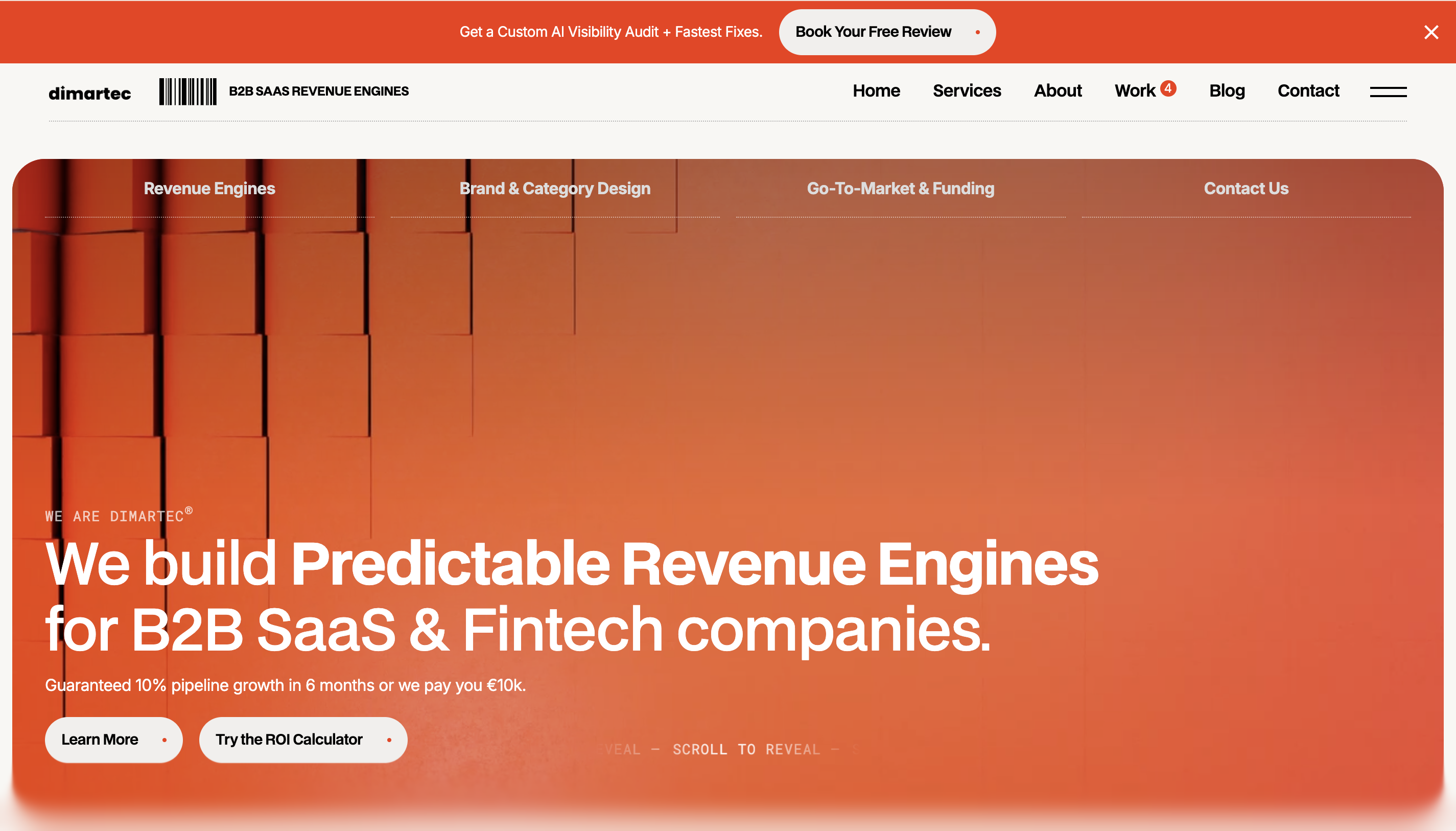
dimartec builds Revenue Engines for B2B SaaS and fintech companies. The five integrated services (Performance Paid Media, CRO, GEO, Lead Gen & Nurturing, and RevOps & Automation) are designed so that sales and marketing alignment is not an initiative layered on top of the system. It is the architectural requirement the system is built to satisfy.
Lead Gen & Nurturing and RevOps & Automation are the two services most directly relevant to the alignment problem. Lead Gen & Nurturing implements the shared qualification standard: the ICP definition that marketing and sales agreed on before any lead is routed is the same definition the lead scoring model uses to determine which contacts advance to the sales team. The criteria are not in a document. They are in the CRM routing logic. A contact that does not meet the agreed criteria does not reach a sales representative regardless of how engaged they appear in the marketing dashboard. This eliminates the primary source of the "marketing sends us garbage" problem: the leads that reach sales have already been filtered against the standard sales agreed to.
RevOps & Automation provides the shared data layer that makes both teams accountable to the same pipeline number. The attribution model connecting every marketing channel to closed-won revenue is the same model the sales team uses to understand which sources are producing their best deals. When both teams read the same attribution data, the "which channels work" disagreement disappears because both teams are answering the question from the same evidence.
The feedback loop is structural rather than procedural. When a sales rep disqualifies a lead, the rejection reason is captured in the CRM as a structured data field, not as a freetext note. Those rejection reasons are aggregated by Lead Gen & Nurturing to identify qualification model failures: if 40% of rejections in a given quarter cite "wrong company size," the ICP targeting is recalibrated before the next quarter's campaigns go live. The feedback does not require a meeting. It requires the right CRM fields, the right aggregation, and the right response.
GEO is relevant to the alignment problem in a specific 2026 way: when buyers arrive at the sales team having already researched the brand in ChatGPT or Perplexity and formed a prior positive impression, the quality of the discovery conversation improves and the sales cycle shortens. Building GEO alongside the alignment infrastructure ensures the leads entering the pipeline are pre-warmed, reducing the friction in the handoff conversation that misalignment typically amplifies.
If any of the following apply, dimartec is worth a conversation:
- The sales team is rejecting more than 30% of marketing-qualified leads, confirming that marketing and sales are working from different qualification standards
- Marketing and sales report different pipeline numbers to the board, and the reconciliation before the board meeting is manual and produces a negotiated number rather than a system-generated one
- Lead rejection reasons are not captured as structured data in the CRM, meaning the qualification model cannot be improved systematically from rejection evidence
- The brand does not appear in AI search answers to the category questions the ICP researches before engaging with sales
Key services
- Lead Gen & Nurturing: shared qualification standard implemented as CRM routing logic, not documented as a verbal agreement between teams
- RevOps & Automation: unified attribution connecting every marketing channel to closed-won ARR, creating the shared data layer both teams read from
- Performance Paid Media: acquisition targeting against the shared ICP definition, not against the marketing team's unilateral assumption about the right audience
- GEO: AI search visibility ensuring buyers arrive at the sales handoff with prior brand familiarity, reducing the discovery friction that misalignment amplifies
- CRO: conversion infrastructure collecting the qualification signals needed to route leads correctly before the sales team sees them
Why dimartec stands out for sales and marketing alignment
- Qualification standard is CRM-enforced rather than documented: the alignment cannot drift under quarterly pressure because it is not a process, it is a routing rule
- Rejection reason capture as structured CRM data creates the feedback loop that makes the qualification model self-improving rather than static
- Both teams read the same attribution model: the "which channels work" disagreement is eliminated because the answer comes from data both teams can see, not from each team's separate dashboard
- GEO builds the pre-awareness that improves handoff quality without requiring alignment effort
Best fit: Post-PMF B2B SaaS and fintech at €2M–€10M ARR where the alignment problem is structural and has persisted through multiple attempts at fixing it through process improvements, quarterly alignment workshops, and leadership conversations that produce agreement and no system change.
2. Winning by Design
Best for: B2B SaaS companies where the primary alignment failure is that marketing, sales, and customer success are each operating from different qualification frameworks and different lifecycle stage definitions, and where the fix requires a shared operating model that all three functions agree to before any CRM configuration begins
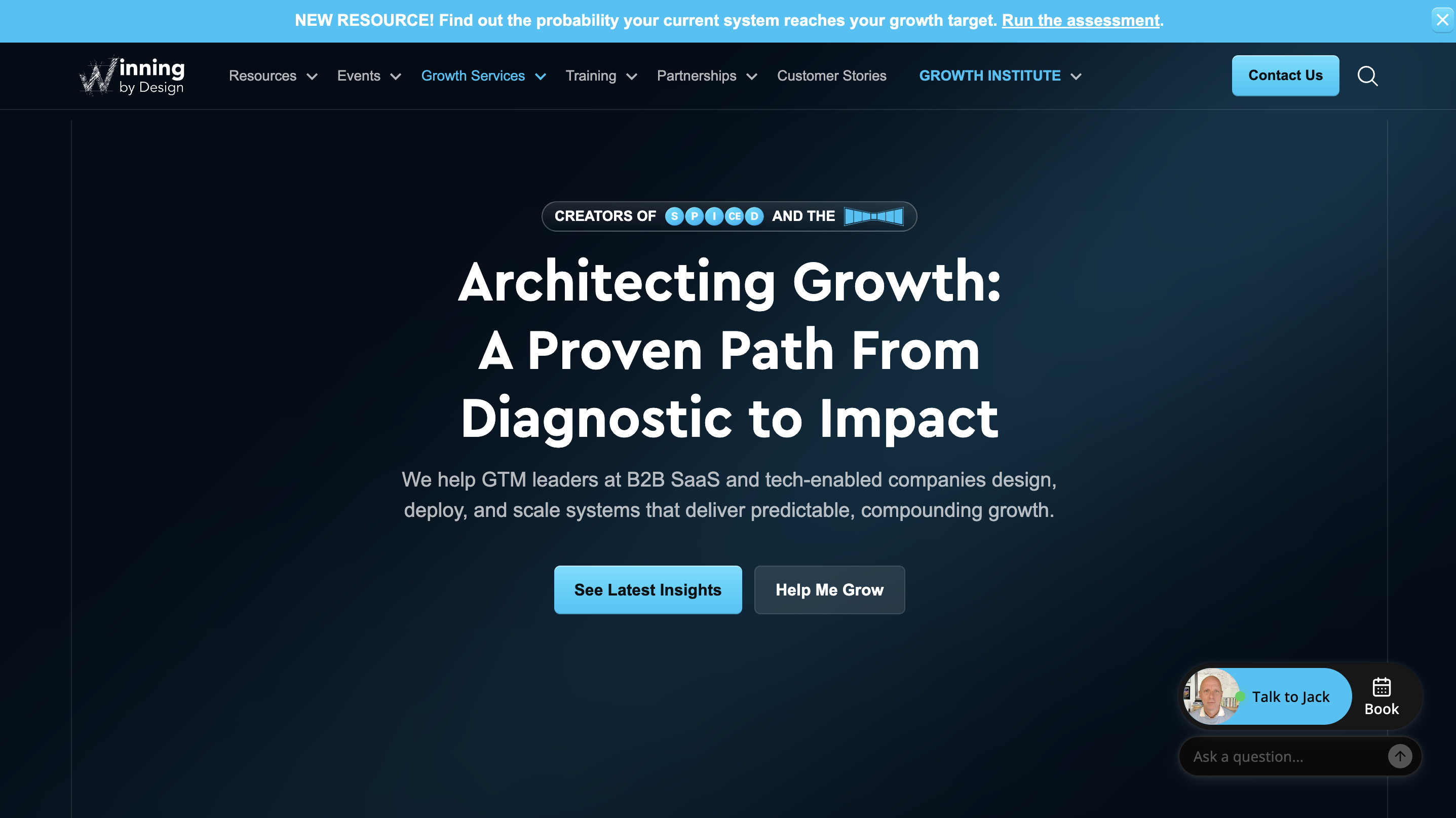
Winning by Design is a recurring revenue consultancy whose SPICED qualification framework and Bowtie Data Model are the most widely adopted approach to sales and marketing alignment in B2B SaaS. Their relevance to this article specifically is in the sequence of how they address the alignment problem: SPICED defines what "qualified" means across the full customer lifecycle before any CRM field is configured, and the Bowtie Data Model creates the shared pipeline definition that both marketing and sales measure against.
SPICED (Situation, Pain, Impact, Critical Event, Decision) eliminates the qualification standard mismatch by replacing each team's implicit criteria with one explicit framework applied consistently across marketing qualification, sales qualification, and customer success qualification. When a lead is called qualified in the SPICED framework, it has met the same criteria regardless of which team made the call. The CRM stage data becomes trustworthy because the entry criteria are no longer subject to individual interpretation.
The Bowtie Data Model extends alignment beyond the initial sale to include the expansion and retention stages. The 2026 alignment problem is not only about the marketing-to-sales handoff. It is about the full lifecycle handoff from marketing to sales to customer success, where misalignment at any handoff compounds into NRR below 110% and churn that marketing and sales each attribute to the other function's failures. Winning by Design builds alignment across all three handoffs simultaneously.
Their Revenue Academy transfers the SPICED and Bowtie frameworks to the internal teams during the engagement, ensuring the alignment operates after the agency relationship ends rather than requiring ongoing consultancy to maintain.
Key services
- SPICED qualification framework: shared qualification criteria replacing each function's implicit standards with one explicit definition
- Bowtie Data Model: full-lifecycle alignment across marketing-to-sales and sales-to-CS handoffs
- Lifecycle stage definition: agreed entry and exit criteria for every pipeline stage before CRM configuration begins
- Revenue Academy: in-house framework transfer ensuring the alignment framework operates without agency dependency
- Sales-CS alignment: expansion revenue architecture connecting the post-sale alignment component to NRR outcomes
Why Winning by Design stands out for sales and marketing alignment
- SPICED creates the shared qualification language that eliminates the most common source of the "marketing sends garbage" and "sales does not work leads" dynamic: the absence of a single agreed definition of qualified
- Bowtie addresses the full lifecycle alignment failure, not only the marketing-to-sales handoff that most alignment programmes stop at
- Revenue Academy prevents the alignment from reverting when the engagement ends by transferring framework ownership to the internal teams
- Documented adoption across hundreds of B2B SaaS organisations provides evidence that SPICED and Bowtie hold across different company sizes, sales motions, and growth stages
Best fit: Series A through mid-market B2B SaaS where the qualification standard mismatch and lifecycle stage disagreement exist across all three revenue functions simultaneously, and where the fix requires an organisational framework adopted by all three functions before any technology configuration makes the misalignment harder to change.
3. The Smarketers
Best for: B2B SaaS companies where the qualification handoff has never been formally designed: marketing and sales are each applying their own unofficial interpretation of what qualified means, and the revenue impact of this gap is visible in the lead rejection rate and the pipeline-to-close conversion rate but the root cause has never been addressed at the process level
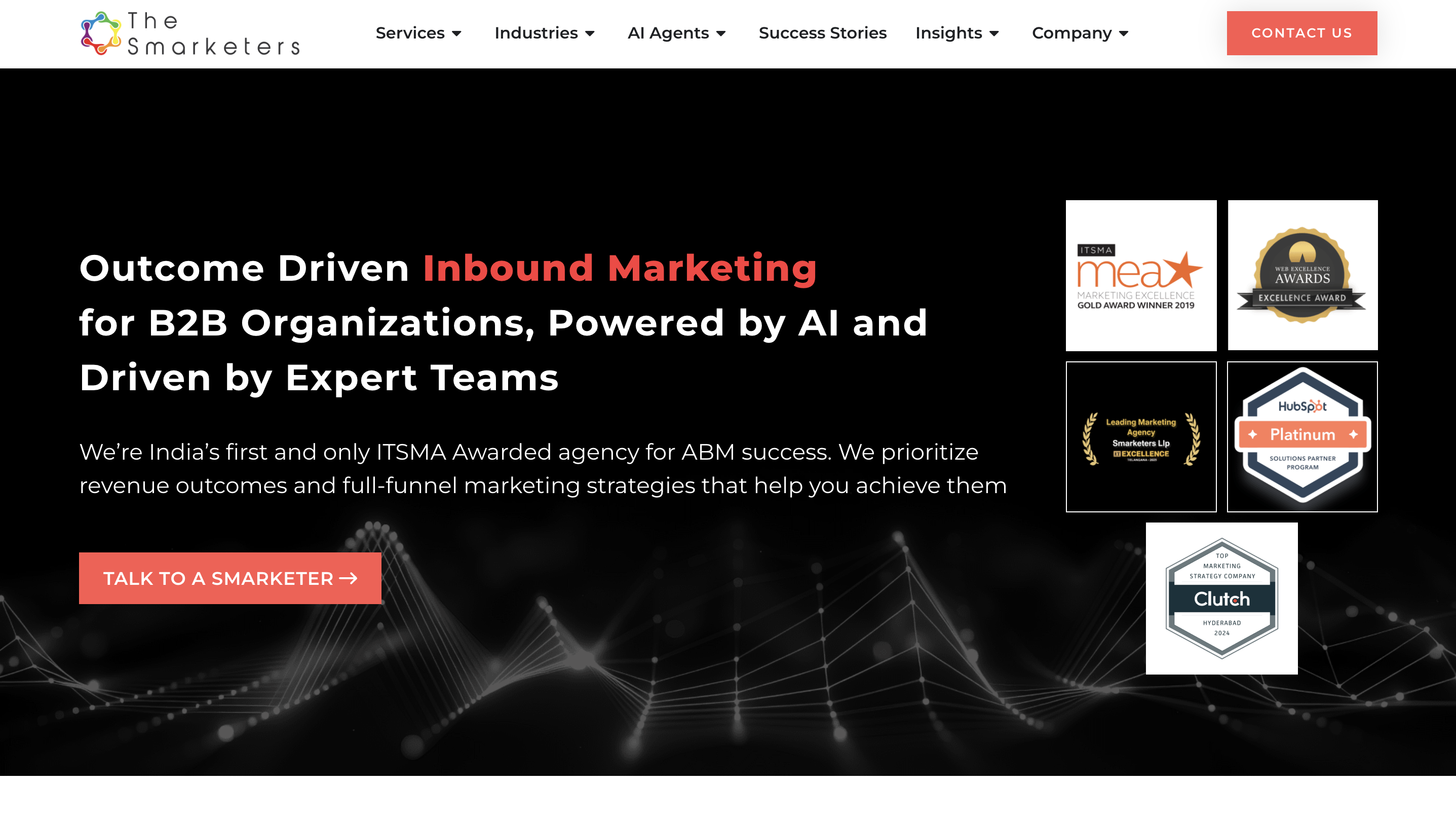
The Smarketers is a B2B marketing and RevOps agency whose methodology explicitly identifies three shapes of alignment failure and builds the response around the specific shape that applies. They distinguish between systems problems (the technology does not enable alignment), process problems (the operating model has not been designed to produce alignment), and measurement problems (both teams are measured against metrics that incentivise misalignment). Most alignment engagements address the systems problem while the process and measurement problems persist.
Their process-led approach starts with a structured documentation and reconciliation exercise: every current lead qualification criterion used by marketing and every rejection criterion applied by sales is documented, compared, and reconciled into one shared standard before any CRM field is created or any routing rule is written. The frequency with which this exercise produces the finding that marketing and sales were using the same word for different concepts (both teams called a contact "qualified" but meant different things) is the best evidence that the process problem is the primary one.
Their demand programme integration capability means the alignment framework they build is tested against the live demand generation programme from the first month: qualification model performance is measured in real-time against actual lead flow rather than against hypothetical scenarios, enabling faster recalibration when the agreed standard does not perform as expected in practice.
Key services
- Process-led alignment methodology: qualification criteria documentation and reconciliation before any technology configuration
- Operating model rebuild for marketing and sales handoff: formal handoff design with documented entry criteria, routing logic, and SLA timelines
- Measurement model redesign: shared revenue metrics replacing team-level proxy metrics for both functions
- Demand programme integration: alignment framework tested against live lead flow from the first month
- Pipeline velocity tracking: stage-by-stage conversion monitoring showing where alignment failures are appearing in near-real-time
Why The Smarketers stand out for sales and marketing alignment
- Process-before-technology sequence addresses the alignment failure that most RevOps engagements miss: the CRM is configured before the alignment criteria are agreed, producing a system that enforces the wrong definition efficiently
- Real-time demand programme integration means alignment performance is measured against actual lead data rather than against workshop outputs, enabling faster detection and correction of qualification model failures
- Explicit methodology for distinguishing systems, process, and measurement alignment failures: the engagement addresses the correct root cause rather than the most visible symptom
- Structured rejection reason capture as a core output: the mutual feedback loop that makes the qualification model self-improving is built into the engagement rather than added as a future phase
Best fit: B2B SaaS companies where multiple previous attempts at sales-marketing alignment have produced documentation, workshops, and temporary improvement followed by reversion, and where the primary failure mode is a process that was never formally designed rather than a technology that was never correctly configured.
4. GrowthSpree
Best for: Series A–C B2B SaaS where the alignment failure is rooted in attribution blindness: marketing and sales are working from incompatible data because the attribution model does not connect campaign performance to pipeline quality, and both teams are drawing correct conclusions from incomplete information
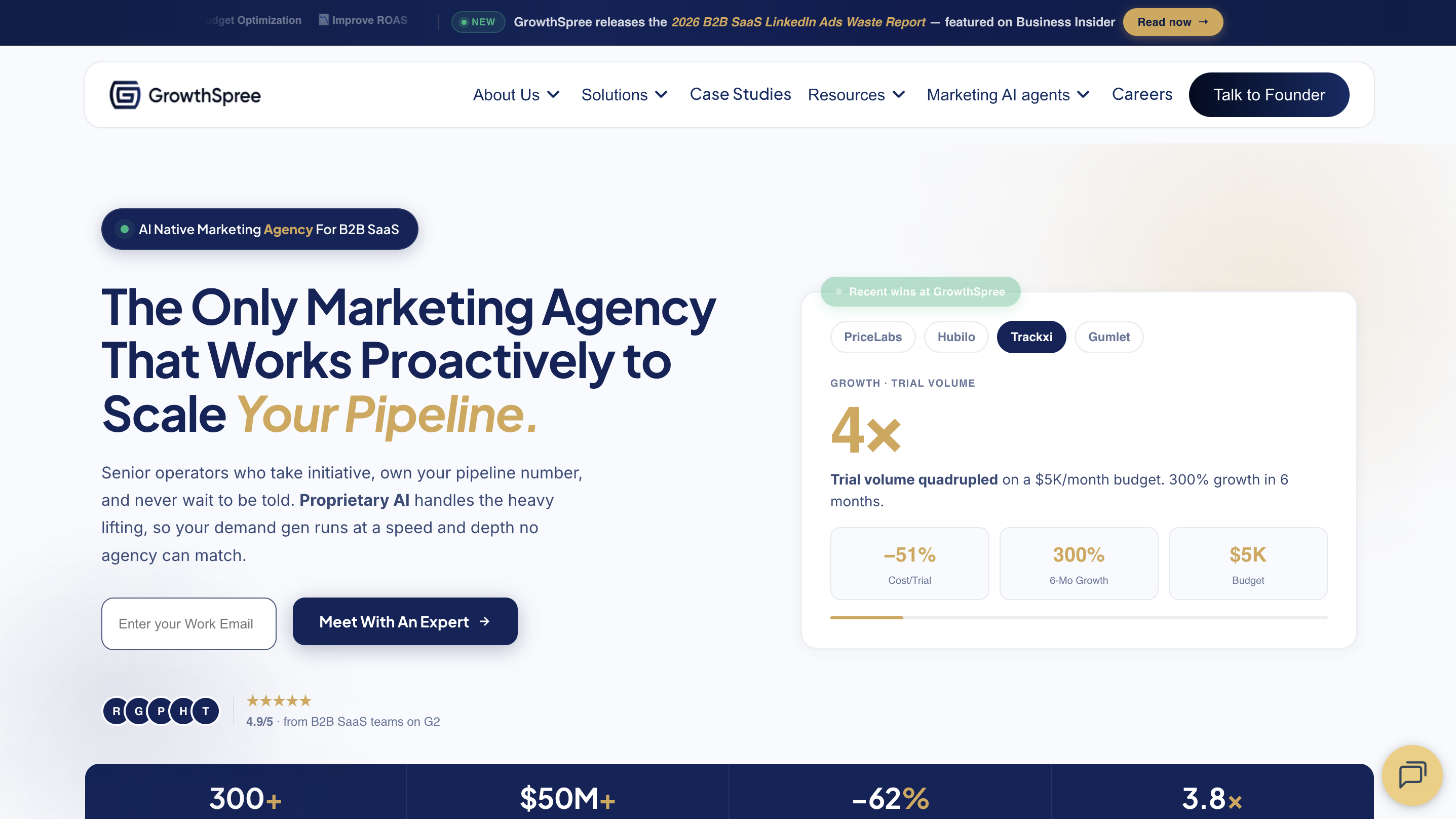
GrowthSpree is an AI-native demand generation and GTM agency. Their specific relevance to sales and marketing alignment is in the attribution infrastructure they deploy, which addresses the specific alignment failure that process workshops cannot fix: the disagreement between marketing and sales about which channels, campaigns, and activities are producing the pipeline that actually closes.
When marketing's attribution model stops at form submission and sales' pipeline view starts at SQL creation, there is a systematic data gap between the two views of the same funnel. Marketing sees campaigns producing leads. Sales sees leads arriving without context about how they were generated or why they were expected to be ready for a conversation. Both teams are working correctly within their data environment. The misalignment is not attitudinal. It is architectural.
GrowthSpree's Model Context Protocol (MCP) infrastructure connects Google Ads, LinkedIn Ads, Meta, HubSpot, GA4, and Search Console into a unified pipeline attribution layer that both teams read from. When a sales rep opens a new lead in HubSpot, the MCP attribution shows which campaigns influenced that contact, at what stages of their engagement journey, and how similar contacts from the same source have historically performed in the pipeline. Marketing can see which campaigns are producing leads that sales advances and which are producing leads that sales rejects. The mutual feedback loop is structural because the data that enables it is the same data both teams already use.
Their Qualified Lead Architecture (QLA) trains paid optimisation against closed-won CRM signals, which directly addresses the ICP drift problem that misalignment compounds: as the qualification standard drifts between teams, the paid campaigns continue targeting audiences that were correct when the ICP was last defined and are increasingly misaligned with what sales actually closes.
Key services
- MCP attribution: unified pipeline reporting both teams read from, connecting campaign performance to SQL conversion and closed revenue
- QLA: paid optimisation against closed-won CRM signals, keeping the acquisition targeting calibrated to the ICP that sales is actually closing
- Signal-based ABM: account-level engagement data visible to both marketing and sales, creating a shared account intelligence layer
- GEO in standard engagements: AI search visibility building the pre-awareness that improves lead quality before it reaches the qualification handoff
- Flat retainer with month-to-month contracts
Why GrowthSpree stands out for sales and marketing alignment
- MCP attribution closes the data gap that produces the most common form of sales-marketing disagreement: incompatible views of the same funnel drawn from different data sources
- QLA prevents the ICP drift that misalignment accelerates: as qualification standards diverge between teams, the acquisition targeting recalibrates against what actually closes rather than against what both teams last agreed was the ICP
- Account-level engagement data visible to both teams eliminates the "sales is not following up" and "marketing is not sending us ready accounts" dynamic by giving both teams visibility into where each account stands in the pipeline
- Flat retainer removes the incentive for the agency to generate MQL volume at the expense of SQL quality, keeping the programme accountable to the alignment metric that matters
Best fit: Series A–C B2B SaaS at €2M–€20M ARR where marketing and sales are reporting genuine disagreement about which channels and activities are producing useful pipeline, and where the root cause is that each team is reading from a different data source rather than from a shared attribution model.
5. Six & Flow
Best for: B2B SaaS on HubSpot that have reached agreement on the alignment framework in principle but need the agreed standards implemented and enforced in HubSpot, with lifecycle definitions, routing automation, and shared pipeline reporting built and maintained by a HubSpot Elite Partner
Six & Flow is a HubSpot Elite Partner agency specialising in RevOps implementation and marketing operations. Their relevance to sales and marketing alignment is in the implementation gap that most alignment engagements leave open: the workshop produced an agreed framework, the shared definitions were documented, and the shared metrics were accepted. Nobody built it in HubSpot. Three months later the alignment is still aspirational because the routing logic is still manual and the lifecycle stage definitions are still a Google Doc rather than a CRM configuration.
Six & Flow implements the agreed alignment framework in HubSpot with specific attention to the three technical components that determine whether alignment holds or drifts: lifecycle stage automation that advances contacts based on agreed criteria rather than manual rep updates, lead routing logic that directs contacts to the correct sales owner with the correct qualification context attached, and shared pipeline reporting that both teams can access without a manual export or a separate analytics tool.
Their RevOps-first approach to implementation means the design of the HubSpot configuration reflects the alignment outcome rather than the default HubSpot setup that most implementations produce. The CRM is configured to enforce the shared standards rather than to accommodate whatever workflow each team was already using. This distinction is the difference between a HubSpot instance that enables alignment and one that merely enables both teams to record their activities in the same tool.
Key services
- HubSpot lifecycle stage automation: advancing contacts based on agreed qualification criteria rather than manual rep updates
- Lead routing implementation: automation directing leads to the correct sales owner with qualification context attached
- Shared pipeline reporting in HubSpot: both teams accessing the same pipeline data without manual aggregation
- Marketing-to-sales handoff automation: confirmation, context delivery, and SLA tracking built into HubSpot workflows
- Marketing and sales operations unified on HubSpot: one platform, one configuration, no reconciliation required
Why Six & Flow stands out for sales and marketing alignment
- HubSpot Elite Partner status provides the implementation depth to build the routing, lifecycle, and reporting configuration that makes agreed alignment framework operational rather than aspirational
- RevOps-first configuration design ensures HubSpot reflects the alignment outcome rather than each team's existing workflow
- Lifecycle stage automation is the specific technical component that prevents qualification standards from drifting: the CRM enforces the standard the teams agreed on rather than recording whatever each rep decides to enter
- Shared pipeline reporting eliminates the "different dashboards producing different numbers" problem that is both a symptom and a cause of ongoing misalignment
Best fit: B2B SaaS companies on HubSpot that have completed the conceptual alignment work (agreed qualification criteria, documented handoff logic, accepted shared metrics) and need a technical implementation partner to build those agreements into HubSpot before the next quarterly planning cycle provides an opportunity to revert.
Why dimartec Addresses Sales and Marketing Alignment Differently
Every agency on this list addresses a dimension of the alignment problem. Winning by Design creates the shared qualification language that eliminates the most fundamental source of misalignment. The Smarketers rebuilds the process before configuring the technology, addressing the root cause that most alignment engagements mistake for a symptom. GrowthSpree closes the attribution data gap that produces incompatible pipeline views. Six & Flow implements agreed alignment frameworks in HubSpot before they drift back to aspiration.
Each of them builds the alignment layer within their scope. None of them owns the acquisition layer feeding the qualification handoff, the conversion layer determining what quality of lead arrives at the handoff, or the attribution layer that connects every campaign to the closed deal it eventually produced. When the alignment framework is built by one agency and the paid campaigns driving leads into it are managed by a different team with a different ICP definition, the framework is technically correct and strategically misaligned. The qualification standard the CRM enforces does not match the intent the campaigns are generating.
dimartec builds the acquisition, conversion, qualification, and attribution layers as one system. The ICP definition the paid campaigns target is the same one the lead scoring model routes against. The qualification standard that Lead Gen & Nurturing enforces is the same one RevOps & Automation attributes to the pipeline that closed. When both teams read the same attribution model and the routing logic enforces a standard both teams agreed on before any lead was sent, alignment is the architectural output of the system rather than an ongoing management effort to prevent it from drifting.
See how the Revenue Engine works: https://www.dimartec.co.uk/services/revenue-engine
How to Choose the Right Agency for Sales and Marketing Alignment
Identify which of the three alignment failures is primary
Systems problems (technology does not enable alignment), process problems (the operating model was never designed to produce alignment), and measurement problems (both teams are incentivised by metrics that reward misalignment) each require a different agency type. Six & Flow addresses the systems problem. The Smarketers addresses the process problem. Winning by Design addresses the organisational framework that produces all three. GrowthSpree addresses the data problem that makes attribution-based alignment possible. dimartec addresses all of them simultaneously within the Revenue Engine.
Require CRM enforcement as a non-negotiable output
Any alignment engagement that does not produce a CRM-enforced qualification standard and CRM-enforced routing logic will produce alignment that reverts within one quarter. Ask any agency you evaluate: what is in the CRM at the end of the engagement that prevents the qualification standard from being overridden by individual rep judgement? If the answer describes a documented process or a training programme rather than a routing rule, the alignment is aspirational rather than structural.
Build the feedback loop into the specification
The qualification model that marketing and sales agree on at the start of the engagement will be wrong in ways neither team can predict before seeing real lead data. The most valuable RevOps output for long-term alignment is not the initial qualification framework. It is the feedback loop that makes the framework self-correcting: structured rejection reason capture, regular rejection pattern analysis, and a formal process for updating the qualification model based on what the data shows rather than on what the teams remember agreeing to.
Frequently Asked Questions
Why do sales and marketing alignment initiatives keep failing?
Most alignment initiatives fail because they address the symptom (teams disagreeing) rather than the cause (teams operating from different definitions and incentivised by different metrics). A quarterly alignment meeting where both teams agree to work better together does not change the CRM routing logic that passes wrong-fit leads to sales or the measurement model that rewards marketing for MQL volume regardless of SQL conversion. Alignment holds when the system enforces it, not when the teams commit to it.
What shared metrics actually produce alignment?
Cost per SQL (not cost per lead) forces marketing to optimise for qualification quality. MQL-to-SQL conversion rate (target 25 to 40% in 2026 according to Varos benchmarks) holds marketing accountable for the quality of what it passes to sales. Pipeline velocity measures how quickly opportunities advance through the stages both teams defined, attributing slowdowns to the specific stage where they occur. Revenue influenced measures marketing's contribution to closed deals regardless of which team generated the original lead. When both teams are measured against these four metrics alongside their own function-level indicators, the incentive to optimise individually at the expense of the shared outcome disappears.
What is the most common source of the "marketing sends garbage, sales does not follow up" cycle?
The most common source is the absence of a structured rejection reason process. When sales rejects a marketing-qualified lead, the rejection typically produces a note in the CRM that reads "not a fit" or produces no data at all. Marketing has no systematic view of why sales is rejecting leads, so the qualification model is never updated from rejection evidence. The cycle continues because neither team has the data to understand what the other is experiencing. Building structured rejection reason capture into the CRM creates the mutual visibility that breaks the cycle.
Build Alignment That Holds
Sales and marketing alignment is not a team dynamic problem. It is a system design problem. The 8% of B2B companies with strong alignment between sales and marketing are not better communicators. They have better infrastructure: one shared pipeline definition enforced in the CRM, one shared attribution model both teams read from, one feedback loop that makes the qualification model self-correcting, and one set of shared metrics that removes the incentive to optimise individually at the expense of the combined result.
The Revenue Engine connects Performance Paid Media, CRO, GEO, Lead Gen & Nurturing, and RevOps & Automation into one system so the alignment is the architectural output rather than the management initiative, the qualification standard is enforced by routing logic rather than by quarterly workshops, and the attribution model gives both teams the same answer to the question both are asking: which activities are producing the pipeline that closes.
See how the Revenue Engine works: https://www.dimartec.co.uk/services/revenue-engine



.png)

















































.png)
.png)
.png)
.png)
.png)
.png)
.png)
.png)
.png)
.png)