Every B2B SaaS company has a pipeline figure that looks healthier than the business feels. The CRM shows three or four times next quarter's target in open opportunities. The forecast call goes smoothly. Then the quarter unfolds, deals slip one by one, a handful are quietly marked closed-lost for reasons nobody can quite explain, and the company finishes well short of a number that seemed safe in week two.
The gap is rarely the sales team's fault. It forms much earlier, at the point where an opportunity was created. A contact who had shown some interest was converted into a deal record, given a value based on the list price, and placed in a stage. Nobody checked whether the company had a budget this year, whether the person had any influence over the purchase, or whether anyone else in the buying group even knew the conversation was happening. The pipeline was full of possibilities recorded as if they were commitments.
After analysing pipeline composition across more than 200 B2B SaaS accounts, the difference between companies that forecast accurately and those that miss is less about how many opportunities they create than about how many of those opportunities meet a real standard when they enter the pipeline. Lead generation shapes that standard more than any other function, because it decides which accounts, which people, and which conversations reach sales in the first place.
This guide looks at five lead generation companies through that lens. The question is not how many leads or meetings each produces, but how much of what it produces survives contact with a sales cycle and turns into pipeline a revenue leader can forecast against.
What Makes Pipeline Qualified
A qualified lead is a judgement about a person. Qualified pipeline is a judgement about a deal. The difference matters, because a company can have plenty of the first and very little of the second.
An opportunity earns its place in the pipeline when four things are true about it.
The account fits. The company is the right size, in the right sector, with the problem the product solves and the means to pay for it. This sounds obvious, yet many pipelines carry deals from accounts that would never have passed a careful look at the ideal customer profile.
There is a reason to buy now. A project has been approved, a contract with a competitor is ending, a regulation is coming into force, or a new leader has been hired to fix something. Without a reason tied to time, interest stays interest, and the deal drifts from quarter to quarter.
More than one person is involved. B2B software is rarely bought by one individual. An opportunity with a single enthusiastic contact and no sign of the rest of the buying group is fragile, however keen that contact is.
The value is realistic. The figure in the CRM reflects what this account would actually spend, not the list price of the largest plan. Inflated values make a pipeline look three times healthier than it is.
Lead generation decides whether those four conditions are likely to hold before a single sales call. It chooses which accounts are approached, what signals are looked for, whose attention is sought, and what is promised in the first conversation.
Why Most Lead Generation Produces Unqualified Pipeline
Nobody sets out to fill a CRM with deals that will never close. The pattern comes from how lead generation is usually bought and measured.
Success is counted too early. Contracts reward leads delivered, meetings booked, or opportunities created. Each of those is counted the moment it happens, weeks or months before anyone knows whether it will turn into revenue. A supplier can hit every target while the sales team closes almost nothing from its work.
Interest is mistaken for intent. Someone who downloads a report, attends a webinar, or accepts a meeting out of curiosity is interested. That is not the same as having a problem to solve this year and the authority to solve it. Programmes optimised for volume naturally collect the interested, because there are far more of them.
One contact stands in for an account. Outreach finds a willing person and books a call. The person likes the product and an opportunity is opened. Months later the deal stalls because finance, IT, or the actual budget holder was never involved and has different priorities.
The meeting is sold before the problem is understood. To book a meeting, outbound and paid campaigns often promise something generic: a quick demo, a free audit, a short chat. The conversation that follows starts from nothing, and the opportunity created from it carries an optimistic stage and value that nobody has tested.
The five companies below each tackle at least one of these causes directly. That, rather than volume, is why they made the list.
How We Chose These Companies
- Pipeline as the measure: Does the company describe its success in terms of pipeline or revenue, not leads or meetings alone?
- Account focus: Does it choose and engage accounts deliberately, or work through large lists?
- Buying group coverage: Does it reach more than one person per account?
- Timing and intent: Does it look for signs that an account is ready to buy, or approach everyone the same way?
- Evidence: Are there named clients, published methods, or documented results?
The five represent different routes to the same goal: strategy, demand creation, account-based marketing, outbound, and an integrated system. Each profile is clear about which route it takes and when that route is the wrong one.
The 5 Best B2B SaaS Lead Generation Companies for Qualified Pipeline
1. dimartec
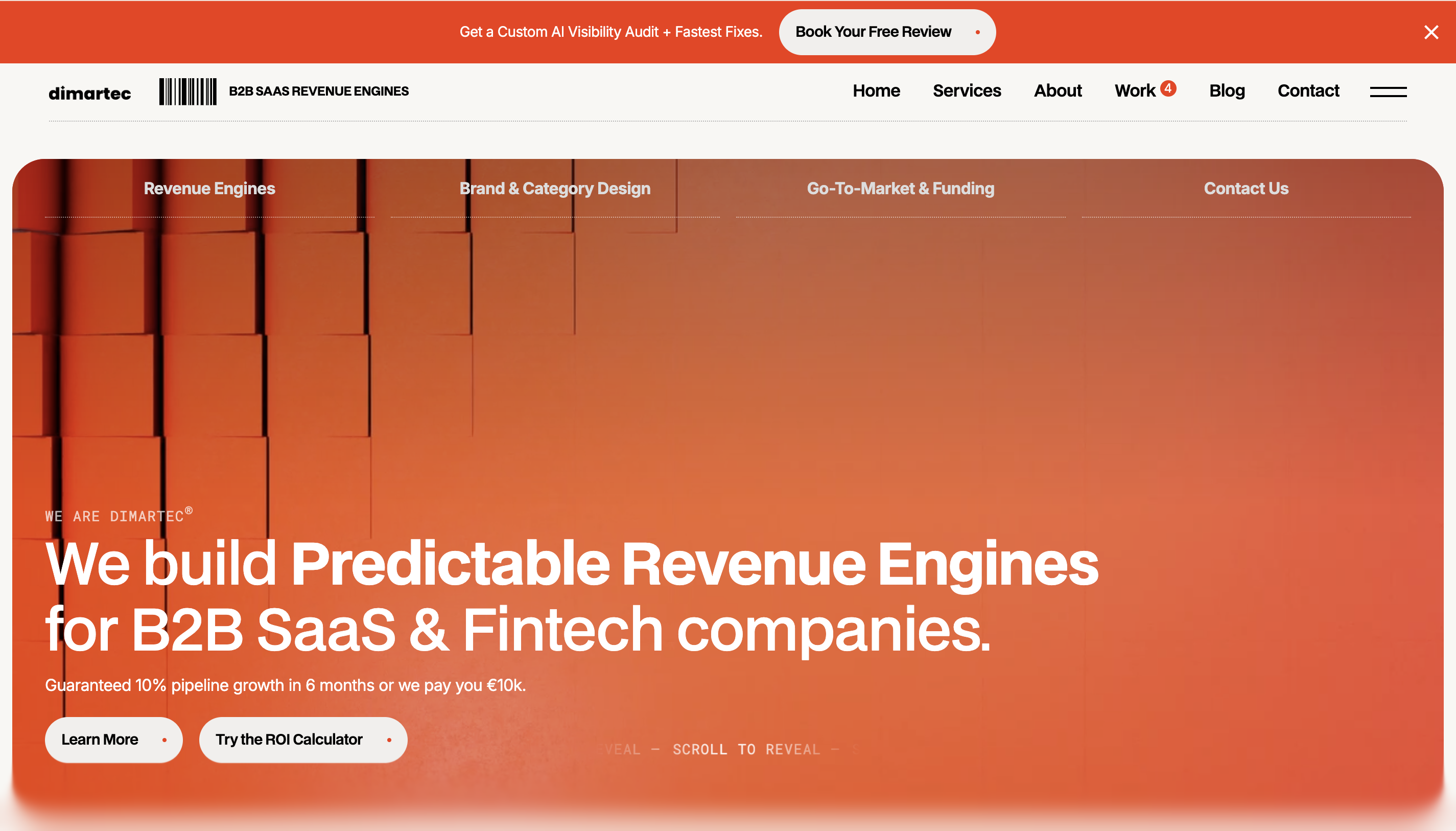
Best for: Post-PMF B2B SaaS and fintech at €2M–€10M ARR whose pipeline looks large enough on paper but converts to revenue far below what the forecast assumes
dimartec builds Revenue Engines for B2B SaaS and fintech companies. Lead Gen & Nurturing is one of five integrated services, alongside Performance Paid Media, CRO, GEO, and RevOps & Automation. Pipeline quality is decided by all five together, which is why they are built as one programme.
The work begins with the deals that closed and the ones that were lost. Patterns in account type, buying trigger, roles involved, and deal size become the targeting for paid campaigns and the criteria in the lead scoring model. Lead Gen & Nurturing then applies those criteria before an opportunity is opened: accounts are checked for fit, for signs of timing, and for involvement beyond a single contact. Prospects that fit but are not ready are nurtured instead of being placed in the pipeline early.
RevOps & Automation enforces the rules in the CRM, so an opportunity cannot be created without the information that makes it credible, and reports how each source performs from opportunity through to closed revenue. CRO shapes forms and pages to capture the details qualification needs. GEO brings in buyers who have already researched the category in AI search tools and tend to arrive later in their thinking.
The result is a pipeline built to a standard set by real wins, and a forecast that rests on deals with evidence behind them.
dimartec fits when:
- Pipeline coverage looks comfortable but the quarter is missed anyway
- A large share of opportunities close as lost with reasons like "no decision" or "timing"
- Opportunity values are set at list price instead of what the account would realistically spend
- Nobody can say which lead sources produce deals that close, as opposed to deals that are opened
Key services
- Lead Gen & Nurturing: qualification built from won and lost deals, with nurture for accounts not yet ready
- RevOps & Automation: CRM rules for opportunity creation and reporting by source through to revenue
- Performance Paid Media: targeting aimed at the account profiles and triggers behind closed deals
- CRO: pages and forms that collect the information qualification relies on
- GEO: AI search visibility that brings in better-informed buyers
Why dimartec stands out for qualified pipeline
- Qualification standards come from deal outcomes, not assumptions
- The CRM enforces those standards when opportunities are created
- Every source is measured on closed revenue, not opportunities opened
- Built for the €2M–€10M ARR stage and handed to the client's team
Best fit: Post-PMF B2B SaaS and fintech companies at €2M–€10M ARR whose forecasts keep proving optimistic, and who want the cause fixed at the point where pipeline is created.
2. Heinz Marketing
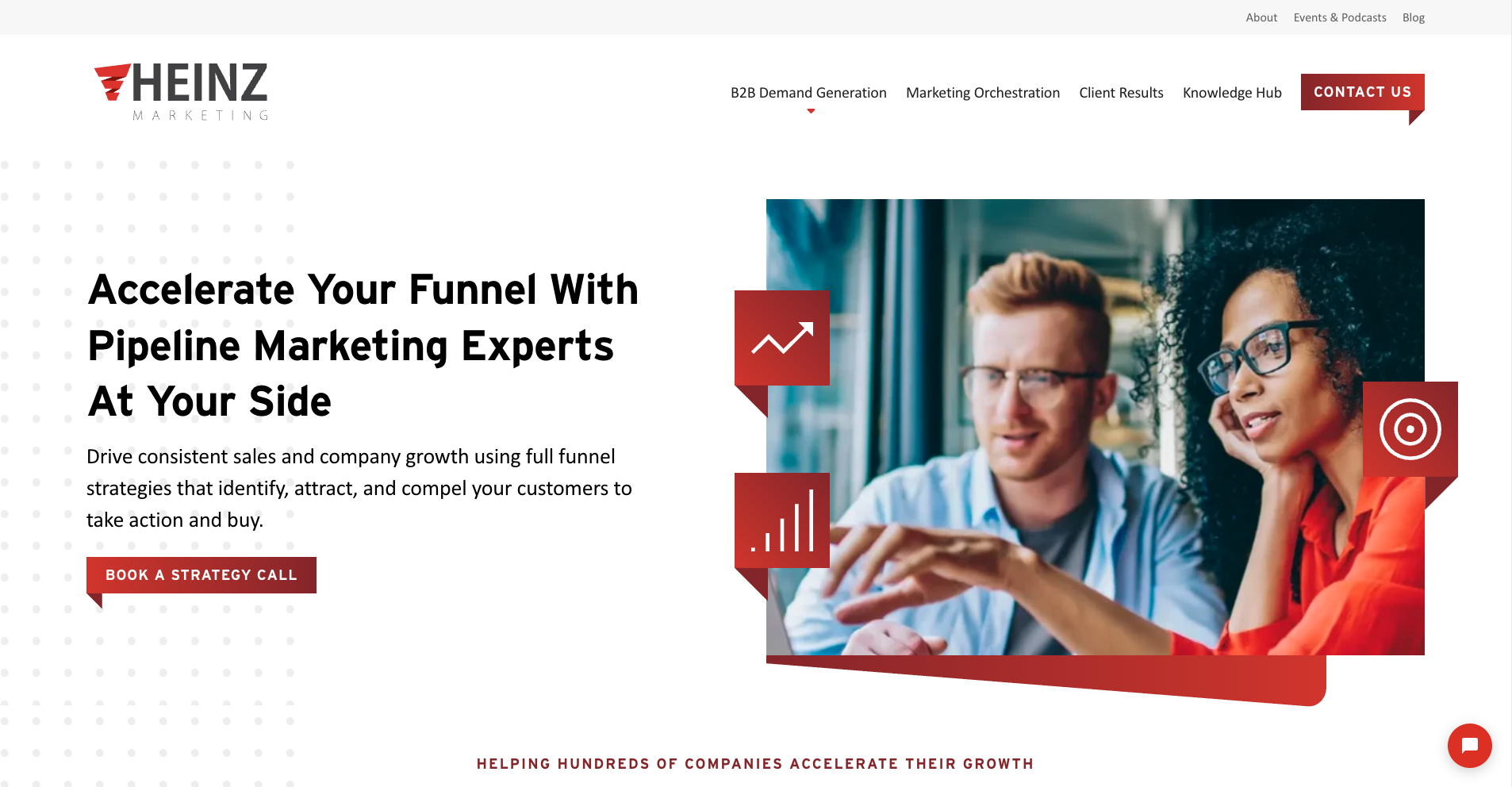
Best for: B2B SaaS companies that need an experienced outside view of where their pipeline is breaking and a structured plan to fix it
Heinz Marketing is a B2B marketing and demand generation consultancy in Redmond, Washington, founded in 2008 by Matt Heinz. It is best known for its Predictable Pipeline methodology, a structured approach to diagnosing gaps in go-to-market strategy and improving how pipeline is created, converted, and moved forward.
That focus suits companies whose pipeline problem is not obvious. Sometimes the issue is targeting, sometimes the handover between marketing and sales, sometimes a sales process that lets weak deals linger. Heinz Marketing starts by working out which, then builds and runs the programmes needed to correct it, from messaging and campaigns to lead scoring and marketing operations.
Its services span demand generation strategy, account-based marketing, sales and marketing alignment, content, and marketing technology advice. Matt Heinz is a widely published author and speaker on B2B pipeline, and the firm's thinking is well documented.
The firm is a consultancy at heart. Companies needing large-scale execution capacity, such as a big paid media programme or an outbound team, may need additional partners.
Key services
- Predictable Pipeline diagnosis and planning
- Demand generation strategy and campaigns
- Account-based marketing programmes
- Lead scoring and marketing operations
- Sales and marketing alignment
Why Heinz Marketing stands out for qualified pipeline
- A named method built around pipeline creation, conversion, and velocity
- Diagnosis before activity, which suits unclear problems
- Long experience with B2B technology companies
- Covers both strategy and programme execution
Best fit: SaaS companies with an underperforming pipeline and no clear explanation why. Less suited to companies that already know the fix and need volume execution.
3. Refine Labs
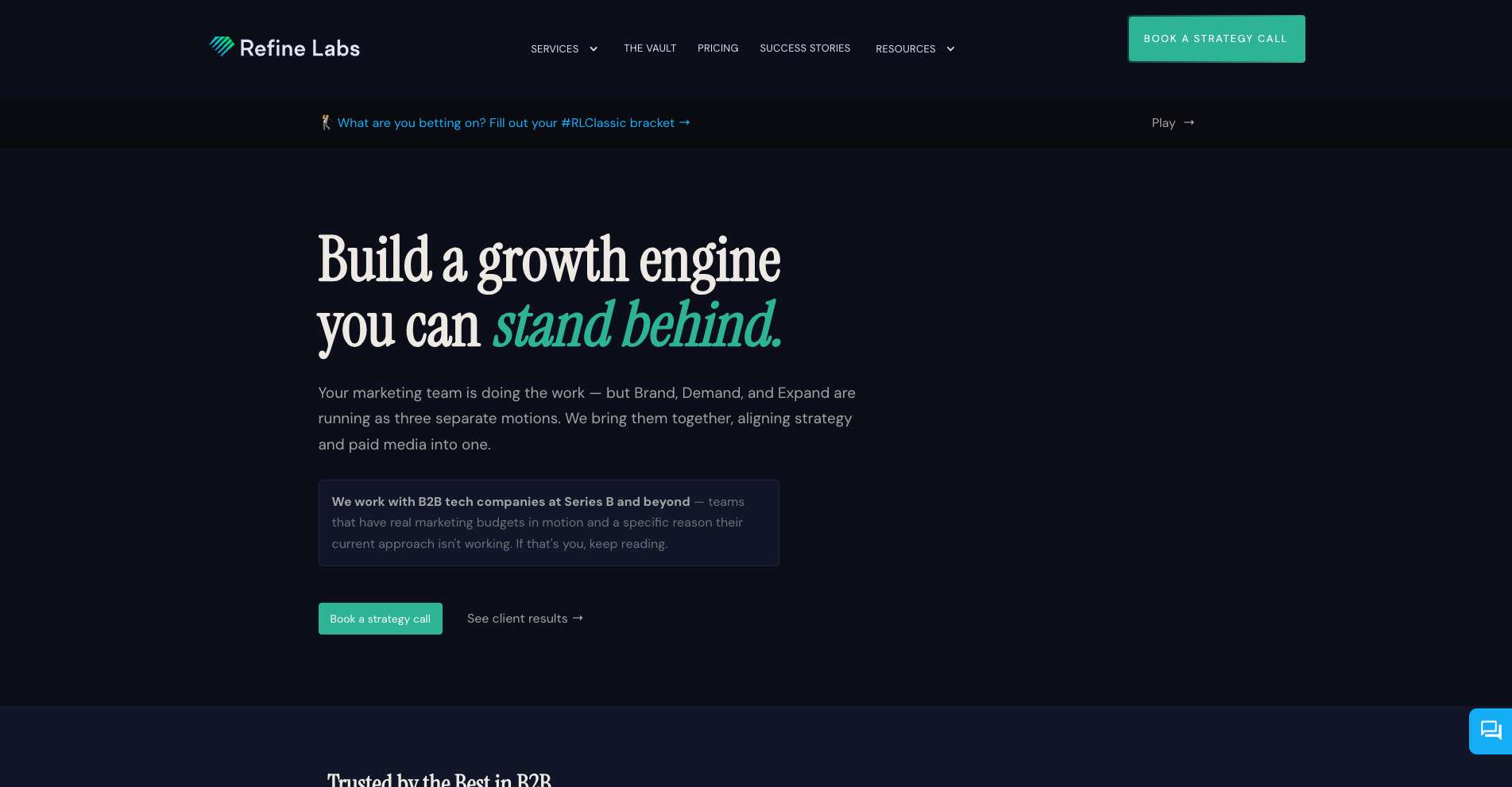
Best for: Mid-market and larger SaaS companies willing to invest in creating demand so that buyers arrive further along before sales ever speaks to them
Refine Labs is a Boston agency founded in 2018 that popularised the idea that B2B companies should stop chasing lead volume and start creating demand. Now led by CEO Megan Bowen, it reports more than 300 B2B SaaS clients. Its programmes combine content, paid social, and paid search to build familiarity and intent among the right audience, and it publishes extensively on buyer behaviour and attribution.
The link to qualified pipeline is indirect but powerful. When buyers have encountered a company's ideas repeatedly before they reach out, they tend to arrive with a clearer problem, a shortlist already formed, and a reason to act. The opportunities they create are more likely to meet the standards set out above. Refine Labs also measures through self-reported attribution, asking buyers how they heard about a company, which captures influence that click-based tracking misses.
The approach takes time. Independent reviews describe it as a six- to twelve-month investment before pipeline figures move, and pricing guides place engagements at around $20,000 a month or more. It is best suited to companies with the budget and patience for that horizon.
Key services
- Demand creation strategy
- Content and paid social distribution
- Paid search for demand capture
- Self-reported attribution
- Revenue and pipeline assessments
Why Refine Labs stands out for qualified pipeline
- Buyers arrive with intent already formed, improving deal quality at entry
- Measurement designed to capture influence beyond the click
- Extensive experience across B2B SaaS
- A clear, well-documented philosophy
Best fit: Larger SaaS companies with long sales cycles and the budget to invest for two or three quarters. Smaller companies needing pipeline this quarter should look elsewhere first.
4. FullFunnel.io
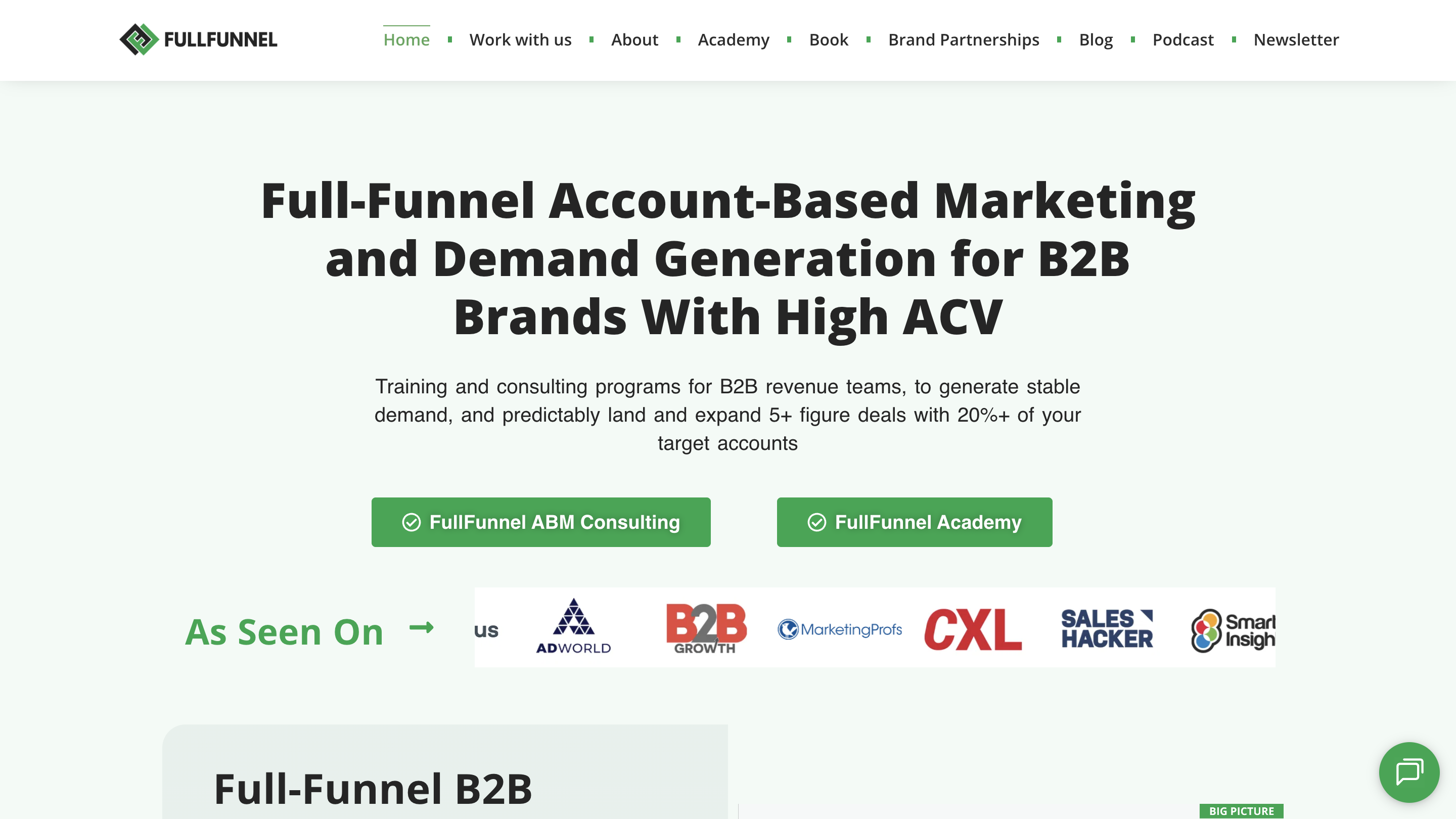
Best for: SaaS companies selling high-value contracts over long cycles to a defined list of target accounts
FullFunnel.io is a go-to-market and RevOps firm specialising in full-funnel account-based marketing for B2B companies with large deal sizes, long sales cycles, and complex buying groups. It is a HubSpot Platinum partner and publishes a widely read newsletter on account-based marketing.
Account-based marketing addresses the buying group problem directly. Instead of chasing individuals, the programme chooses a limited set of accounts, maps the people involved in a purchase at each, and engages them across channels over time. Pipeline is judged at account level: how many of the right people are engaged, and whether the account is moving towards a decision. An opportunity created this way is far less likely to depend on a single contact.
In one published case, FullFunnel.io helped a lean three-person team improve pipeline coverage by concentrating on 60 strategic accounts instead of hundreds. Its work combines ABM strategy with the RevOps and HubSpot set-up needed to track account engagement.
Account-based marketing suits a particular sales model. Products with low prices, short cycles, or very large target markets will not benefit in the same way.
Key services
- Full-funnel account-based marketing
- Buying group mapping and engagement
- Account-level pipeline reporting
- HubSpot and RevOps set-up
- Sales outreach support for target accounts
Why FullFunnel.io stands out for qualified pipeline
- Engages whole buying groups, not single contacts
- Measures pipeline at account level
- Focus on concentrated, high-value account lists
- Combines ABM with the systems to track it
Best fit: High-ACV SaaS companies with a known list of target accounts. Not suited to high-volume, low-price sales motions.
5. CIENCE
Best for: Companies that need consistent outbound conversations with defined accounts and want a managed team to run them
CIENCE is a Denver company founded in 2015 that provides outsourced sales development: teams of SDRs who run outbound campaigns on a client's behalf, supported by its own data and AI tooling. It now operates under graph8. Its Orchestrated Outbound method coordinates email, phone, LinkedIn, targeted ads, and SMS around the same accounts at the same time.
For pipeline quality, two features matter. First, outreach can be built around different starting points, including intent signals and content engagement, so contact is timed to accounts showing interest instead of sent to everyone on a list. Second, coordinated channels make it more likely that several people at an account hear from the company, not just one. Reporting through its platform covers meetings booked and pipeline attribution.
Independent reviews are mixed on cost and timing. They note layered pricing that can be hard to predict and an onboarding period plus several months of ramp-up before results settle. Outcomes also depend on the individual SDRs assigned.
Key services
- Managed outbound SDR teams
- Multichannel orchestrated outreach
- Intent-led and content-led outbound strategies
- B2B data and targeting
- Pipeline reporting
Why CIENCE stands out for qualified pipeline
- Outreach can be triggered by intent and engagement signals
- Coordinated channels reach more of the buying group
- Large, established sales development operation
- Its own data products support targeting
Best fit: Companies with defined target accounts and enough runway to allow for ramp-up. Those needing pipeline within weeks, or wanting to own their outbound infrastructure, may prefer a different model.
Why dimartec Approaches Qualified Pipeline Differently
The four other companies each strengthen pipeline from a different direction. Heinz Marketing diagnoses where the process breaks. Refine Labs builds intent before buyers make contact. FullFunnel.io organises effort around whole buying groups. CIENCE times outbound to accounts showing interest.
Each improves the raw material entering the pipeline. None of them controls the moment the material becomes a deal: the decision, usually made inside the CRM by a salesperson or an automated rule, that a conversation is now an opportunity worth a certain amount. That moment is where most of the gap between a full pipeline and a missed quarter is created, and it is usually governed by nobody in particular.
dimartec sets the standard for that moment and builds everything upstream to meet it. Won and lost deals define what a credible opportunity looks like. Performance Paid Media and GEO aim at accounts that match. CRO collects the details needed to judge them. Lead Gen & Nurturing holds back accounts that fit but are not ready. RevOps & Automation makes the CRM require the evidence before an opportunity can be opened, and reports every source on the revenue it eventually produces. Pipeline built this way is smaller on day one and far more reliable by the end of the quarter.
See how the Revenue Engine works: https://www.dimartec.co.uk/services/revenue-engine
Three Things to Check Before Hiring a Lead Generation Company
One: Ask what happens to their opportunities after ninety days. Any provider can show opportunities created. Ask for the share of those opportunities, from a current client, that were still active or closed won three months later. The answer reveals more about pipeline quality than any volume figure.
Two: Ask how many people per account they typically engage. If the answer is one, every deal they create will depend on a single relationship. Providers serious about pipeline quality will describe how they reach the wider buying group and how they track it.
Three: Ask who decides when a conversation becomes an opportunity. Find out whether the provider opens opportunities itself, hands meetings to your team, or follows a standard you set. Then make sure that standard exists in writing, with your sales leader's agreement, before the first campaign begins.
Frequently Asked Questions
What is the difference between a qualified lead and qualified pipeline?
A qualified lead is a person who meets an agreed standard for being worth a sales conversation. Qualified pipeline is an opportunity, a potential deal, that meets a standard for being likely to close: the account fits, there is a reason to buy now, more than one person is involved, and the value is realistic. Many companies track the first carefully and the second loosely, which is why their pipelines look stronger than their results.
How much pipeline coverage does a B2B SaaS company need?
A common rule of thumb is three times the revenue target in open pipeline. That figure assumes the pipeline is qualified. If many opportunities are weak, three times coverage may deliver far less than the target, and companies compensate by asking for four or five times. Improving quality usually does more for the forecast than adding volume.
Is outbound or inbound better for qualified pipeline?
Neither is inherently better. Inbound buyers often arrive with clearer intent, but may include many who are not a fit. Outbound allows precise choice of accounts but starts with people who were not looking. The quality of either depends on targeting, timing, and how carefully opportunities are created. Many SaaS companies use both, with outbound aimed at accounts showing signs of interest.
How long does it take to improve pipeline quality?
Changes to qualification rules and opportunity creation can take effect within weeks, though they usually reduce pipeline volume at first. Improvements from better targeting, account-based programmes, or demand creation take one or more sales cycles to show in closed revenue. Track the share of new opportunities that progress beyond the first stage as an early sign that quality is rising.
Build Pipeline You Can Forecast Against
A pipeline is only as useful as the confidence a company can place in it. Full CRMs and comfortable coverage ratios mean little if the deals inside were opened on hope. The lead generation partner that matters most is the one that helps set a real standard for what enters the pipeline, and then works to fill it with deals that meet that standard.
The Revenue Engine connects Performance Paid Media, CRO, GEO, Lead Gen & Nurturing, and RevOps & Automation, so that every opportunity is created against criteria drawn from deals that actually closed.
See how the Revenue Engine works: https://www.dimartec.co.uk/services/revenue-engine















.png)







.png)

















































.png)
.png)
.png)
.png)
.png)
.png)
.png)
.png)
.png)
.png)