Series A is the worst time to hire the wrong lead generation company and the highest-stakes time to hire the right one. The raise has just closed. The board is watching the first 90 days. The sales team (often two or three reps) cannot absorb high volumes of unqualified meetings without wasting the runway the raise was meant to fund. And the investor conversation in 18 months will be built on the attribution data the current quarter is or is not generating.
Most lead generation companies sell volume. Series A does not need volume. It needs signal: the first repeatable evidence of which ICP segment converts, at what cost per SQL, through which channel, and with what qualification depth. One hundred meetings that produce eight SQLs and two closed deals tells a Series A founder something important about where to scale next. One hundred meetings that produce no SQLs at consistent cost tells them something important about what to fix. Both are valuable. Three hundred meetings that produce indeterminate outcomes, logged inconsistently in a CRM that nobody has yet configured correctly, tell them nothing.
After reviewing lead generation programmes across more than 200 B2B SaaS companies at the Series A stage, the consistent finding is this: the companies that exit Series A with a repeatable pipeline signal chose lead generation partners whose output connected directly to CRM qualification data from the first month, not from the first quarterly review. Speed of follow-up matters, an hour-one response converts 53% of leads versus 17% after 24 hours, but speed without qualification routing produces fast contact with the wrong accounts. The Series A companies that learn fastest treat every lead generation outcome as data to feed back into the ICP definition, not as pipeline to celebrate.
This guide evaluates the five best B2B SaaS lead generation companies specifically for Series A: the ones whose methodology is calibrated to the signal-extraction requirement of this stage, whose output connects to CRM attribution from the start, and whose engagement structure fits the budget and team capacity of a Series A SaaS company.
What Lead Generation at Series A Actually Requires
Lead generation at Series A is different from lead generation at Series B or growth stage in three ways that determine which company type is the right fit.
ICP validation is still in progress. At Series A, the ICP is a hypothesis built from a small sample of early customers, many of whom came through the founder's network rather than through a repeatable channel. The lead generation programme that runs on an unvalidated ICP generates volume against assumptions that have not been tested at scale. The companies that do this well build ICP validation into the lead generation programme itself: they test multiple ICP segments in parallel, measure SQL conversion by segment, and use the results to refine the targeting before committing the full budget to one approach.
The first sales hire needs qualified routing, not volume. A Series A company with one or two sales reps cannot absorb an unstructured flow of meetings the founder used to qualify personally. Each meeting the reps cannot advance wastes capacity and produces frustration. The lead generation company that serves Series A well designs the qualification and routing logic alongside the outreach: the leads that reach the sales team arrive with enough context (ICP fit confirmed, intent stage identified, relevant stakeholders noted) that the rep can prioritise and progress them without the founder's input.
The attribution data generated now is the investor story for Series B. The CAC payback, MQL-to-SQL conversion rate by channel, and pipeline velocity data that a Series B investor will request are being generated right now. Companies that do not connect lead generation output to CRM attribution from the start of the Series A programme spend three to six months of the raise period generating unattributed pipeline, then face a retro-attribution exercise that is both incomplete and time-consuming. The lead generation company worth hiring at Series A builds attribution into the engagement structure from month one, not as a future deliverable.
The Series A Lead Generation Sequence
There is a specific sequence that produces better outcomes at Series A than starting with volume outreach. The companies on this list follow versions of this sequence. The ones that do not start with execution and discover the ICP problems at the quarterly review.
Step one: ICP signal testing. Before committing the full outreach budget to one ICP segment, test three or four segments in parallel at small volume. Measure which generates the highest meeting-to-SQL conversion rate, not the highest meeting volume. This takes four to six weeks and produces the most commercially useful data a Series A team can generate before scaling the programme.
Step two: Qualification framework design. Before the first SDR books the first meeting, define what an SQL means for this specific product, this specific ICP, and this specific sales team. Document it. Configure the CRM to capture the qualification signals that determine routing. Agree the definition with the sales team before it receives the first lead.
Step three: Routing and attribution setup. Connect the lead generation programme to the CRM before the programme goes live. Every lead that arrives should be tagged with its source, its qualification status, and the outreach that triggered it. This is not a post-programme analysis. It is the infrastructure that makes the programme's output useful.
Step four: Scale on validated signal. Once the ICP segment with the highest SQL conversion rate is identified, the qualification framework is documented, and attribution is running, scale the outreach volume and the spend on the channels that are producing the signal. Not before.
What We Looked For
The companies on this list were selected against five criteria specific to Series A.
First, ICP validation capability: does the company run multi-segment ICP testing before committing to one approach, or does it inherit the founder's ICP assumptions and build volume against them? Second, qualification depth: does the company deliver meetings with qualification context attached, or does it deliver meeting volume for the sales team to sort? Third, attribution integration: does the company connect its output to CRM pipeline data from the start of the engagement, or does attribution come later? Fourth, engagement model fit: does the fee structure and minimum commitment match the financial constraints of a Series A company, or is it priced for a company with a scaling marketing budget? Fifth, Series A-specific proof: named clients at Series A stage with specific SQL and pipeline outcomes, not case studies from larger companies applied to smaller ones.
The 5 Best B2B SaaS Lead Generation Companies for Series A
1. dimartec
Best for: Series A B2B SaaS and fintech at €2M–€10M ARR that need lead generation connected to the CRM qualification layer, RevOps attribution, and GEO visibility from day one, producing investor-grade pipeline data from the first quarter rather than the first annual review
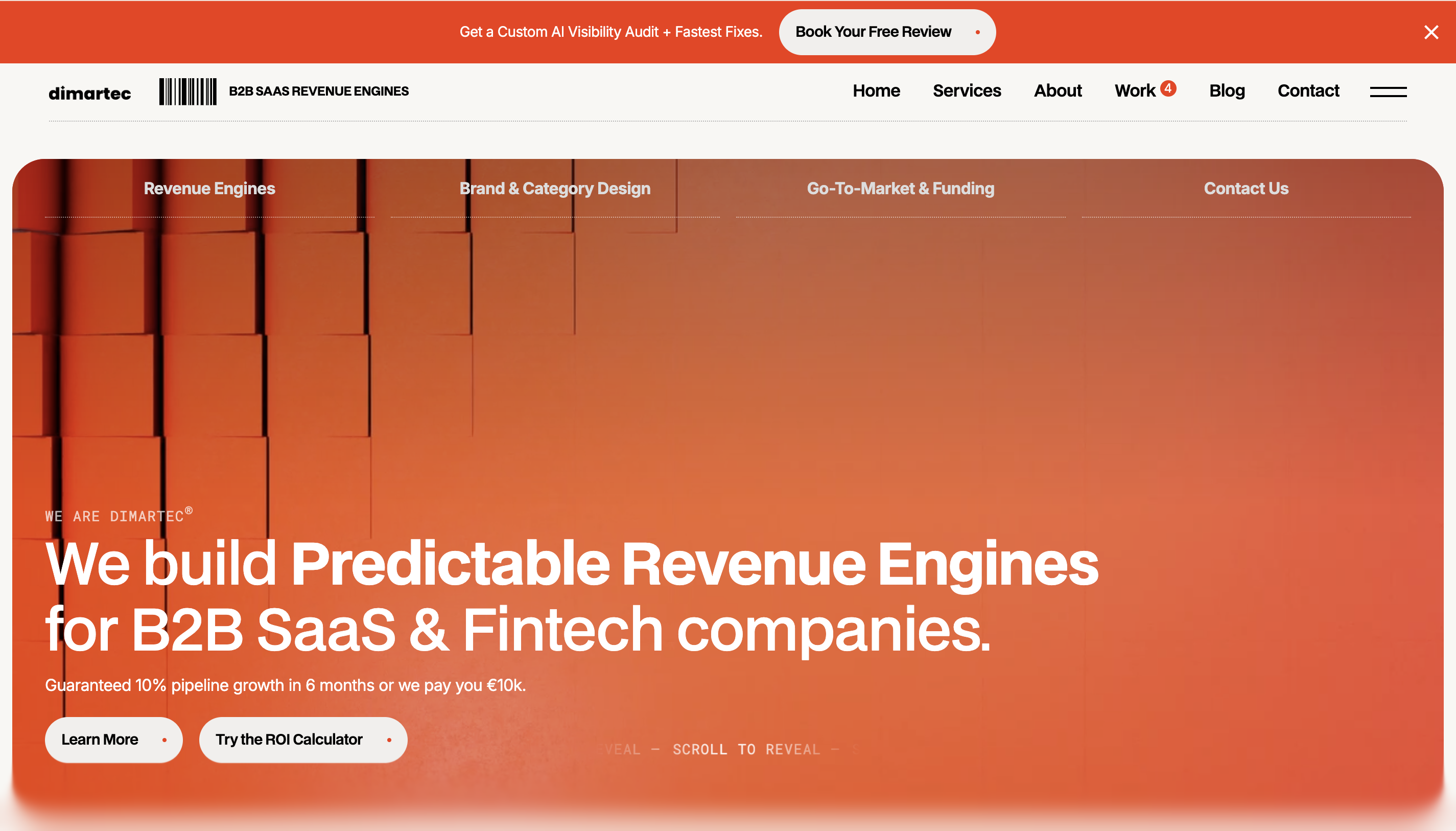
dimartec builds Revenue Engines for B2B SaaS and fintech companies. Lead Gen & Nurturing is one of five integrated services alongside Performance Paid Media, CRO, GEO, and RevOps & Automation. At Series A specifically, the integration of all five services from the start produces the signal-extraction outcome that this stage requires, not from the lead generation function alone but from the system connecting it to attribution and qualification.
Lead Gen & Nurturing at dimartec is built around two outputs that matter specifically at Series A. First, ICP-calibrated lead scoring built from closed-won data rather than assumed criteria: at Series A the closed-won sample is small, but the scoring model is designed to update as the sample grows, producing a qualification standard that becomes more accurate as the programme generates data rather than one that is fixed at the start and never recalibrated. Second, CRM-enforced routing logic: the qualification definition agreed with the sales team is enforced by the CRM automation, not by individual SDR judgement, so the first sales hire can act on leads without the founder's involvement in routing decisions.
RevOps & Automation connects every lead source to closed-won data from the first session. At Series A, this means the MQL-to-SQL conversion rate by channel, CAC payback by source, and pipeline velocity by stage are all available from the first quarterly board review rather than assembled from manual analysis at the Series B data room preparation stage.
GEO builds brand visibility in ChatGPT, Perplexity, Grok and Claude from the first session. For Series A companies whose brand is not yet established in AI search, this is the fastest way to create the top-of-funnel discovery layer that compounds over time and reduces the volume of cold outreach required to generate a given SQL count.
Performance Paid Media and CRO round out the acquisition layer: paid acquisition calibrated to the ICP segments that lead gen signal-testing has validated, with landing page conversion optimised to qualify intent at the point of capture rather than leaving it to the CRM to discover after the fact.
If any of the following apply, dimartec is worth a conversation:
The lead generation programme is generating meetings but the CRM contains no consistent qualification data attached to those meetings, making the attribution question unanswerable at the quarterly review
Different ICP segments are being pursued in parallel but there is no measurement framework comparing SQL conversion rate by segment, so the budget allocation decision remains based on volume rather than signal
The brand is absent from AI-generated answers to the category questions the ICP researches before entering an evaluation, meaning a growing share of demand is forming a shortlist that does not include the brand
The board has requested CAC payback and pipeline attribution for the next quarterly review and the data does not currently exist in a form that can answer the question
Key services
Lead Gen & Nurturing: ICP-calibrated lead scoring updated from closed-won data, intent-stage nurture sequences, and CRM-enforced routing qualifying leads before the sales team touches them
RevOps & Automation: attribution infrastructure connecting every lead source to closed-won ARR from session one, producing investor-grade pipeline metrics without a separate reporting project
GEO: brand visibility in ChatGPT, Perplexity, and Claude, building the AI search discovery layer that compounds over time and supplements outbound and paid channels
Performance Paid Media: paid acquisition calibrated to the ICP segments validated by lead gen signal-testing, measured by cost per SQL
CRO: landing page and form design qualifying intent at the point of capture, feeding correctly attributed and qualified leads into the CRM
Why dimartec stands out for Series A lead generation
Lead Gen & Nurturing and RevOps & Automation are designed as one connected system: qualification and attribution run together from the start, producing the investor-grade pipeline data the Series A stage generates for the Series B raise
ICP signal-testing is built into the engagement approach: the programme tests multiple segments and updates the qualification model as closed-won data accumulates, producing increasingly accurate targeting rather than fixed assumptions
GEO provides the compounding discovery layer that reduces cold outreach dependency over time, improving cost per SQL as the programme matures
The system belongs to the client team at the end of the engagement
Best fit: Series A B2B SaaS and fintech at €2M–€10M ARR where the primary lead generation requirement is not volume but signal: the first repeatable evidence of which ICP segment converts, at what cost, through which channel, with the attribution data to prove it.
2. GrowthSpree
Best for: Series A–C B2B SaaS that need AI-native full-funnel lead generation with MCP attribution connecting every lead source to CRM pipeline from month one, and QLA-optimised paid acquisition improving SQL quality from campaign launch
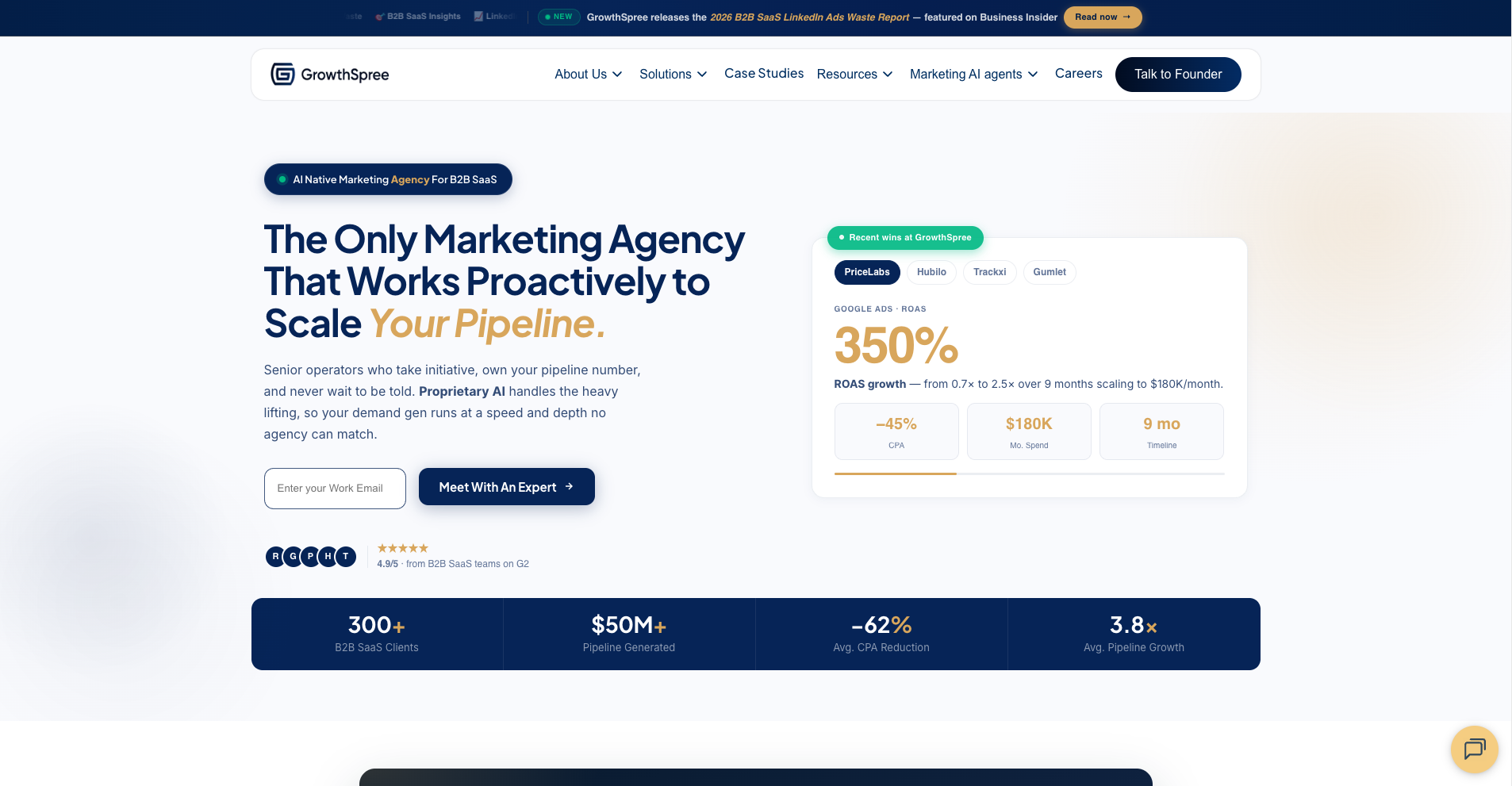
GrowthSpree is an AI-native demand generation and GTM agency. Their specific relevance to Series A lead generation is in the attribution infrastructure they deploy from the start. Their Model Context Protocol (MCP) connects Google Ads, LinkedIn Ads, Meta, HubSpot, GA4, and Search Console into a unified pipeline attribution layer that produces cost per SQL by channel from the first month's data rather than from a quarterly retrospective analysis.
For Series A companies whose primary lead generation question is "which channels are producing the SQLs that close and at what cost," the MCP infrastructure answers that question from live data rather than from directional impression. This makes the budget allocation decision between inbound, outbound, paid, and ABM analytical rather than political: the channels producing the best cost per SQL receive more budget; the channels producing volume without SQL conversion receive less.
Their Qualified Lead Architecture (QLA) trains paid platform algorithms on closed-won signals rather than form-fill signals, improving the SQL quality of paid-sourced leads from campaign launch rather than after three months of optimisation. At Series A, where the budget for testing is limited and every month of suboptimal paid acquisition extends CAC payback unnecessarily, the QLA's earlier quality improvement is commercially material.
Flat retainer fee structure with month-to-month contracts removes the commitment risk that is particularly significant at Series A, where the ICP is still being validated and the programme scope may need to change as signal-testing produces new data.
Documented results include PriceLabs (350% ROAS improvement), Rocketlane (3.4x ROAS at 36% lower cost per demo), with $60M-plus in managed SaaS ad spend across 300-plus B2B accounts.
Key services
AI-native paid acquisition (Google, LinkedIn, Meta) with QLA improving SQL quality from launch
MCP attribution: real-time cross-channel pipeline reporting from month one
Signal-based ABM using 15-plus intent signals to identify in-market ICP accounts
GEO built into standard engagements alongside SEO
Lead scoring and routing automation connected to CRM qualification standards
Flat retainer with month-to-month contracts
Why GrowthSpree stands out for Series A lead generation
MCP attribution produces investor-grade pipeline data from the first month, answering the Series B due diligence questions before they become urgent
QLA improves paid SQL quality from launch, reducing the CAC inflation that typically characterises the first three months of a new paid acquisition programme
Signal-based ABM identifies in-market ICP accounts before outreach, concentrating the programme on the accounts most likely to convert to SQL rather than sequencing the full list uniformly
Month-to-month contracts match the commitment risk tolerance of a Series A company still validating its ICP
Best fit: Series A B2B SaaS at €2M–€10M ARR that want paid and ABM-driven lead generation measured by cost per SQL and connected to CRM attribution from month one, with a fee structure that does not lock the programme into an ICP definition that signal-testing may need to revise.
3. Growleads
Best for: Series A B2B SaaS that need lead generation to begin with buyer signal research rather than outreach, identifying which ICP accounts are demonstrating active evaluation behaviour before the first sequence fires
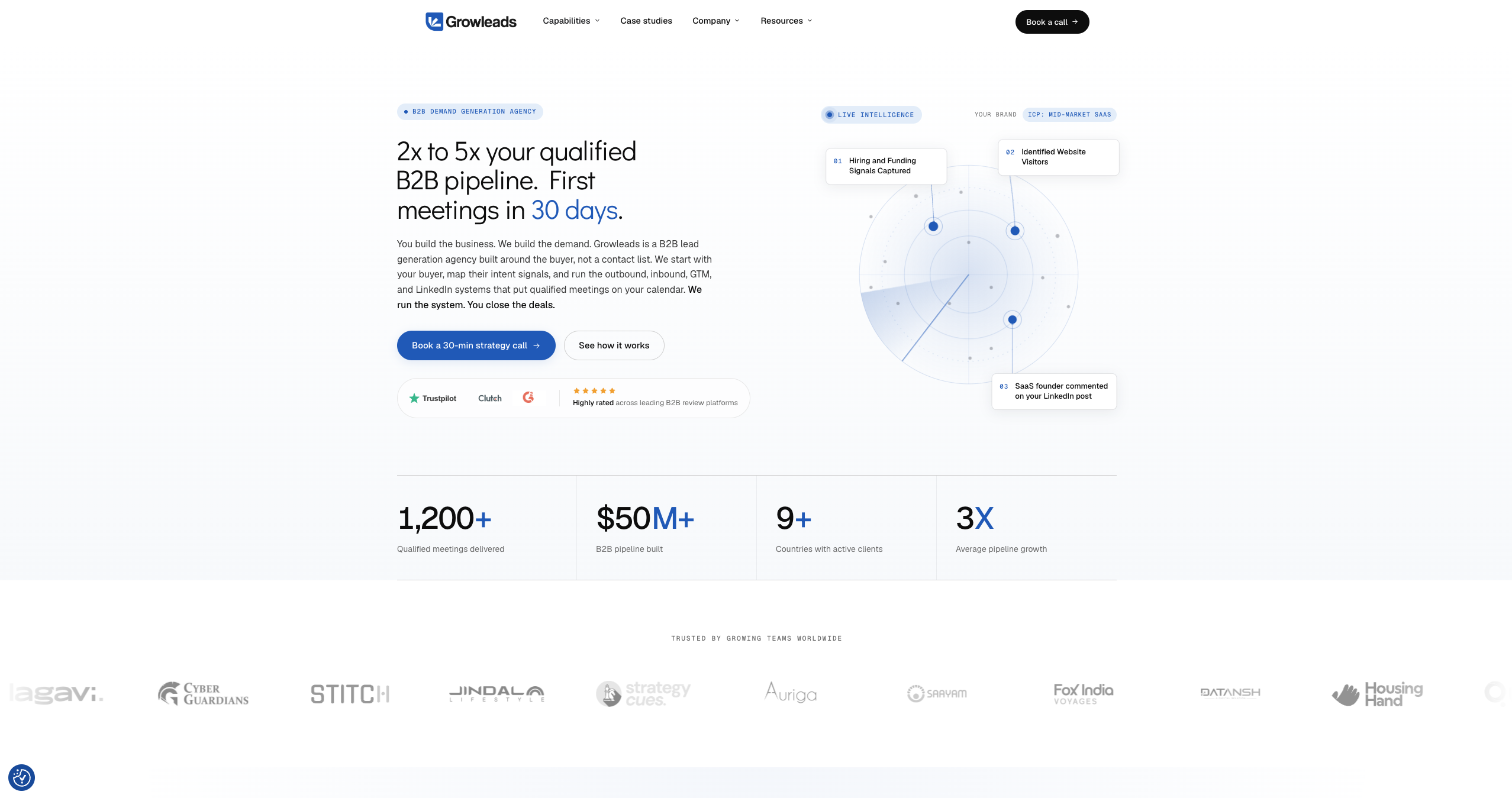
Growleads is a B2B demand intelligence company that starts with buyer signal research rather than outreach volume. Their methodology requires answering one question before any campaign goes live: which accounts in the ICP universe are currently showing buying signals (funding events, hiring for relevant roles, technology stack changes, competitor research activity) that indicate an active evaluation is underway? The outreach that follows is concentrated on those accounts rather than distributed across the full ICP list.
For Series A lead generation specifically, this approach produces higher SQL conversion rates from lower outreach volume, which is the commercially correct trade-off at a stage where the sales team is small and meeting capacity is the scarcer resource. A programme that generates 40 meetings with 12 SQLs from signal-validated accounts teaches the Series A team more about which ICP segments convert than a programme that generates 120 meetings with eight SQLs from broadly targeted outreach.
Their buyer-signal model draws on multiple data sources — job postings for relevant hiring signals, technographic data for stack changes indicating evaluation activity, funding signals for budget triggers, and intent data for active research behaviour — to build an account prioritisation model that identifies the accounts most likely to be receptive before the first contact.
Pipeline-stage reporting connects their outbound activity to opportunity progression in the CRM, measuring the programme against SQL conversion rate and pipeline contribution rather than meeting volume.
Key services
Buyer signal research: ICP account prioritisation from funding, hiring, technographic, and intent signals before outreach begins
Signal-validated outbound: multi-channel sequences concentrated on accounts showing active evaluation behaviour
ICP segment testing: parallel outreach to multiple ICP segments measuring SQL conversion by segment
Pipeline-stage reporting connecting outbound to CRM opportunity progression
Outbound infrastructure design as a client-owned asset
Why Growleads stands out for Series A lead generation
Buyer signal research before outreach means the programme is testing the ICP hypothesis against real account behaviour data, not against assumptions about who should be interested
ICP segment testing as a programme feature produces the signal the Series A team needs to validate targeting before scaling spend
Higher SQL conversion from lower meeting volume is the correct efficiency trade-off for a Series A sales team whose meeting capacity is limited
Pipeline-stage reporting makes the programme accountable to SQL outcomes, providing the attribution data the investor conversation will require
Best fit: Series A B2B SaaS companies whose ICP definition is still being validated and whose primary lead generation question is not how many meetings to book but which ICP segment and which buying signal pattern most reliably produces meetings that advance to SQL.
4. Belkins
Best for: Series A B2B SaaS that have a validated ICP and clear messaging and need a managed outbound programme generating qualified meetings at scale, with EMEA coverage and pre-qualification criteria defined before the first sequence fires
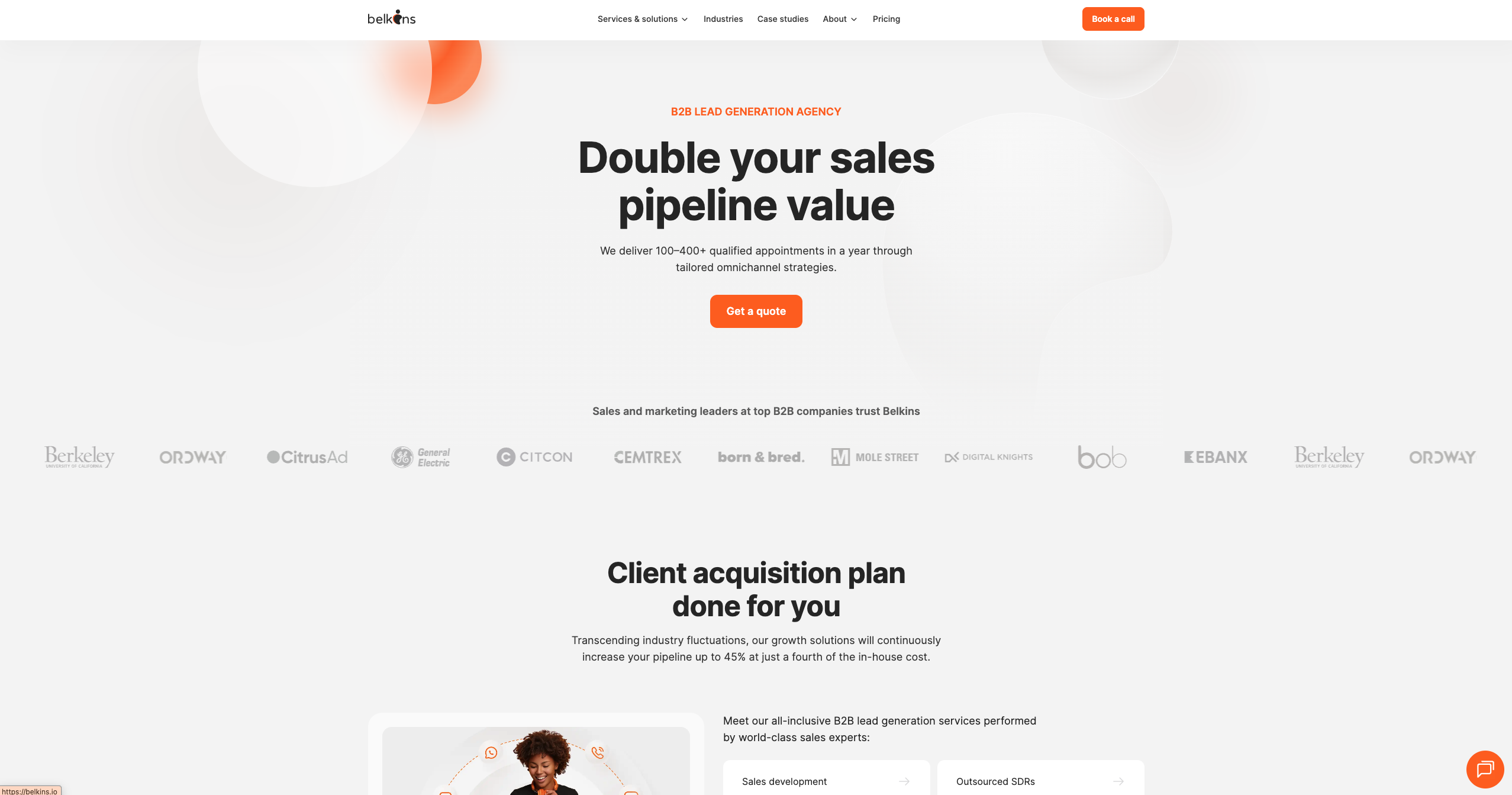
Belkins is a managed outbound and appointment-setting agency with over 8 years of B2B experience and 1M-plus appointments delivered across North America, EMEA, and APAC. Their specific relevance to Series A lead generation is in the handoff model: qualification criteria for a booked meeting are defined with the client before outreach begins, so the meetings delivered to the sales team have been filtered against the agreed ICP standard rather than generated to a volume target.
For Series A companies that have completed ICP validation and are ready to scale outreach volume against a confirmed target profile, Belkins provides the managed execution capacity that the small internal team cannot build without diverting attention from product and sales. The dedicated SDR team, account manager, and data infrastructure operate under the client's ICP definition rather than a generic outreach playbook.
Their EMEA data coverage with documented compliance validation processes is relevant for Series A companies scaling across European markets, where the contact data quality and compliance basis for outreach are often the first scaling bottleneck for programmes built on US data infrastructure.
Documented SaaS results include TechSmart (50-plus appointments in 4 months), with a client satisfaction framework built around pre-defined qualification criteria rather than meeting volume commitments.
Key services
Managed multi-channel outbound: email, LinkedIn, and calling with dedicated SDR team per engagement
Pre-qualification framework: acceptance criteria for booked meetings defined with the client before outreach begins
Verified EMEA contact data with documented compliance validation
CRM integration connecting meetings to opportunity progression
Dedicated account manager and SDR team structure
Why Belkins stands out for Series A lead generation
Pre-qualification framework ensures meetings arrive with ICP fit confirmed rather than leaving qualification to the sales team after the fact
Managed execution model provides outbound capacity without the hiring timeline and onboarding overhead of building an internal SDR team
EMEA data coverage with compliance validation addresses the contact quality and legal basis gaps that US-built programmes encounter when scaling into European markets
8-year operating history and 1M-plus appointments provides pattern recognition on which outreach approaches work at the Series A stage across different SaaS categories
Best fit: Series A B2B SaaS companies that have confirmed their ICP through early sales cycles, have clear messaging, and need a managed outbound programme generating qualified meetings at volume without building an internal SDR team before the programme's effectiveness is validated.
5. LaunchLeads
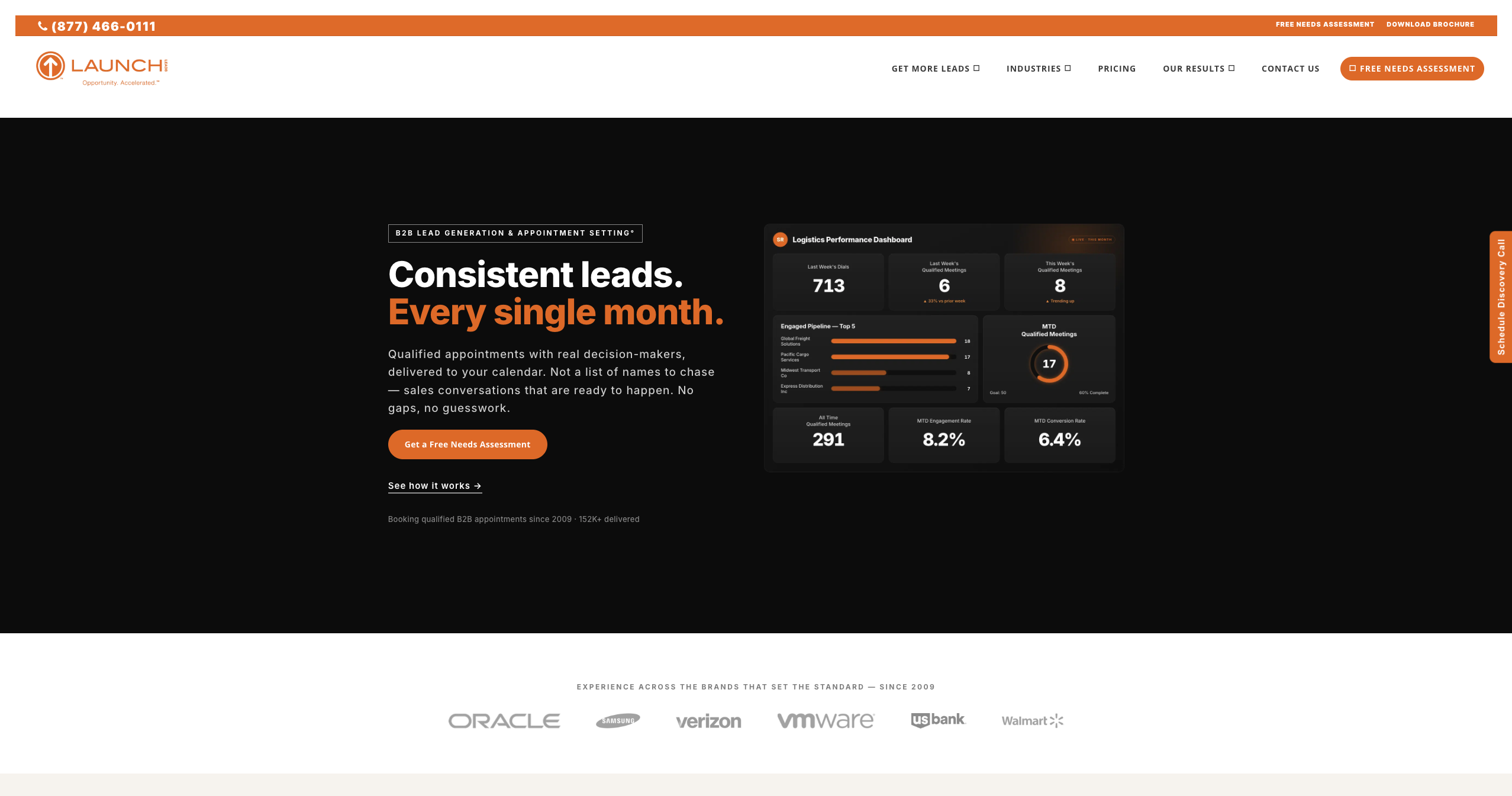
Best for: Series A B2B SaaS that need a targeted outbound lead generation service focused on ICP-aligned prospecting, appointment setting, and lead list development, with a model designed to produce qualified conversations for a small sales team without overwhelming its capacity
LaunchLeads is a B2B lead generation service that helps SaaS companies build consistent pipeline by identifying qualified prospects and initiating outreach calibrated to the target ICP. Their model is designed for the Series A reality: a small sales team that cannot absorb high volumes of unvetted meetings needs a lead generation partner that prioritises quality alignment over volume delivery.
Their prospecting methodology starts with a detailed ICP definition that informs both the list-building approach and the outreach personalisation. Rather than applying a generic sequence to a broad contact list, LaunchLeads builds outreach around the specific role, use case, and pain point relevant to each account in the target ICP, increasing the proportion of conversations that advance beyond the first exchange.
Appointment setting is their primary output: they prioritise qualified calendar bookings over form fills or raw contact delivery, aligning their commercial incentive with the sales team's actual workflow at Series A, where the value of lead generation is measured by the conversations that advance rather than the contacts that were reached.
Lead list development and management as an ongoing service maintains the accuracy of target account data as the ICP definition is refined through early pipeline learning, preventing the list quality decay that affects volume-outreach programmes built on static data.
Key services
Targeted prospecting: ICP-aligned contact identification from verified B2B data sources
Outbound outreach: personalised multi-touch campaigns calibrated to the target ICP and use case
Appointment setting: qualified meeting delivery prioritised over raw contact volume
Lead list development and management: ongoing ICP-aligned list maintenance as targeting is refined
Reporting on meeting-to-SQL conversion rate alongside meeting volume
Why LaunchLeads stands out for Series A lead generation
ICP-aligned prospecting from the start: outreach is built around the specific target profile rather than applied generically to a broad list
Appointment-setting focus aligns commercial incentive with the sales team's actual constraint at Series A: qualified meetings, not contact volume
Personalised outreach calibrated to role and use case produces higher meeting-to-SQL conversion rates than template sequences applied to generic ICP definitions
Lead list management as an ongoing service prevents list quality decay as the ICP definition evolves through Series A pipeline learning
Best fit: Series A B2B SaaS companies with one or two sales reps whose primary constraint is qualified meeting volume, where the lead generation partner needs to prioritise ICP alignment and meeting quality over raw outreach scale.
The Signal Argument
Every company on this list contributes to the lead generation output a Series A company needs. GrowthSpree provides AI-native paid acquisition with MCP attribution connecting every source to pipeline data from month one. Growleads starts with buyer signal research before outreach, identifying which ICP accounts are in active evaluation mode. Belkins provides managed outbound execution with pre-qualification criteria that filter for ICP fit before meetings reach the sales team. LaunchLeads prioritises ICP-aligned appointment setting for small sales teams that cannot absorb unvetted meeting volume.
Each of them generates leads or meetings. None of them builds the system that connects those leads to the qualification layer, the nurture sequences, the CRM routing logic, and the attribution model that tells the board which lead generation investment produced which closed ARR.
At Series A, this gap matters more than at any subsequent stage. The 90 days after the raise are the window when the programme's architecture is set. If attribution is built into the engagement from the start, the board at the first quarterly review receives pipeline data by source, CAC payback by channel, and MQL-to-SQL conversion by ICP segment. If attribution is planned as a future deliverable, the board at the first quarterly review receives meeting volume and a narrative.
dimartec builds all five services as one system from the first session. Lead Gen & Nurturing, RevOps & Automation, and GEO operate together so the lead generation output is connected to attribution, qualification, and AI search discovery simultaneously. The investor-grade metrics are available when the board asks for them, not six months after the programme starts generating data.
See how the Revenue Engine works: https://www.dimartec.co.uk/services/revenue-engine
Three Questions Before You Sign Anything
Question one: How do you report SQL conversion rate by ICP segment? The answer should describe a reporting framework that shows meeting-to-SQL conversion and SQL-to-opportunity progression broken down by the ICP segments the programme is testing. If the answer describes meeting volume by outreach channel, the programme measures its activity rather than its commercial output.
Question two: What does my CRM contain at the end of month one? The answer should describe attributed leads with qualification context, source tags, and routing status. If the answer describes a list of contacts and a meeting calendar, the programme has not built the data infrastructure the Series B due diligence process will require.
Question three: What does my first sales hire receive when they join? The answer should describe a qualification framework, a documented ICP standard, and a CRM routing logic they can follow without the founder's guidance. If the answer describes a meeting calendar and a good luck message, the lead generation programme has not transferred the founder's qualification instinct to a system.
Frequently Asked Questions
How much lead generation volume does a Series A SaaS company need?
Volume is the wrong metric at Series A. A Series A sales team of two or three reps can typically absorb 15–25 qualified meetings per month without their conversion quality declining. More than that saturates the team and reduces close rates on meetings that would otherwise advance. The right metric is not meeting volume but SQL conversion rate: the proportion of meetings that progress to a qualified sales opportunity. A programme producing 20 meetings with 12 SQLs is more valuable than one producing 60 meetings with 8 SQLs, both for the sales team's time and for the ICP signal it generates.
Should a Series A company focus on inbound or outbound lead generation?
Both should run simultaneously from the start, but with different time horizons. Outbound produces pipeline within 30–60 days and is the primary source of early SQL signal. Inbound and GEO channels take 6–12 months to produce meaningful volume but provide compounding pipeline that reduces cold outreach dependency over time. A Series A programme that runs only outbound builds a pipeline floor that disappears when the programme pauses. A programme that runs both from the start builds the outbound signal quickly and the inbound floor simultaneously, producing pipeline stability earlier in the Series A period.
How should ICP validation integrate with the lead generation programme?
The lead generation programme should run two or three parallel ICP segments in the first six weeks at low volume, measuring SQL conversion rate by segment rather than meeting volume. The segment producing the highest SQL conversion rate at acceptable cost per SQL receives the scaled programme budget. This approach treats the lead generation programme as an ICP validation tool as well as a pipeline generation tool, producing the most commercially useful data available to a Series A company: direct evidence of which buyer profile converts.
What attribution data does a Series A investor expect?
At Series A, investors typically assess the GTM programme through five metrics: CAC payback period by channel, MQL-to-SQL conversion rate, pipeline velocity by stage, lead source attribution to closed ARR, and total qualified pipeline by channel. All five require attribution infrastructure connecting marketing activity to CRM pipeline data. Series A companies that do not build this infrastructure in the first quarter of the raise period arrive at the Series B conversation with a pipeline narrative rather than a pipeline data set.
Build the Signal Before You Scale the Volume
The most valuable output of a Series A lead generation programme is not the pipeline it generates in the first quarter. It is the signal it generates: which ICP segment converts at what cost per SQL, through which channel, with what qualification depth. That signal determines where the Series B growth budget goes. The companies that get the signal early scale efficiently. The ones that generate volume without signal scale spend against assumptions that the Series B data room will expose.
The Revenue Engine connects Performance Paid Media, CRO, GEO, Lead Gen & Nurturing, and RevOps & Automation into one system so the lead generation signal is connected to attribution from the first session, the qualification standard is enforced by the CRM rather than by the founder's presence, and the investor-grade pipeline data is available when the board asks for it.
See how the Revenue Engine works: https://www.dimartec.co.uk/services/revenue-engine









.png)







.png)
















































.png)
.png)
.png)
.png)
.png)
.png)
.png)
.png)
.png)
.png)