We all know that getting new customers can be tough, especially in the B2B SaaS world. It feels like there's a lot of noise out there, and making sure the right people find you, then stick around long enough to buy, is a real challenge. We've spent a lot of time looking at how companies actually make sales happen, and it often comes down to having a solid plan for how prospects move from just hearing about you to actually signing on the dotted line. This guide is about breaking down those lead funnels for B2B SaaS, so we can all get better at turning interest into income.
Key Takeaways
- We need to build a clear path for potential customers, from when they first learn about us to when they become paying clients. This structured approach helps us manage the sales process better.
- Different parts of the sales journey need different tactics. What works to get someone's attention at the start won't work when they're ready to buy.
- Paying close attention to how many people move from one stage to the next helps us see where things are going wrong and fix them.
- The size of the company we're selling to changes how the funnel works. Smaller businesses might move faster, while bigger ones take more time but can mean bigger deals.
- Using tools like AI and automated systems can help us find the right leads, talk to them at the right time, and make the whole process smoother.
Architecting The B2B SaaS Lead Funnel Framework
Deconstructing The Buyer's Journey Through The Funnel
We approach the B2B sales funnel not as a rigid structure, but as a dynamic map of our buyer's journey. Understanding this path is the first step to building a system that consistently brings in revenue. It’s about recognizing that potential customers move through distinct phases, from first hearing about a problem to actively seeking a solution. This journey isn't linear; it's complex, involving multiple people and often long timelines. Our goal is to align our efforts with where the buyer is at each point, providing the right information and support.
- Awareness: The buyer realizes they have a problem or an opportunity.
- Consideration: The buyer researches potential solutions.
- Decision: The buyer evaluates specific vendors and makes a choice.
This framework helps us pinpoint exactly where deals are stalling or falling through the cracks. By tracking prospects through these stages, we can identify bottlenecks and optimize our outreach. It transforms a potentially chaotic process into a manageable, repeatable system that drives predictable growth.
Building an effective B2B sales funnel is less about a single tactic and more about a systematic approach to guiding prospects. It requires us to think like our buyers, anticipating their questions and needs at every turn.
Aligning Marketing And Sales For Revenue Engine Synergy
For a B2B SaaS business to truly grow, marketing and sales cannot operate in silos. We must create a unified revenue engine where both teams work in concert. This means establishing clear communication channels, shared goals, and a mutual understanding of the lead funnel. Marketing's role is to attract and qualify leads, passing them to sales at the opportune moment. Sales, in turn, provides feedback on lead quality and market insights, helping marketing refine its strategies. This synergy is what turns a collection of individual efforts into a powerful, predictable growth machine.
- Define shared Key Performance Indicators (KPIs) for lead generation and conversion.
- Implement a Service Level Agreement (SLA) between marketing and sales regarding lead handoff and follow-up.
- Regularly conduct joint meetings to review pipeline performance and identify areas for improvement.
The Strategic Imperative Of A Predictable Revenue Engine
In the B2B SaaS landscape, predictability is paramount. A predictable revenue engine means we can forecast sales with a high degree of accuracy, allowing for better resource allocation, strategic planning, and sustainable growth. This engine is built upon a well-architected lead funnel. When each stage of the funnel is optimized and conversion rates are understood, we can reliably project how many leads are needed at the top to achieve our revenue targets at the bottom. This data-driven approach removes much of the guesswork from scaling a business, making it easier to plan for the future.
Fortifying The Top Of The Funnel For Maximum Reach

Attracting the right audience is the primary objective at the top of the funnel. We aim for quality over sheer quantity, recognizing that generic outreach often yields few qualified prospects. Precision and providing genuine value are key.
Precision Targeting For Ideal Customer Profile Attraction
We start by defining our Ideal Customer Profile (ICP) with sharp detail. This isn't about casting a wide net; it's about understanding precisely who benefits most from our solution. We analyze firmographics, technographics, and behavioral data to pinpoint companies that align with our success metrics. This focused approach ensures our marketing efforts reach those most likely to convert.
Intent-Driven SEO And Pillar Content Authority
Our search engine optimization strategy centers on long-tail, intent-driven keywords. We identify the specific phrases our ideal customers use when searching for solutions to their problems. By creating comprehensive pillar pages and supporting content that directly addresses these search intents, we build authority with both search engines and potential buyers. This pulls in high-quality organic traffic, positioning our brand as a helpful resource from the initial touchpoint. For instance, instead of targeting broad terms like "CRM software," we focus on phrases such as "CRM for small manufacturing businesses" or "best CRM for remote sales teams." This thought leadership approach establishes us as a knowledgeable entity in the field.
Value-First Content Marketing For Initial Engagement
Our content marketing is designed to solve real problems for our target audience. We produce guides, articles, webinars, and tools that offer actionable insights and practical advice. The goal is to provide immediate value, demonstrating our understanding of their challenges and our capacity to help. This value-first approach builds trust and credibility early on, encouraging engagement and moving prospects further down the funnel.
Nurturing Engagement In The Middle Funnel Stages
Once we've captured a prospect's attention at the top of the funnel, the middle stages are where we build trust and demonstrate our solution's specific value. This is a critical phase; many funnels leak here because engagement falters. Our approach focuses on consistent, value-driven communication to move prospects from general interest to specific consideration.
Automated Lead Nurturing Sequences For Trust Building
We implement automated email sequences designed to educate and engage prospects based on their initial interactions. These aren't generic blasts; they're tailored workflows that respond to prospect behavior. For instance, a prospect who downloaded a guide on cloud migration might receive a series of emails detailing the benefits of our platform for that specific challenge, followed by a relevant case study.
- Trigger-based content delivery: Emails are sent based on specific actions, like downloading a resource or visiting a pricing page.
- Progressive profiling: We gather more information about the prospect's needs and company through their engagement with these emails.
- Value addition: Each email aims to provide new insights or solutions, not just push for a demo.
The goal is to consistently show we understand their problems and have viable answers.
Demonstrating Value Through Tailored Case Studies
Case studies are powerful tools in the middle funnel. We don't just present generic success stories; we highlight examples that closely mirror the prospect's industry, company size, and specific pain points. This allows potential clients to see themselves in the narrative and understand how our solution can achieve similar results for them. We ensure these studies are easily accessible, often linked directly within our nurturing sequences or available on dedicated landing pages.
Earning The Right To Propose A Solution
Throughout the middle funnel, our objective is to build credibility and establish ourselves as a trusted advisor. We avoid aggressive sales tactics. Instead, we focus on providing ongoing value through webinars, in-depth guides, and personalized content. This consistent demonstration of expertise and understanding of their challenges naturally leads to the prospect being more receptive when we eventually propose a tailored solution or demo. It's about building a relationship where the proposal feels like a logical next step, not a forced pitch. This approach aligns with a broader B2B SaaS marketing playbook for sustained growth.
The middle of the funnel is a delicate balance. We must provide enough information to educate and build confidence without overwhelming the prospect. Each touchpoint should reinforce our understanding of their unique situation and our capability to address it.
Closing Deals At The Bottom Of The Funnel
Tailored Demos and Negotiation Mastery
We've reached the final stage, where prospects are ready to make a decision. They've done their research, compared options, and now they're focused on the specifics: pricing, implementation, and contracts. The core question on their minds is whether we are the right partner and what the next steps look like to get started.
This is where our sales team needs to shine. The conversation shifts from general education to presenting a specific solution that addresses their unique business needs. We must demonstrate how our product provides a clear return on their investment. A generic pitch won't cut it here; the conversation must be highly personalized, directly addressing the pain points, objectives, and stakeholders we've identified throughout the entire funnel.
The quality of our sales calls is paramount at this stage.
Activities here are focused on getting the contract signed:
- Proposals and Quotes: We lay out a clear, customized plan covering scope, pricing, and terms.
- Negotiation: We work with the buying committee to align all parties.
- Free Trials/Demos: We offer hands-on experiences to eliminate any remaining doubts.
Prioritizing High-Converting Referral Programs
Referrals are a goldmine for conversions. Data shows that deals originating from referrals convert at a significantly higher rate than other sources. Building a formal referral program systematically generates these warm introductions, making the closing process smoother and more efficient.
Optimizing For Deal Size and Complexity
We recognize that not all deals are the same. Small deals require an efficient, low-friction process to close quickly. Larger, more complex deals, however, demand a more patient, consultative approach. Understanding these differences allows us to tailor our strategies for maximum effectiveness.
The average sales call conversion rate can hover between 13% and 25%. Deals under $10,000 close around 25.73% of the time, while deals over $5 million drop to about 9.09%. Referrals convert at 25.56%, significantly outperforming cold calls at 9.38%.
Leveraging AI And Automation For Funnel Optimization
We can use artificial intelligence and automation to make our lead funnels work better. These tools help us see what buyers are doing and move them along faster. This means we can focus our efforts where they matter most.
AI Visibility For Buyer Discovery
AI can sift through vast amounts of data to find potential buyers. It looks at online behavior, company news, and other signals to identify who might be interested in what we offer. This helps us find leads we might have missed otherwise. It's like having a super-powered assistant constantly scanning the market for us. We can use these insights to tailor our outreach and make sure we're talking to the right people at the right time. This approach helps us get a better handle on who our ideal customers are and where they spend their time online.
Automated Workflows For Prospect Qualification
Once we identify potential buyers, automation can take over much of the initial qualification process. We can set up systems that automatically score leads based on their engagement and profile information. This helps us quickly separate the most promising prospects from those who aren't a good fit yet. For example, a lead who visits our pricing page multiple times and downloads a case study might get a higher score than someone who only browsed our blog. This frees up our sales team to focus on the leads that are most likely to convert. We can also use automated email sequences to provide more information and gauge interest, moving prospects through the early stages of the funnel without manual intervention. This is a big step towards a more efficient sales process.
Real-Time Behavior Analysis For Lead Scoring
AI excels at analyzing real-time behavior. We can track how prospects interact with our website, emails, and content. AI algorithms can then update lead scores instantly based on these actions. This gives us an up-to-the-minute view of a prospect's interest level. If a prospect suddenly starts looking at specific product features or attending a webinar, their score can jump, signaling to sales that it's time for a personalized follow-up. This dynamic scoring prevents leads from going cold because we missed an engagement signal. It allows us to be proactive and responsive, adapting our strategy as buyer interest fluctuates. This continuous analysis helps us understand the subtle shifts in buyer intent and act on them immediately.
Measuring And Optimizing B2B SaaS Lead Funnel Performance
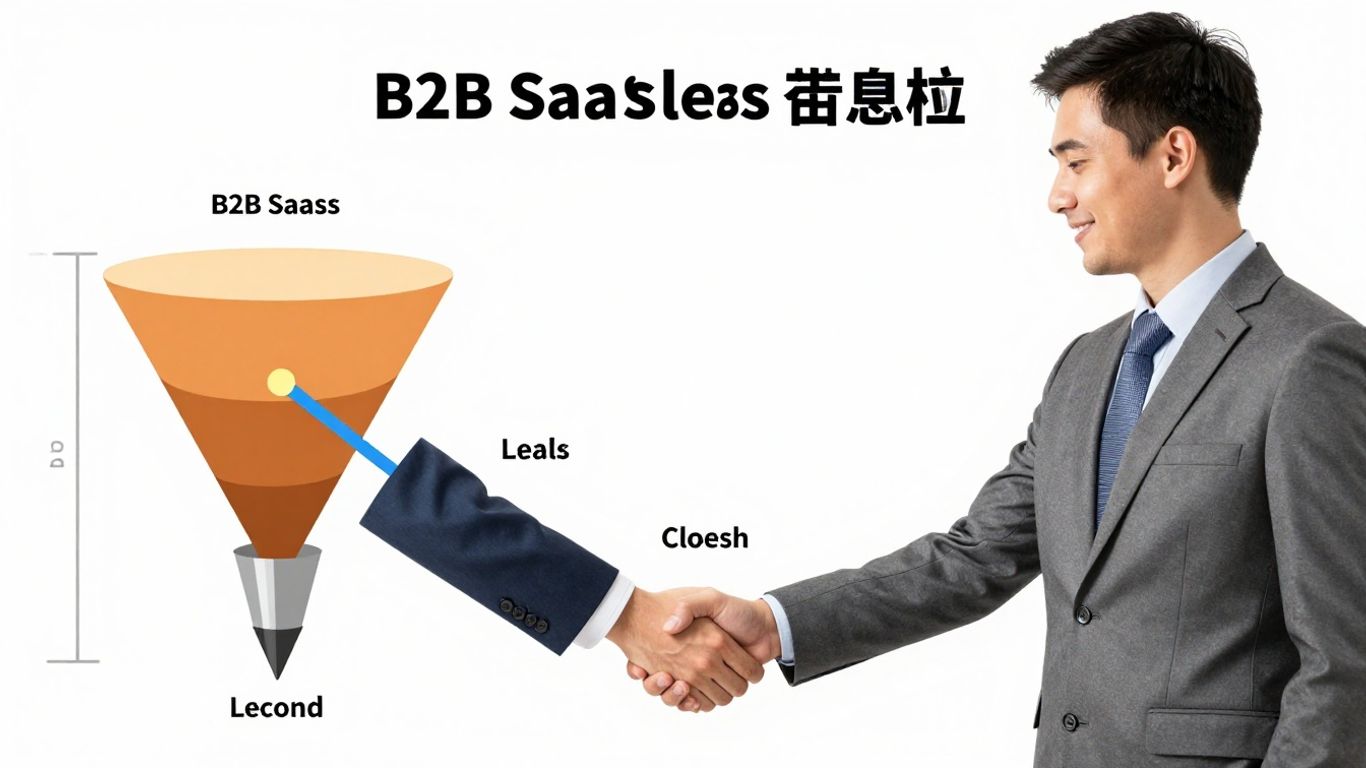
We must track how our B2B SaaS lead funnel performs to grow predictably. Without knowing where we stand, we're just guessing. This section covers how we measure success and make things better.
Critical KPIs For Funnel Diagnostics
To understand our funnel, we need to look at specific numbers. These aren't just random figures; they tell us what's working and what's not. We focus on metrics that directly impact revenue and growth. The goal is to get actionable insights, not just data points.
Here are some key performance indicators (KPIs) we track:
- Visitor-to-Lead Conversion Rate: This shows how many people who visit our site become leads. A low rate might mean our content or calls-to-action aren't strong enough.
- Lead-to-MQL (Marketing Qualified Lead) Rate: This tells us how many of our leads are showing enough interest to be considered marketing-ready.
- MQL-to-SQL (Sales Qualified Lead) Rate: This is a big one. It shows how well marketing is handing off qualified leads to sales. A low rate here often points to issues with lead quality or sales/marketing alignment.
- SQL-to-Opportunity Conversion Rate: How many sales-qualified leads actually turn into a real sales opportunity?
- Opportunity-to-Customer Conversion Rate: This is the final step before a sale. It measures how many opportunities we close.
We often see companies focusing too much on just getting more leads. But if those leads aren't the right ones, they won't convert. It's better to have fewer, higher-quality leads that fit our ideal customer profile.
Benchmarking Conversion Rates Across Stages
Knowing our own numbers is good, but comparing them to others is better. Benchmarking helps us see where we stand in the wider B2B SaaS landscape. This gives us a realistic target to aim for and highlights areas needing the most attention.
Here's a look at some typical conversion rate benchmarks for 2026:
Note: MQL and SQL conversion rates can vary significantly based on lead scoring models and qualification criteria. Focus on improving your internal rates first.
Linking Marketing Efforts To Sales Outcomes
Our marketing activities should directly contribute to sales. We need systems in place to connect what marketing does with the revenue it generates. This isn't always straightforward, but it's vital for proving marketing's value and optimizing spend.
We achieve this by:
- Implementing robust tracking: Using CRM and marketing automation tools to follow leads from their first touchpoint through to becoming a customer.
- Defining clear attribution models: Deciding how credit is given for a closed deal (e.g., first touch, last touch, or a more complex multi-touch model).
- Regularly reviewing campaign performance: Analyzing which marketing channels and campaigns are bringing in the most qualified leads and closed deals.
- Fostering sales and marketing alignment: Holding regular meetings to discuss lead quality, campaign effectiveness, and market feedback. This ensures both teams are working towards the same revenue goals.
Understanding Funnel Dynamics By Company Size
SMB Funnel Efficiency and Speed
When we look at smaller to mid-sized businesses (SMBs), their sales funnels often move at a different pace. They tend to have a higher visitor-to-lead conversion rate, sometimes around 1.4%. This is because they can be more direct and personal with their outreach. Think of it as a more focused approach. However, they might struggle more with building trust and brand recognition later on, especially for larger deals. Their sales teams are often smaller, meaning individuals wear many hats, which can stretch resources thin. The goal here is speed and efficiency, making sure each step is as smooth as possible to close deals quickly.
Enterprise Funnel Complexity and Deal Value
For enterprise-level companies, the funnel looks quite different. Their initial visitor-to-lead conversion rate is typically lower, maybe 0.7%. This is often due to broader marketing efforts that attract a wider, less qualified audience. The real challenge for enterprise sales lies in the middle and bottom of the funnel. Sales cycles are much longer, often extending over a year. This is because deals involve multiple stakeholders, each with their own needs and approvals required. We're talking about navigating legal, procurement, and finance departments. While the process is more complex and slower, the potential deal value is significantly higher. Mastering multi-threading—building relationships with various people within the target account—is key to success here.
Adapting Strategies To Market Segments
It's clear that a one-size-fits-all approach to funnel optimization just doesn't work. We need to tailor our strategies based on the size of the company we're selling to, and the size of the companies we're selling to. For SMBs, focusing on quick wins and streamlined processes makes sense. This might involve automated follow-ups and clear, concise product demonstrations. For enterprises, the focus shifts to building deep relationships, understanding complex organizational structures, and providing extensive proof of value over a longer period. This could mean more in-depth case studies, custom solution proposals, and dedicated account management. Understanding these differences helps us allocate resources effectively and set realistic conversion goals. The average cost per lead can vary greatly, from around $75-$150 for transactional products to $300-$500 or more for complex solutions, which directly impacts how we approach each segment. B2B lead costs are a significant factor in this planning.
The structure of a B2B sales funnel is not static; it's a dynamic framework that must adapt to the specific context of the buyer and seller. Recognizing the distinct characteristics of SMB and enterprise funnels allows for more precise targeting, resource allocation, and ultimately, a higher probability of conversion. Ignoring these differences leads to wasted effort and missed opportunities.
Mapping The Complete Buyer Journey For Conversion
We need to look at how potential customers move from first hearing about us to actually buying. This isn't a straight line anymore. People research a lot, talk to different people in their company, and sometimes skip steps. Our job is to see this whole path, not just our part of it.
Identifying Drop-Off Points In The Buyer Path
We track where people stop engaging. Did they look at our pricing page but never request a demo? Did they download a whitepaper but not open our follow-up emails? Pinpointing these moments tells us where the process is breaking down. It’s like finding leaks in a pipe; we need to know exactly where they are to fix them.
- Website analytics showing pages visited and time spent.
- Email engagement rates (opens, clicks).
- Demo request forms submitted but not completed.
- Content downloads without further interaction.
Delivering The Right Information At Each Touchpoint
Once we know where people are in their journey and where they might get stuck, we can give them what they need. Someone just learning about a problem needs different info than someone comparing two specific solutions. We make sure the content matches their current stage and questions.
The modern buyer journey is complex, involving multiple stakeholders and extensive self-directed research. Providing contextually relevant information at each interaction point is no longer optional; it's a requirement for moving prospects forward.
Creating A Seamless Transition From Awareness To Purchase
Our goal is to make it easy for people to move from one stage to the next. This means marketing and sales have to work together smoothly. When marketing hands off a lead, sales needs to know exactly where they are and what they're interested in. This avoids making the prospect repeat themselves or feel like they're talking to two different companies. A smooth handoff builds confidence and speeds up the deal.
Setting Measurable Conversion Goals For Growth
Defining Specific Targets For Each Funnel Stage
We must set clear, quantifiable objectives for every step of our lead funnel. Without these, we're essentially flying blind, making it impossible to gauge progress or identify where our efforts are falling short. These targets act as our roadmap, guiding our actions and providing a benchmark against which we can measure success. Think of it like training for a marathon; you don't just start running without a plan. You set mile markers, target times for each segment, and a final goal time. Our funnel goals work the same way.
Utilizing Data For Iterative Improvement
Our approach to funnel optimization is not static. We continuously analyze performance data to pinpoint areas needing adjustment. This iterative process involves tracking key metrics, identifying conversion bottlenecks, and implementing changes based on what the data tells us. It’s about making informed decisions, not just guessing.
For instance, if we observe a significant drop-off between the Marketing Qualified Lead (MQL) and Sales Qualified Lead (SQL) stages, we don't just accept it. We investigate. Is our MQL definition too broad? Are sales reps not following up effectively? Is the nurturing content not compelling enough? The data will point us in the right direction.
Here’s a look at how conversion rates can differ based on our go-to-market model. These aren't rigid rules, but they give us a starting point for setting our own targets:
Understanding these differences is key. A sales-led model will naturally have lower top-of-funnel conversion rates than a PLG model, but often with larger deal sizes. Setting goals without this context leads to unrealistic expectations and misplaced effort.
Establishing Challenging Yet Attainable Objectives
Our conversion goals must strike a balance. They need to be ambitious enough to drive significant growth and push our teams to perform at their best, but also realistic enough to be achievable. Setting impossible targets leads to frustration and demotivation. Conversely, setting the bar too low stifles innovation and limits our potential.
We achieve this by:
- Benchmarking: Comparing our current performance against industry averages and, more importantly, against our own historical data.
- Segmentation: Recognizing that conversion rates can vary by market segment, product line, or even specific campaigns.
- Forecasting: Using historical data and market trends to project realistic growth trajectories.
By setting these specific, measurable, achievable, relevant, and time-bound (SMART) goals, we create a framework for predictable revenue growth. This allows us to allocate resources effectively, identify areas for improvement, and ultimately, build a more robust and successful B2B SaaS business.
Customer Lifetime Value Optimization Strategies
Identifying High-Potential Accounts
We focus on finding accounts that show the most promise for long-term engagement. This isn't just about the initial deal size; it's about understanding a prospect's potential for growth, their alignment with our core offerings, and their capacity to become a repeat customer or advocate. We look at factors like their industry's growth trajectory, their existing technology stack, and their stated business objectives. Identifying these accounts early allows us to tailor our approach from the very first touchpoint, setting the stage for a mutually beneficial, extended relationship.
Balancing Short-Term Sales With Long-Term Growth
Our strategy prioritizes sustainable growth over quick wins. While closing deals is important, we never let it overshadow the potential for future revenue. This means sometimes recommending solutions that might have a smaller immediate impact but position the customer for greater success and expansion down the line. We analyze the Customer Lifetime Value (CLV) against the Customer Acquisition Cost (CAC) to ensure our efforts are profitable over time. A healthy CLV:CAC ratio, ideally 3:1 or higher, indicates we are building a robust, long-term business.
Building Enduring Customer Relationships
True optimization of customer lifetime value hinges on building strong, lasting relationships. This goes beyond just providing a product or service; it involves becoming a trusted partner. We achieve this through consistent value delivery, proactive support, and a deep understanding of our customers' evolving needs. Regular check-ins, personalized insights, and anticipating future challenges are key. Loyal customers not only renew their contracts but also become our best source of referrals, significantly reducing future acquisition costs and driving predictable revenue.
Want to keep your customers happy and spending for longer? That's what Customer Lifetime Value Optimization is all about! It means finding smart ways to make sure people who buy from you keep coming back. We've got some awesome tips to help you do just that. Ready to boost your business? Check out our website for more!
The Path Forward: Building a Predictable Revenue Engine
We've walked through the critical stages of the B2B SaaS sales funnel, from sparking initial awareness to securing the final deal. It's clear that a well-oiled funnel isn't a happy accident; it's the result of deliberate strategy and continuous refinement. By focusing on attracting the right audience at the top, building trust and demonstrating value in the middle, and streamlining the path to purchase at the bottom, we can systematically reduce leaks and accelerate growth. Remember, the data shows that optimizing each stage, understanding the nuances between company sizes, and aligning sales and marketing efforts are not just best practices – they are the bedrock of building a predictable revenue engine. Now, it's time to implement these insights and watch your pipeline flourish.
Frequently Asked Questions
What exactly is a B2B sales funnel?
Think of a B2B sales funnel as a path that guides potential customers from first hearing about us to becoming a paying customer. It's like a roadmap that helps us understand what people are thinking at each step and how we can best help them.
Why is it important to have a well-organized sales funnel?
Having a clear funnel helps us attract the right people, build trust, and make it easier for them to buy. It's like having a well-organized store where customers can easily find what they need, leading to more sales and happier customers.
What are the main stages of a B2B sales funnel?
We usually talk about three main parts: the top (where we get attention), the middle (where we build trust and see if they're a good fit), and the bottom (where we help them make the final decision to buy).
How do we get people interested at the very beginning of the funnel?
We focus on creating helpful content, like blog posts or guides, that answers questions our potential customers are asking. We also make sure our website shows up when they search online for solutions to their problems.
What happens in the middle part of the sales funnel?
In the middle, we aim to show them more about how we can help. This might involve sharing success stories from other companies like theirs or offering more detailed information to build their confidence in our solution.
How do we help people decide to buy at the end of the funnel?
At this stage, we offer personalized help, like tailored demos that show exactly how our product solves their specific issues. We also make sure the buying process is as smooth and easy as possible.
Can technology like AI help improve our sales funnel?
Yes, absolutely! AI can help us understand who our best potential customers are, identify when they are ready to buy, and even automate some of the steps to make the process faster and more efficient for everyone.
How do we know if our sales funnel is working well?
We track important numbers, like how many people move from one stage to the next. This helps us see where things are going great and where we might need to make improvements to help more people become customers.















.png)







.png)







































.png)
.png)
.png)
.png)
.png)
.png)
.png)
.png)
.png)
.png)