
Most SaaS PPC programmes are structured to make the agency money, not to make the client pipeline. A percentage-of-spend fee model rewards an agency for recommending higher budgets regardless of whether a higher budget produces more qualified pipeline. A reporting cadence built around impressions, click-through rates, and cost per click rewards the agency for metrics that look good in a weekly update and mean nothing in a board meeting. The structural incentive is to spend more and report on what the spend produced, not to optimise for what the spend actually costs per closed deal.
Profit-focused PPC in B2B SaaS is a different discipline. The primary metric is cost per SQL, not cost per click. The channel strategy is built around intent tiers, not audience size. The creative is tested against demo conversion rate and pipeline contribution, not click-through rate. And the budget decision is made from attribution data that connects each campaign to closed-won revenue, not from a dashboard that stops at lead creation and calls it done.
After reviewing paid acquisition programmes across more than 200 B2B SaaS accounts, the finding that separates profitable PPC from expensive PPC is consistent. It is not the platform, the bid strategy, or the creative framework. It is whether the agency can answer one question with data: which of our campaigns produced the pipeline that closed, and at what cost per SQL? Agencies that can answer this question from their reporting infrastructure make spend allocation decisions from evidence. Agencies that cannot make them from convention, which is another word for guessing efficiently.
This guide evaluates the five best PPC agencies for B2B SaaS specifically focused on profit-driven acquisition: the ones that measure their work against cost per SQL, CAC payback, and pipeline contribution, and whose fee structures do not create an incentive to inflate spend.
Why Profit-Focused PPC Is Different from Standard PPC Management
Standard PPC management optimises the campaign. Profit-focused PPC optimises the commercial outcome the campaign feeds. The difference shows up in four places that determine whether a PPC programme is generating profitable growth or expensive activity.
What gets measured determines what gets optimised. An agency that reports on cost per click will optimise for cost per click. An agency that reports on cost per SQL will optimise for cost per SQL. These are not the same objective, and they frequently produce opposite decisions. Reducing cost per click by broadening audience targeting typically increases the proportion of clicks from accounts that will never become SQLs. Reducing cost per SQL often requires narrowing audience targeting and accepting a higher cost per click on a smaller, better-qualified audience. The agency whose fee depends on spend volume has no incentive to make the second choice.
Attribution depth determines whether the optimisation is real. A campaign that produces 50 leads at €30 cost per lead looks efficient. A campaign that produces 50 leads at €30 cost per lead where 4 of those leads became SQLs at a combined cost of €375 per SQL, compared to a different campaign producing 20 leads at €80 cost per lead where 8 became SQLs at €200 per SQL, is dramatically less efficient. Without attribution connecting leads to SQL to closed-won, the less efficient campaign looks better on every standard PPC metric.
Fee structure determines whose interests the optimisation serves. A percentage-of-spend agency earns more when budget increases, regardless of whether the increase produces more qualified pipeline. A flat-fee agency earns the same regardless of budget level. The flat-fee model aligns agency incentives with client efficiency. The percentage-of-spend model aligns agency incentives with client spend. In a profit-focused acquisition programme, only one of these structures produces an agency that will voluntarily recommend pausing a channel that is spending budget without producing SQLs.
Landing page ownership determines whether the intent converts. B2B SaaS paid acquisition fails more often at the landing page than at the campaign level. An agency that manages campaigns but hands the landing page back to the client has optimised the targeting and abandoned the conversion. Agencies that own both the campaign and the landing page it points at can trace whether a campaign's underperformance is a targeting problem or a conversion problem, and fix the right thing.
Quick Comparison
What Makes a PPC Agency Profit-Focused
Before evaluating any agency on this list, the three questions that separate a profit-focused PPC partner from a standard PPC vendor are specific.
First: how do you report cost per SQL, and how often does that figure reach the team with the budget authority? If the answer involves a monthly report that is assembled manually from the CRM and the ad platform, the attribution is manual, meaning it is incomplete and subject to interpretation. Automated attribution connecting ad spend to CRM pipeline is the standard for profit-focused reporting.
Second: is your fee a flat retainer or a percentage of spend? The answer tells you whose interests the optimisation will serve. Flat retainer means the agency is indifferent to budget level and will recommend cuts as readily as increases when the data supports them. Percentage of spend means the agency's revenue increases when yours decreases through budget inflation.
Third: who owns the landing page the campaigns point at? An agency that delivers campaign performance against a page it does not control cannot diagnose whether underperformance is a targeting problem or a conversion problem. The most profit-focused PPC agencies own the full paid acquisition funnel from creative to click to conversion.
How We Chose These Agencies
Revenue metric primacy: Does the agency measure its work against cost per SQL, CAC payback, and pipeline contribution as primary metrics, or does it use them as secondary context behind impressions and CTR?
Attribution infrastructure: Can the agency connect ad spend to CRM pipeline to closed-won revenue, or does attribution stop at lead creation?
Fee structure alignment: Is the fee model structured to reward efficiency or spend volume?
Landing page ownership: Does the agency own conversion optimisation alongside campaign management, or does it hand the page back to the client?
SaaS commercial fluency: Does the agency understand MQL-to-SQL conversion rates, sales cycle length, LTV:CAC ratios, and trial-to-paid conversion, or does it translate everything back into click economics?
Where an agency is a strong fit for profit-focused PPC in a specific SaaS context, we have said so. Where the scope is narrower than it appears, we have said that too.
The 5 Best PPC Agencies for SaaS for Profit-Focused Acquisition
1. dimartec
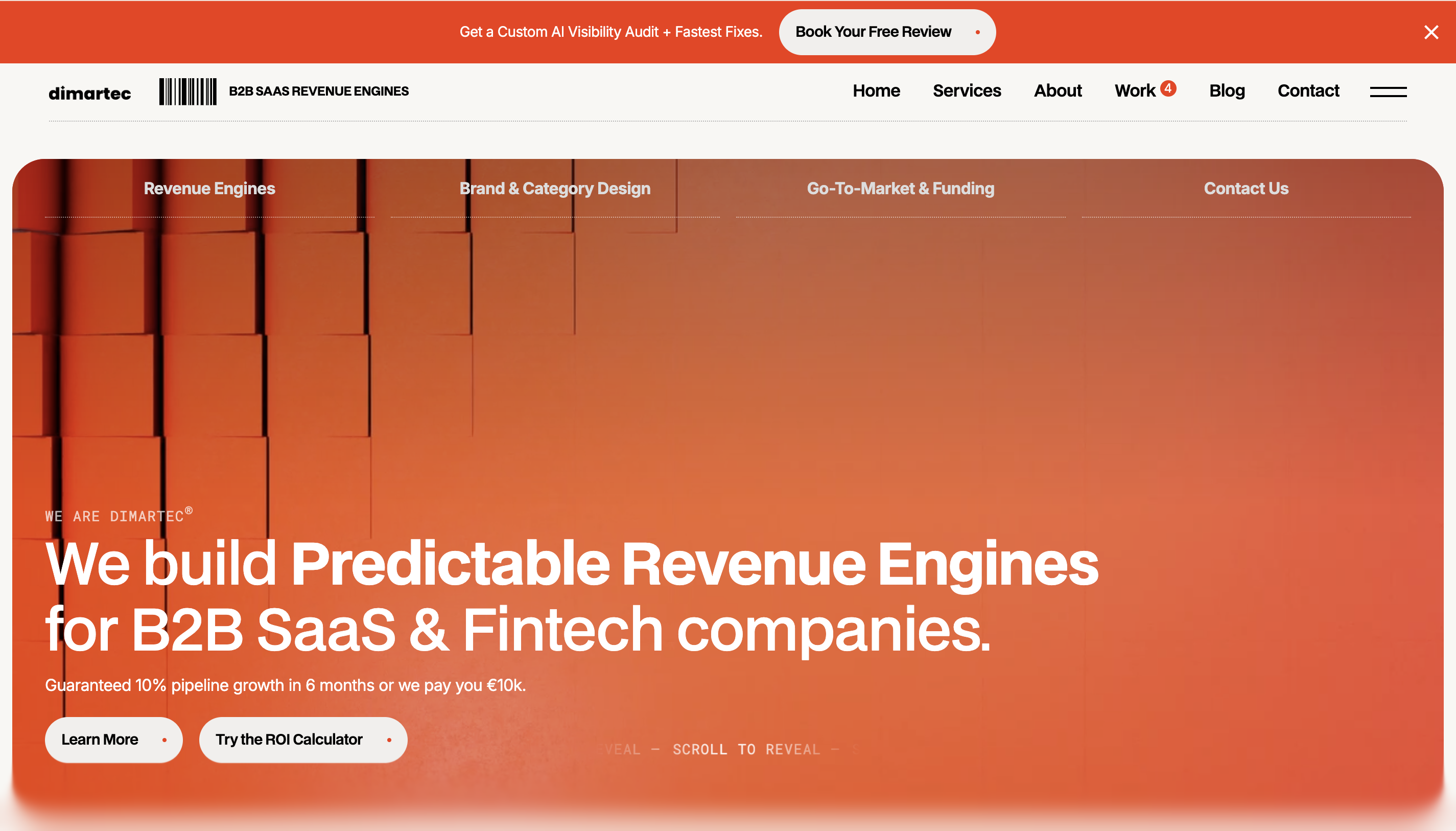
Best for: Post-PMF B2B SaaS and fintech at €2M–€10M ARR where paid acquisition needs to compound with CRO, Lead Gen & Nurturing, and RevOps & Automation rather than operate as a standalone channel measured by its own metrics
dimartec builds Revenue Engines for B2B SaaS and fintech companies. Performance Paid Media is one of five integrated services alongside CRO, GEO, Lead Gen & Nurturing, and RevOps & Automation. The profit-focused distinction is architectural: paid acquisition at dimartec is not run as a standalone channel optimising for its own metrics. It is calibrated to the same ICP definition that the lead scoring model uses, measured against the same pipeline number that RevOps & Automation tracks, and connected to the same closed-won attribution that tells the board which spend produced which revenue.
The consequence of this integration is specific to profitability. CRO work at dimartec is done before paid spend scales, ensuring the landing page conversion rate is not the bottleneck that turns a budget increase into a CAC increase. Lead Gen & Nurturing ensures the leads that paid campaigns capture are qualified and routed before they reach the sales team, so the cost per SQL reflects genuine qualification rather than volume passing through an unmaintained scoring model. RevOps & Automation produces the attribution infrastructure that connects every campaign to closed-won data, making the decision about which channels to scale and which to cut from evidence rather than convention.
If any of the following apply, dimartec is worth a conversation:
CPA is climbing on LinkedIn and Google despite growing spend, and the investigation cannot isolate whether the cause is targeting drift, landing page deterioration, or qualification standard drift, because the three are measured separately
Paid campaigns are generating MQL volume that looks healthy in the ad platform but sales is not seeing the same number of qualified opportunities in the CRM, indicating a disconnect between what the campaigns are optimising for and what the business needs
The decision about which channels to scale next quarter is being made from ad platform dashboards rather than from attribution connecting spend to pipeline to closed revenue
Budget increases have not produced proportional SQL increases, confirming that the conversion or qualification layer, not the campaign layer, is the primary constraint
Key services
Performance Paid Media: profit-focused acquisition across Google, LinkedIn, and Meta, measured by cost per SQL and pipeline contribution, with bid strategy and audience selection calibrated to ICP fit rather than click volume
CRO: landing page structural diagnosis and conversion optimisation designed alongside the campaigns feeding the page, not independently
Lead Gen & Nurturing: qualification and routing logic ensuring paid-campaign leads are scored and handed to sales at the correct intent stage
GEO: brand visibility in ChatGPT, Perplexity, and Claude, building organic discovery that reduces paid channel dependency as it compounds
RevOps & Automation: attribution infrastructure connecting every campaign to closed-won data, producing the cost-per-SQL and CAC payback figures that drive spend allocation decisions
Why dimartec stands out for profit-focused PPC
Paid media and CRO run under the same owner: conversion failures are diagnosed at source rather than attributed to a separate team's page
Attribution is connected to closed-won data from the first session, not built retrospectively when the board asks for CAC payback figures
The lead scoring and qualification layer prevents paid campaigns from producing SQL volume that inflates the count without improving the close rate
GEO builds the compounding channel that progressively reduces blended CAC as organic discovery supplements paid acquisition over time
Best fit: Post-PMF B2B SaaS and fintech where the PPC programme is producing spend that looks managed and pipeline that remains unpredictable, and where the gap between what ad platforms report and what the board sees in closed revenue has never been closed by the attribution model.
2. Directive Consulting
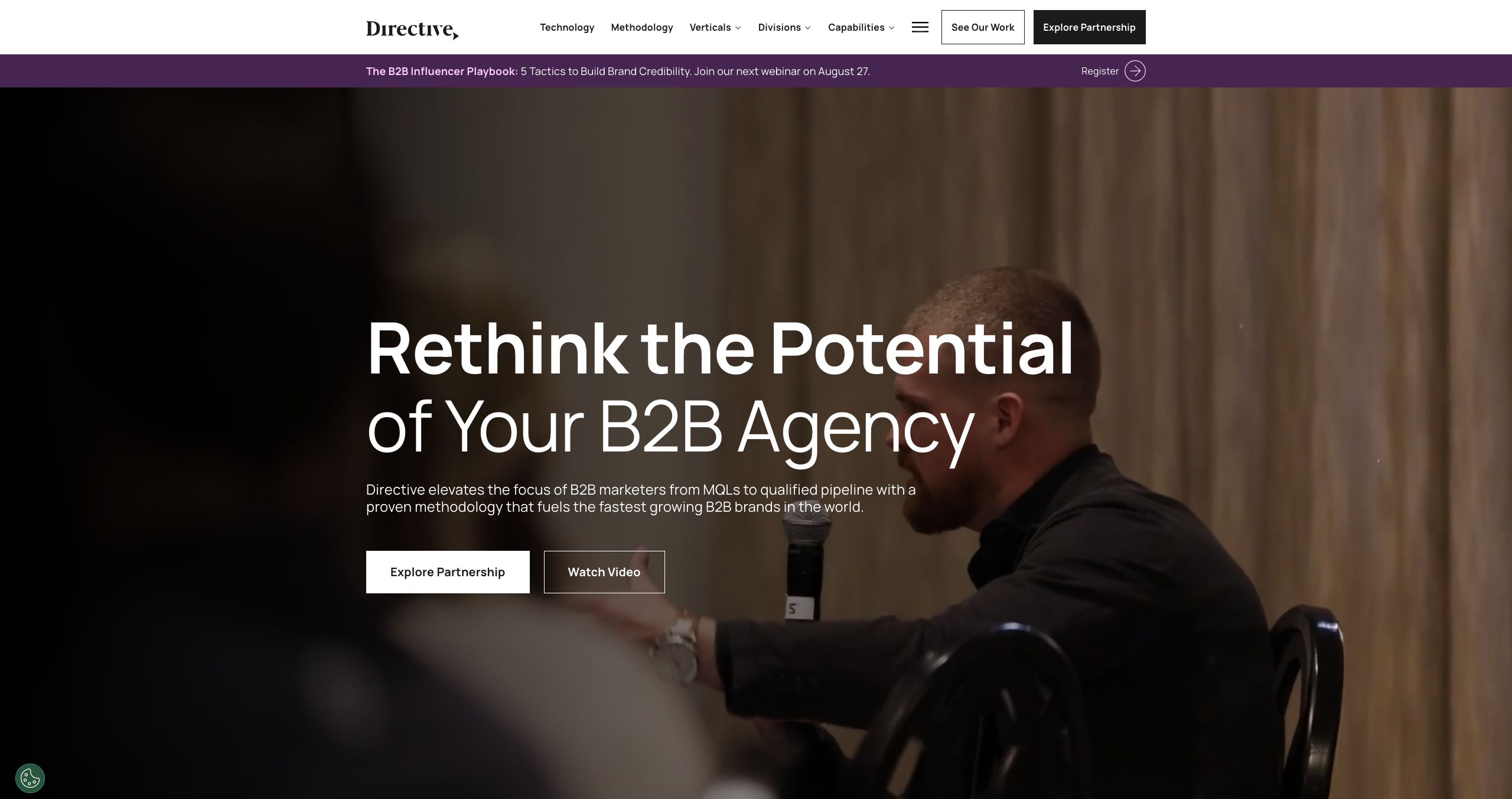
Best for: Series B and beyond B2B SaaS that need paid acquisition measured against CAC payback and connected to a full revenue operations model, at a scale where channel efficiency is a board-level conversation
Directive Consulting is the largest SaaS-focused performance marketing agency consistently shortlisted by enterprise software companies. Their Customer Generation methodology measures marketing by revenue contribution rather than lead volume: campaigns are optimised against CAC payback, LTV:CAC ratio, and pipeline velocity, with a financial modelling layer that connects paid media decisions to unit economics rather than campaign metrics.
Their DiscoverabilityOS framework aligns paid search, paid social, and content to the specific buyer discovery stages of their target ICP, ensuring spend is concentrated at the intent stages that produce SQLs rather than distributed across the awareness spectrum that produces impression volume. For enterprise B2B SaaS with average deal values above €50k, this intent-tiered approach produces a cost per SQL that is measurable and defensible at board level.
Their track record spans $1 billion-plus in reported client revenue over their ten-year history, with named clients including ZoomInfo, Calendly, Adobe, and Cisco. Their team of 200-plus specialists covers paid search, paid social, creative, and revenue operations as an integrated team rather than siloed channel departments.
Key services
Paid search (Google, Bing) optimised against pipeline contribution and CAC payback
Paid social (LinkedIn, Meta) with ICP-matched targeting and SQL-level attribution
Creative production and testing against demo conversion rate, not click-through rate
DiscoverabilityOS: intent-tiered campaign architecture aligning spend to buyer discovery stage
Financial modelling: paid media decisions connected to unit economics and LTV:CAC ratio
Revenue operations integration connecting ad spend to CRM closed-won data
Why Directive stands out for profit-focused PPC
Customer Generation methodology measures success by revenue, not lead volume: the agency's stated primary metric is what it costs to produce a closed customer, not what it costs to produce a click
Intent-tiered campaign architecture concentrates spend at the stages that produce SQLs, preventing budget from distributing across audiences that produce impressions without pipeline
Financial modelling layer makes paid media decisions legible at CFO and board level, not just at campaign manager level
Named client roster at enterprise scale: ZoomInfo, Calendly, Adobe, and Cisco provide credibility for mid-market and enterprise SaaS at the stage where PPC spend is material to the P&L
Best fit: Series B and beyond B2B SaaS at £10M ARR and above with PPC budgets large enough that channel efficiency is a board-level metric, and where the paid acquisition programme needs to be connected to a revenue operations model that the CFO can interrogate.
3. Aimers
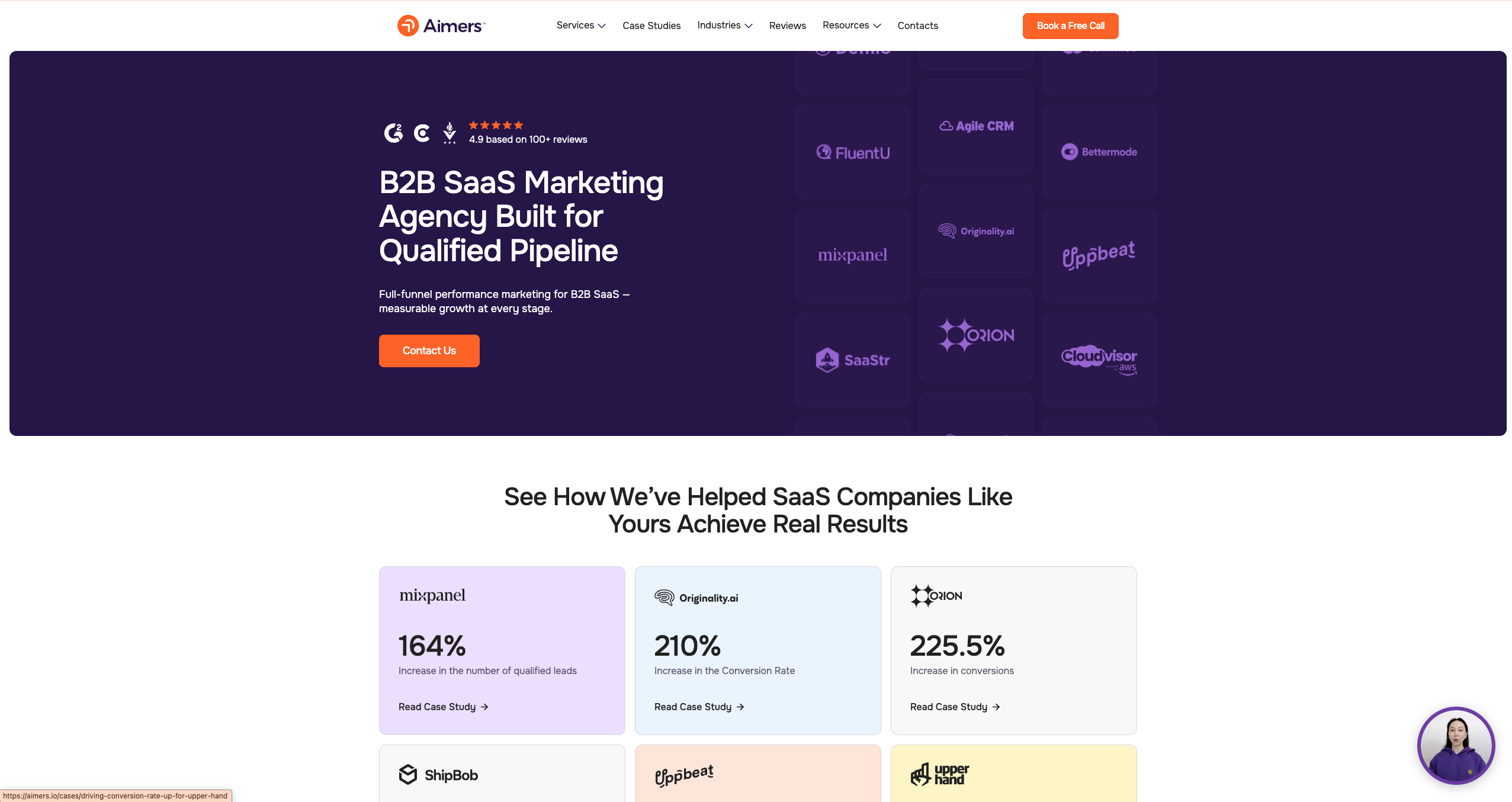
Best for: Growth-stage to mid-market B2B SaaS and tech companies that need a SaaS-only PPC agency with Google Premier Partner status, genuine CAC and LTV metric fluency, and documented results at the growth stage
Aimers works exclusively with B2B SaaS and technology companies, running paid search, paid social, and landing page CRO across the full acquisition funnel. Their SaaS-only positioning means every benchmark, every campaign structure decision, and every reporting conversation is calibrated to the commercial realities of subscription software: CAC payback periods, MQL-to-SQL conversion rates, trial-to-paid conversion, and the specific intent patterns of B2B SaaS buyers at different evaluation stages.
Their Google Premier Partner status — awarded to the top 3% of Google Partners globally — signals campaign management depth at the technical level that most SaaS PPC agencies claim and fewer actually hold. Combined with their $30M-plus in managed annual spend across SaaS and technology clients, their pattern recognition on what campaign structures produce profitable SaaS acquisition is grounded in volume rather than assertion.
Named clients include Mixpanel and ShipBob. Their 4.93 out of 5 client satisfaction rating across independent review platforms provides external validation that the agency's stated methodology is being delivered consistently rather than described in pitches and replaced by generic execution.
Key services
Paid search (Google, Bing) with SaaS funnel-specific campaign architecture
Paid social (LinkedIn, Meta) with B2B SaaS ICP targeting and intent-level segmentation
Landing page CRO integrated with campaign management, not handed back to the client
Attribution setup connecting ad spend to CRM pipeline and closed-won data
CAC, LTV, and MQL-to-SQL reporting as primary metrics rather than secondary context
Why Aimers stands out for profit-focused PPC
SaaS-only client base means every optimisation decision is benchmarked against SaaS-specific conversion rates and CAC norms, not adapted from B2C or mixed-vertical B2B data
Google Premier Partner status provides top-tier access to platform features and beta programmes that affect campaign performance before they are available to general partners
Landing page CRO is part of the service rather than a hand-off, closing the gap between campaign intent and page conversion that is the most common source of PPC inefficiency
4.93 out of 5 independent satisfaction rating across review platforms provides external delivery validation that most agencies of comparable size cannot match
Best fit: Growth-stage to mid-market B2B SaaS and tech companies at Series A–C that need a SaaS-specialist PPC agency with Google Premier Partner credentials and genuine CAC and LTV reporting, without the enterprise price point that the largest agencies require.
4. Tuff Growth
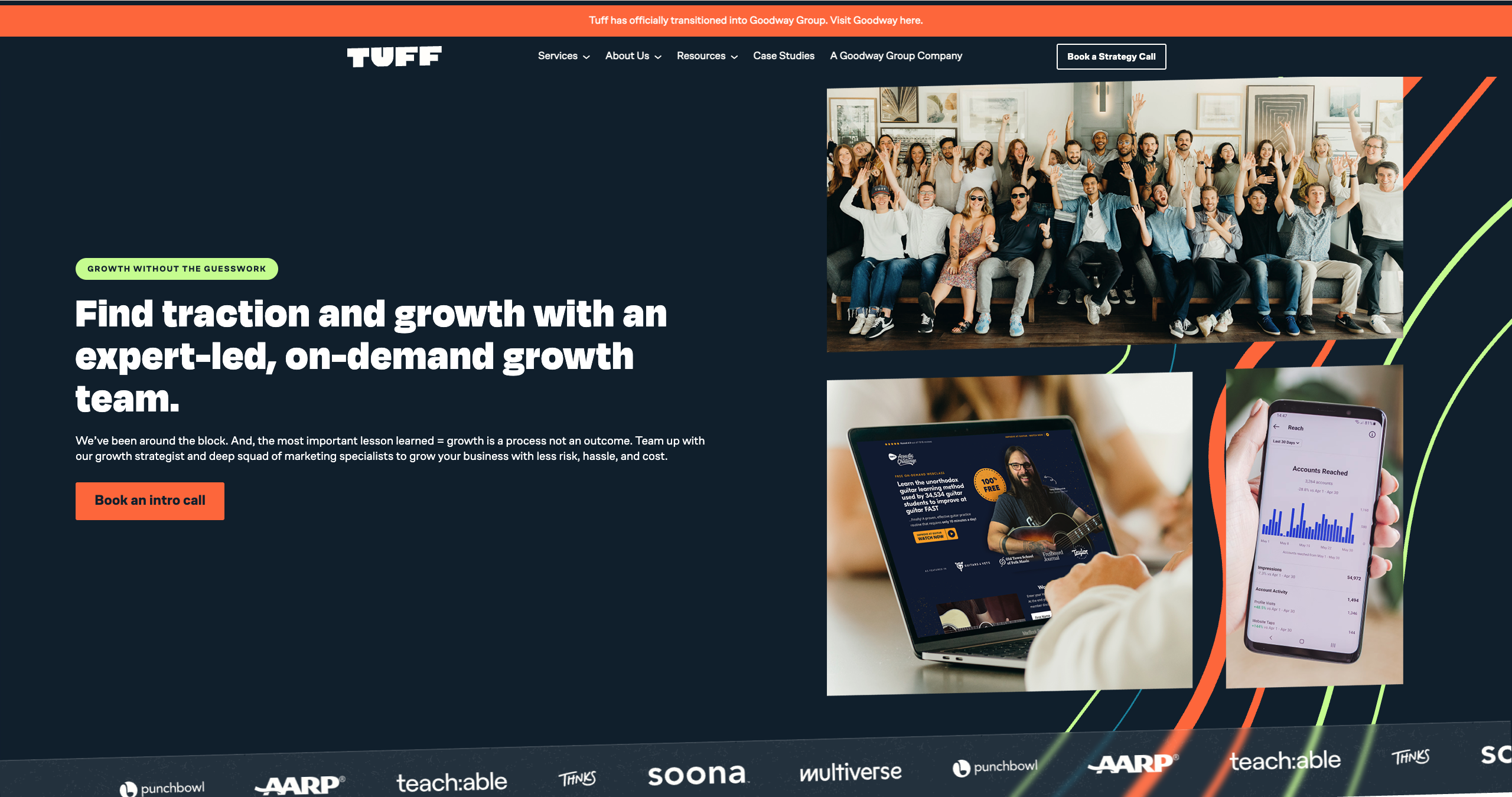
Best for: Series A B2B SaaS that need capital-efficient paid acquisition on a flat-fee structure, where the agency's incentive is SQL production rather than budget growth
Tuff Growth is a growth marketing agency specialising in capital-efficient paid acquisition for Series A and scaling SaaS companies. Their model is built around the specific commercial constraint of Series A: every dollar of marketing spend is measured against runway, and an agency that recommends scaling spend without demonstrating improved SQL efficiency is consuming the company's operating capital rather than multiplying it.
Their flat-fee structure is the structural differentiator: the agency earns the same regardless of whether the client's budget is €15k or €50k per month. This eliminates the percentage-of-spend incentive that causes agencies to recommend budget increases as the primary route to better results. At Series A, where the question is not "how much should we spend" but "what does a dollar of well-spent PPC produce", the flat-fee model aligns the agency's work with the right objective.
Their paid media work covers Google, LinkedIn, and Meta with an experimentation framework that tests channels and creative before committing budget, rather than scaling spend on assumptions about which platform will perform. For SaaS companies that have not yet validated which paid channels produce their most efficient SQLs, this test-before-scale approach protects runway while building the attribution data that informs the scaling decision.
Key services
Paid search and paid social with flat-fee, channel-agnostic budget management
Channel and creative testing framework before spend commitment at scale
CAC payback and cost per SQL as primary reporting metrics
Attribution setup connecting campaign performance to CRM pipeline data
Growth experiment methodology for validating new PPC channels before scaling
Why Tuff Growth stands out for profit-focused PPC
Flat-fee model removes the percentage-of-spend incentive misalignment: the agency has no revenue reason to recommend budget increases that do not improve SQL efficiency
Test-before-scale approach protects Series A runway while building the attribution data that makes the scaling decision evidence-based rather than assumption-based
Capital-efficiency framing aligns the agency's methodology to the specific constraint of Series A: pipeline per dollar of spend rather than pipeline per impression
Channel-agnostic model tests where the most efficient SQLs come from rather than defaulting to the client's existing channel mix
Best fit: Series A B2B SaaS at €1M–€5M ARR that have validated their ICP and are ready to test paid acquisition channels systematically, but have not yet committed budget at scale because the attribution data to justify the commitment does not yet exist.
5. Hey Digital
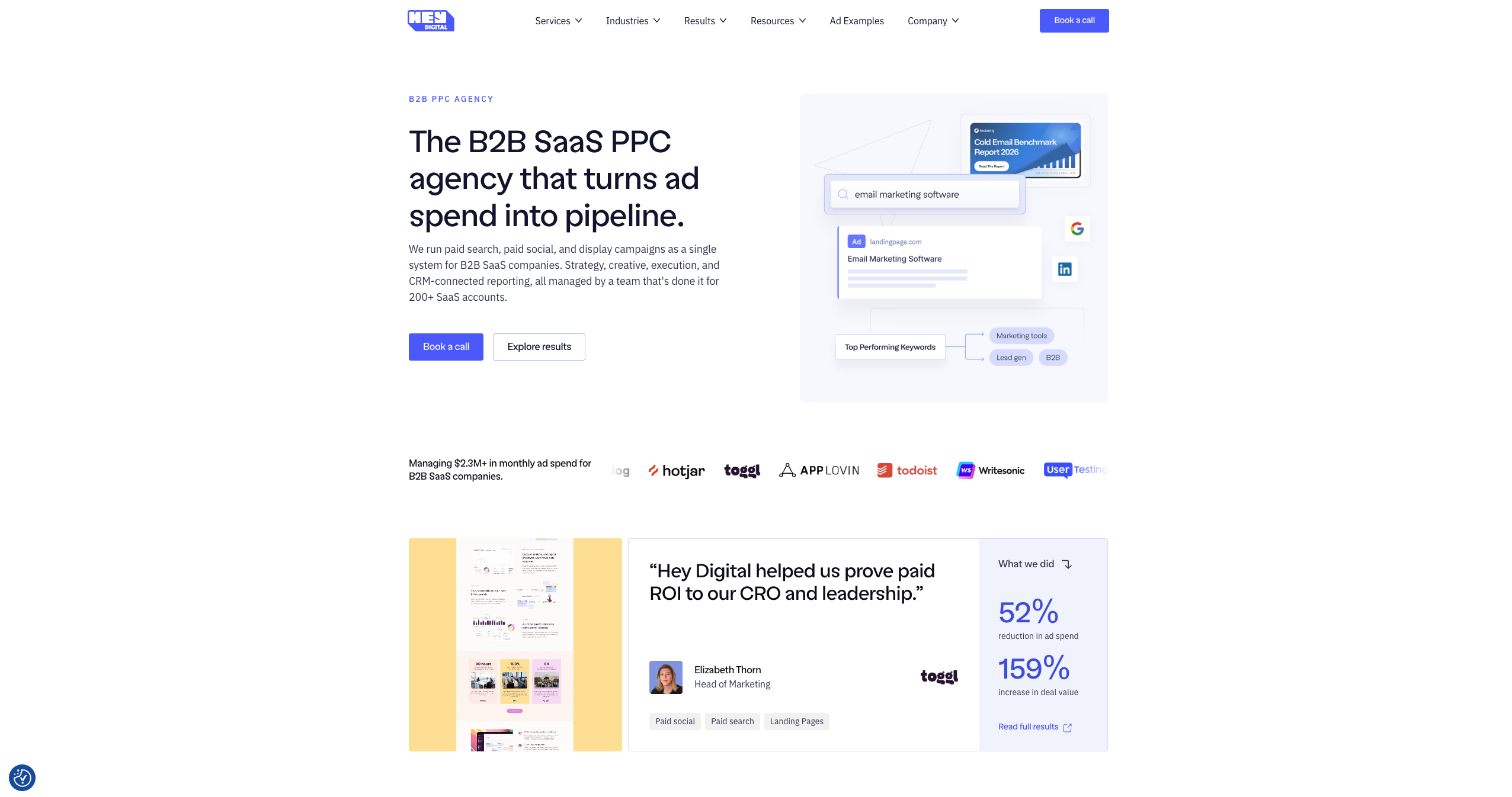
Best for: Series A–C B2B SaaS that want paid acquisition and landing page conversion owned by one team that reports against pipeline metrics, not campaign metrics
Hey Digital works exclusively with SaaS companies. Their stated commercial accountability distinguishes them from the majority of paid media agencies: they measure and report their work against pipeline metrics (cost per SQL, demo conversion rate, MQL-to-SQL rate, and CAC efficiency) as primary metrics rather than as secondary context behind click-through rate and impression share.
Their model covers paid search and paid social alongside landing page design and A/B testing, meaning the agency owns the full paid acquisition journey from ad impression to conversion event. This end-to-end ownership is the specific capability that allows Hey Digital to diagnose whether a campaign underperformance is a targeting problem or a conversion problem, and to fix the correct one without the coordination overhead of two separate vendors whose output is attributed to the same pipeline number.
Their SaaS-only client roster includes Hotjar, Landbot, Maze, and Userback. Documented results include a 127% increase in qualified leads for one SaaS client and a 3.2x improvement in trial-to-paid conversion for another, both attributed to paid media calibration and landing page alignment working as one programme rather than separately.
Key services
Paid search (Google) and paid social (LinkedIn, Meta, YouTube) for SaaS acquisition funnels
Landing page design and A/B testing integrated with campaign management
Demo request and trial signup flow optimisation aligned to paid campaign intent
Pipeline metric reporting: cost per SQL, MQL-to-SQL rate, and CAC efficiency as primary outputs
Ad creative production and testing against conversion rate, not click-through rate
Why Hey Digital stands out for profit-focused PPC
SaaS-only client base with pipeline metric reporting as the stated primary accountability, not campaign-level metrics translated to pipeline as an afterthought
End-to-end ownership of paid acquisition from ad creative through to landing page conversion, eliminating the attribution gap between campaign performance and page conversion that most separate-vendor models produce
Named SaaS clients at the Series A–C stage: Hotjar, Landbot, Maze, and Userback provide stage-specific credibility
Documented pipeline outcomes (127% qualified lead increase, 3.2x trial-to-paid improvement) rather than campaign-level benchmarks disconnected from commercial outcomes
Best fit: Series A–C B2B SaaS at €2M–€20M ARR that want paid media and landing page conversion managed by one team with pipeline accountability, where the current setup has a paid agency managing campaigns against a page the client owns and neither party is fully accountable for the SQL output.
Why dimartec Approaches Profit-Focused PPC Differently
Every agency on this list optimises paid acquisition against commercial metrics rather than campaign metrics. Directive connects paid media to the unit economics the CFO uses to evaluate marketing investment. Aimers brings SaaS-only depth with Google Premier Partner technical credentials. Tuff Growth structures its fee model to remove the spend-inflation incentive. Hey Digital owns the full journey from creative to conversion, preventing the gap where targeting is optimised and the page is not.
Each of them is a paid media programme. None of them owns the qualification layer that determines whether the leads the paid campaigns produce actually become SQLs, or the attribution layer that traces those SQLs to the closed-won revenue the board measures growth by. When the paid acquisition programme is producing cost-efficient leads that are not converting to SQLs at a proportional rate, the problem is not in the campaign. It is in what happens to the lead after the campaign delivers it: how it is scored, how it is routed, whether the landing page qualified it or just captured it, and whether the CRM can tell the sales team what to do with it.
dimartec connects the paid acquisition programme to every layer downstream. Lead Gen & Nurturing ensures paid-campaign leads are qualified and routed before the sales team touches them. RevOps & Automation connects each campaign to the closed-won data it produces, making the cost per SQL a live metric rather than a quarterly calculation. CRO ensures the page the campaign is pointing at is converting the intent the targeting delivers. GEO builds the compounding organic layer that progressively shifts the blended CAC downward as organic discovery supplements paid acquisition over time.
The result is a paid acquisition programme where the metric that matters, cost per closed-deal-equivalent-pipeline, is the one the whole system is optimised against.
See how the Revenue Engine works: https://www.dimartec.co.uk/services/revenue-engine
How to Choose the Right PPC Agency for Profit-Focused SaaS Acquisition
Require cost per SQL in the reporting framework before signing
Ask any PPC agency to show you the cost per SQL report from a current client at a comparable stage. The report should show spend by campaign, leads generated by campaign, SQLs attributed to each campaign, and cost per SQL by campaign. If the agency cannot produce this from a current client, it will not produce it for you. If the report shows cost per lead instead of cost per SQL, the agency is reporting on the output it controls (leads) rather than the output you need (qualified pipeline).
Test attribution depth before channel expertise
Every PPC agency on this list can show impressive campaign metrics. The differentiating question is whether those metrics connect to the pipeline the board is measuring. Ask specifically: how do you connect a closed-won deal in the CRM back to the campaign that influenced it? The answer should describe a multi-touch attribution model connected to the CRM, not a last-click model reported from the ad platform. If the attribution stops at form submission, the profit-focused reporting does not exist yet.
Frequently Asked Questions
What is a profit-focused PPC agency for SaaS?
A profit-focused PPC agency for SaaS measures its work against cost per SQL, CAC payback period, and pipeline contribution rather than impressions, clicks, or MQL volume. The primary optimisation target is the cost the business pays to produce a sales-qualified opportunity, not the cost to produce a click or a form fill. Profit-focused agencies connect their campaign reporting to CRM attribution that traces spend to closed revenue, making the relationship between paid acquisition and commercial outcome visible rather than assumed.
What metrics should a B2B SaaS PPC agency report on?
Primary metrics: cost per SQL by campaign and channel, MQL-to-SQL conversion rate for paid-sourced leads, CAC payback period for paid acquisition, and pipeline contribution by channel. Secondary metrics: cost per lead (as an upstream indicator), click-through rate (as a creative quality signal), and quality score (as a platform efficiency indicator). Agencies that report primarily on secondary metrics and present primary metrics as context are not operating a profit-focused programme.
How long does it take for a profit-focused PPC programme to produce reliable cost per SQL data?
A well-structured paid campaign connected to CRM attribution produces initial cost per SQL data within 60–90 days. That initial data is directionally useful but statistically limited. Reliable cost per SQL figures that can be used for budget allocation decisions require three to four months of consistent data across enough SQLs to identify true channel efficiency rather than campaign-period variance. Agencies that promise reliable profit metrics in the first 30 days are measuring something other than closed-attribution SQL cost.
Build Paid Acquisition That the P&L Can Defend
A PPC programme that produces efficient cost per click metrics while CAC payback extends quarter over quarter is not a profit-focused acquisition programme. It is an activity programme with impressive dashboard numbers. The transition from one to the other requires connecting every campaign to the qualified pipeline it produces, every qualified lead to the scoring and routing logic that determines whether it reaches a sales conversation ready to close, and every sales conversation back to the campaign that generated the first touchpoint.
The Revenue Engine connects Performance Paid Media, CRO, GEO, Lead Gen & Nurturing, and RevOps & Automation into one system so the paid acquisition programme is measured against the same closed-revenue outcome as every other component, the cost per SQL is a live metric rather than a quarterly calculation, and the budget allocation decision is made from attribution data rather than from ad platform dashboards that have never been connected to the CRM.
See how the Revenue Engine works: https://www.dimartec.co.uk/services/revenue-engine




.png)







.png)
















































.png)
.png)
.png)
.png)
.png)
.png)
.png)
.png)
.png)
.png)