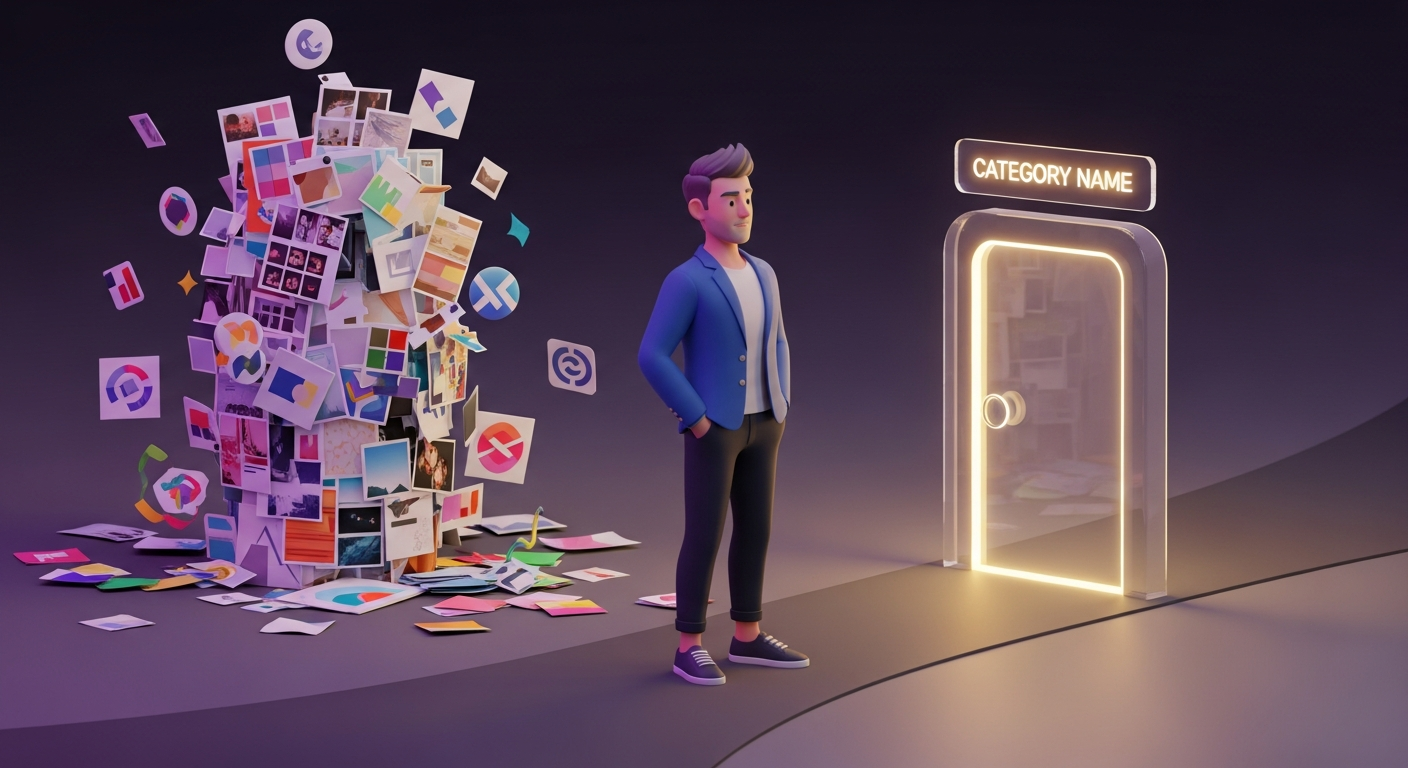
We've been looking at how SaaS companies grow, and it seems like there's always a big chat about Product-Led Growth versus Demand Generation. It's a bit like trying to decide if you should build a house brick by brick yourself or hire a team to get it done faster. Both have their points, and honestly, figuring out which one is 'best' for your product-led growth vs demand generation SaaS strategy can be tricky. We'll break down what each approach means and when it makes the most sense to lean into one, or even better, how to blend them.
Key Takeaways
- Product-Led Growth (PLG) uses the product itself as the main way to get and keep customers, often through free trials or freemium models. It works well for simpler products with lower contract values.
- Demand Generation focuses on building brand awareness and creating interest through marketing efforts like content and ads, aiming to generate leads for sales teams. This is often better for complex products with higher contract values and longer sales cycles.
- Many successful SaaS companies are moving towards hybrid models, combining PLG and Demand Generation to get the best of both worlds. This means using marketing to attract attention and the product to convert and retain users.
- Integrating these strategies requires breaking down team silos. Marketing needs to drive initial awareness and educate potential customers, while the product team focuses on converting those interested users and ensuring they get value.
- Success in a hybrid model relies on understanding your buyers deeply, aligning pricing with the value delivered, and using data from product usage platforms to make informed decisions and continuously improve.
Understanding Product-Led Growth vs Demand Generation SaaS
We often hear about two main ways SaaS companies try to grow: Product-Led Growth (PLG) and Demand Generation. They sound different, and they are, but understanding their core ideas is key to figuring out how your own company should grow. It’s not always an either/or situation, but knowing the basics helps a lot.
Defining Product-Led Growth
Product-Led Growth, or PLG, is a strategy where the product itself is the main engine for bringing in new customers, getting them to use more features, and keeping them around. Think of it like this: the product does the selling. Users find the product, try it out, and see its value all on their own, often through a free trial or a basic free version. This approach relies on the product being intuitive and delivering value quickly without needing a salesperson to explain it. Companies that do this well often see their users become their best salespeople through word-of-mouth. It's a way to lower the cost of getting new customers because the product handles much of the heavy lifting. Many companies are putting more money into PLG, seeing it as a smart move for the future.
Defining Demand Generation Strategies
Demand Generation, on the other hand, is more about creating interest and desire for your product in the market. It involves a range of marketing activities designed to build brand awareness, educate potential customers, and ultimately drive them to become leads. This can include things like creating blog posts, running ads, hosting webinars, and attending industry events. The goal is to make sure people know your product exists, understand the problems it solves, and feel compelled to learn more. It’s about building a pipeline of interested prospects that the sales team can then work with. This approach focuses on reaching out to potential customers and convincing them that your solution is the right one for their needs.
Core Tenets of Each Approach
Let's break down the main ideas behind each strategy:
- Product-Led Growth:
- The product is the primary driver of acquisition, conversion, and expansion.
- Focuses on user experience and self-service adoption.
- Value is experienced before purchase.
- Lower customer acquisition costs (CAC) are a common outcome.
- Demand Generation:
- Marketing and sales efforts drive awareness and lead generation.
- Focuses on educating the market and building interest.
- Often involves a sales team engaging with leads.
- Aims to create a strong pipeline of potential customers.
We often see a debate about which strategy is 'better.' However, the reality for most SaaS businesses today is that neither approach works in isolation. The most successful companies are finding ways to blend these strategies, using the strengths of each to create a more robust growth engine. It's about understanding when and how to apply each one, and critically, how they can work together. This is especially true as we look at how buyers interact with software in 2026.
When we think about how people find and adopt software, the product itself plays a huge role. For instance, Product-Led SEO is about making the product so good and discoverable that users naturally find it and want to use it. This is a core idea within PLG, where the product's inherent quality and user experience are the main marketing tools. Understanding these distinct, yet often complementary, approaches is the first step toward building an effective growth strategy for any SaaS business. It's important to know the differences before we can talk about how to combine them, or when one might be a better fit than the other. This is key to achieving rapid business expansion.
The Strategic Imperative of Product-Led Growth
Product-led growth (PLG) fundamentally shifts how we think about acquiring and retaining customers in the SaaS landscape. It's not just a strategy; it's a philosophy where the product itself becomes the main engine for growth. This approach means customers discover, evaluate, and adopt our solution primarily through their own experience with it, often starting with a free trial or freemium model. This self-service journey is designed to be intuitive, allowing users to experience value rapidly without needing extensive sales interaction.
Product as the Primary Growth Driver
In a PLG model, the product isn't just a tool; it's the core of our go-to-market motion. Every aspect, from initial sign-up to ongoing usage, is optimized to guide users toward realizing the product's full potential. This means we focus intensely on user experience, onboarding flows, and in-app guidance. The goal is to make the product so intuitive and valuable that it actively drives acquisition, expansion, and retention. Think of it as the product doing the selling, the onboarding, and the ongoing engagement. This contrasts sharply with traditional sales-led approaches where a human sales representative is the primary point of contact and driver of the customer journey. Companies like Atlassian have shown how prioritizing product excellence can fuel significant expansion [e5ec].
Leveraging Freemium and Trials for Acquisition
Freemium and free trial models are the bedrock of PLG acquisition. They lower the barrier to entry, allowing a broad audience to experience the product firsthand. Our focus shifts from generating leads through marketing campaigns to driving product sign-ups. Success is measured by how many users activate, how quickly they find value (time-to-value), and the percentage who reach that critical 'aha moment' where they truly grasp the product's benefit. This data-driven approach allows us to refine the product and onboarding process continuously. It's about letting the product's inherent value speak for itself, attracting users who are genuinely interested and likely to convert.
Key Metrics for PLG Success
Measuring success in PLG requires a different set of metrics than traditional sales models. We look beyond just MQLs (Marketing Qualified Leads) and focus on metrics that reflect actual product engagement and value realization. These include:
- Activation Rate: The percentage of users who complete key initial setup steps and experience core functionality.
- Time-to-Value (TTV): How quickly a new user can achieve a meaningful outcome with the product.
- Product Qualified Leads (PQLs): Users who have demonstrated significant engagement and intent through their product usage, indicating they are ready for an upgrade or further engagement.
- Feature Adoption Rate: Tracking the usage of key features to understand user behavior and identify areas for improvement or upsell opportunities.
- Customer Acquisition Cost (CAC) Payback Period: PLG typically leads to a shorter payback period compared to sales-led models, as the product handles much of the selling effort [ef4d].
The strategic imperative of PLG lies in its ability to create a more efficient, scalable, and customer-centric growth engine. By placing the product at the heart of our go-to-market strategy, we can reduce acquisition costs, improve customer satisfaction, and build a more resilient business model that adapts to user needs in real-time.
The Strategic Imperative of Demand Generation
Brand Awareness and Lead Generation Focus
Demand generation is our primary engine for building broad market awareness and consistently filling the top of the sales funnel. It’s about making sure potential customers know we exist and understand the problems we solve, even before they might be actively looking for a solution. We focus on creating a steady stream of qualified leads that sales can then nurture and convert. This approach is particularly effective when our product isn't something people discover organically through usage, or when the buying decision involves multiple stakeholders.
Content Marketing and Paid Media Synergy
Our demand generation strategy relies heavily on a dual approach: content marketing and paid media. Content marketing, through blog posts, whitepapers, webinars, and case studies, establishes us as thought leaders and attracts prospects seeking information. We aim to address their pain points and educate them about potential solutions. Paid media, on the other hand, allows us to amplify our message and reach a wider, more targeted audience quickly. This includes search engine marketing, social media advertising, and display ads. The synergy between these two lies in using paid channels to drive traffic to our valuable content, thereby capturing leads.
We structure our content efforts around key stages of the buyer's journey:
- Awareness: Content that identifies and defines a problem (e.g., "Challenges in SaaS Sales").
- Consideration: Content that explores solutions and compares options (e.g., "Comparing CRM Systems").
- Decision: Content that highlights our specific product benefits and differentiators (e.g., "How Our Platform Solves X Problem").
Measuring Demand Generation Effectiveness
Measuring the success of our demand generation efforts is critical. We track a range of metrics to understand what's working and where we can improve. Key performance indicators include:
- Marketing Qualified Leads (MQLs): The number of leads generated that meet specific criteria indicating a higher likelihood of becoming a customer.
- Cost Per Lead (CPL): The average cost to acquire a single lead through our various campaigns.
- Conversion Rates: The percentage of leads that move from one stage of the funnel to the next (e.g., MQL to Sales Qualified Lead, SQL to Opportunity).
- Pipeline Contribution: The amount of sales pipeline and revenue directly influenced by demand generation activities.
We must constantly analyze our campaign performance, attributing leads and revenue back to specific channels and content. This data-driven approach allows us to optimize our spend, refine our targeting, and ensure our demand generation activities are directly contributing to business growth. A robust demand engine is built on continuous measurement and adaptation, aiming for a healthy LTV:CAC ratio that signifies profitable growth.
By focusing on these areas, we build a predictable and scalable system for acquiring new customers, ensuring our brand remains top-of-mind and our sales pipeline remains robust. This approach is foundational for building a revenue-first B2B SaaS demand engine.
When Product-Led Growth Dominates SaaS Strategy
There are specific scenarios where a product-led growth (PLG) strategy isn't just a good option; it's the most effective path forward for a SaaS business. When the stars align, PLG can drive rapid adoption and efficient scaling. We see this approach shine when the product itself is the primary driver of customer acquisition, expansion, and retention. It’s about letting the user experience the value firsthand, often before any sales interaction occurs. This is particularly true for companies whose products offer a quick time-to-value and appeal to a broad audience. The core idea is that the product sells itself, reducing the need for extensive sales and marketing teams upfront. This strategy is a primary go-to-market strategy for many SaaS companies today, enabling scalable growth and cost control.
Ideal Product Characteristics for PLG
For PLG to truly dominate, the product needs certain inherent qualities. First, it must be intuitive and easy to use, allowing users to discover its value without extensive training or support. Think about a product where a user can sign up, start using it, and see a tangible benefit within minutes. Second, the product should have a clear path to value realization. Users need to understand how it solves their problem quickly. Finally, features that encourage sharing or collaboration can significantly boost PLG. When users naturally invite colleagues or share their work, the product gains built-in virality. These characteristics are key to making the product the main engine of growth.
- Ease of Use: Minimal learning curve, intuitive interface.
- Rapid Time-to-Value: Users experience benefits quickly after signup.
- Self-Service Onboarding: Users can get started without sales or support intervention.
- Inherent Virality/Shareability: Features that encourage users to invite others or share outputs.
Target Market Suitability for PLG
PLG strategies tend to perform best when targeting a broad market, especially segments like small to medium-sized businesses (SMBs) or even individual consumers. These markets often have less complex buying processes and are more receptive to trying new tools without a lengthy sales cycle. When a product can appeal to a wide range of users, from individual contributors to small teams, PLG becomes a powerful acquisition channel. The ability for individual users to adopt and derive value independently is paramount. This approach is particularly effective for SaaS companies whose products appeal to a wide audience and possess inherent viral or network effects. This approach focuses on user experience and self-service to onboard and engage customers, ultimately leading to sustainable growth.
Low Average Contract Value Scenarios
When the average contract value (ACV) is relatively low, a PLG model often makes the most sense. High ACV deals typically require significant sales effort, negotiation, and relationship building, which can be prohibitively expensive if the deal size doesn't justify the cost. Conversely, with a lower ACV, the cost of acquiring a customer must also be low. PLG excels here because it minimizes sales and marketing overhead. Users can discover, try, and purchase the product with minimal human intervention. This makes it economically viable to acquire a large number of customers who each contribute a smaller amount of revenue. For instance, a tool priced at $50-$500 per month is a prime candidate for a PLG motion, as the cost of a sales rep engaging with every potential customer would quickly outweigh the revenue generated.
In low ACV scenarios, the economics of customer acquisition are fundamentally different. The product must do the heavy lifting of selling, onboarding, and even upselling, as the cost of human interaction for each customer would be unsustainable. This necessitates a product that is not only easy to use but also clearly demonstrates its value proposition through usage alone.
PLG companies grow revenue 2x faster than their peers and trade at a 50% higher revenue multiple on public markets. This is a testament to the efficiency and scalability of the model when applied to the right product and market. Product-led growth (PLG) is the primary go-to-market strategy for SaaS companies in 2026, enabling scalable growth and cost control.
When Demand Generation Dominates SaaS Strategy
Complex Product Requirements
When our SaaS product involves intricate workflows, specialized functionalities, or requires significant integration with existing systems, a demand generation approach often takes precedence. These aren't typically products that users can intuitively grasp and adopt through self-service alone. Instead, they necessitate a deeper explanation of value and a guided journey to adoption. We find that potential customers need to be educated about the problem our solution solves and how it uniquely addresses their specific challenges. This often involves detailed case studies, webinars, and personalized demonstrations to showcase the product's capabilities in a relevant context. Building brand awareness and establishing thought leadership become paramount, as customers need to trust our expertise before committing to a complex solution. This is where a robust SaaS demand generation strategy truly shines, creating a pipeline of informed prospects ready for a more involved sales process.
Enterprise Sales Cycles and Stakeholders
For SaaS products targeting larger organizations, the sales cycle is inherently longer and involves multiple decision-makers and influencers. Demand generation excels here by systematically nurturing relationships across these stakeholder groups. We focus on creating content and campaigns that speak to the varied needs of IT departments, finance teams, and end-users, ensuring each group understands the product's benefits from their perspective. Building trust and demonstrating ROI become critical. This often means employing account-based marketing (ABM) tactics, where we tailor our outreach and messaging to specific target accounts. The goal is to move prospects through a considered evaluation process, which demand generation is well-equipped to manage by providing consistent, relevant information at each stage. This approach helps us build the necessary momentum for closing deals in complex environments.
High Average Contract Value Scenarios
When our average contract value (ACV) is substantial, typically above $25,000, the economics often favor a demand generation model. The investment required for sales and marketing efforts is justified by the higher revenue per customer. In these situations, a direct sales team, supported by strong marketing efforts, is usually more effective than a purely product-led approach. We need to invest in building relationships, understanding customer needs deeply, and providing tailored solutions. This often involves a consultative sales process where our team works closely with the prospect to define requirements and demonstrate how our product delivers significant business value. The focus shifts from self-serve adoption to a guided, high-touch sales experience. This allows us to effectively communicate the comprehensive value proposition and justify the higher price point. A well-executed demand generation plan is key to identifying and converting these high-value opportunities, ensuring a healthy sustainable SaaS demand generation strategy.
When the product is complex, the sales cycle is long, or the contract value is high, demand generation becomes our primary engine for growth. It allows us to educate, build trust, and guide prospects through a considered purchase process, which is essential for closing significant deals and building long-term customer relationships.
The Rise of Hybrid Models in SaaS Growth
We've seen how Product-Led Growth (PLG) and Demand Generation (DG) can operate independently, each with its own strengths. However, the most dynamic SaaS companies today aren't strictly adhering to one or the other. Instead, they are increasingly adopting hybrid models, blending the best of both worlds to create a more robust and adaptable growth engine. This isn't about picking a side; it's about recognizing that different stages of the customer journey and different customer segments benefit from distinct approaches.
Synergizing PLG and Demand Generation
The core idea behind a hybrid model is to use Demand Generation to build initial awareness and attract a broad audience, while Product-Led Growth takes over to allow users to experience the product's value firsthand. Demand Generation efforts, like targeted content marketing or paid campaigns, can bring potential customers to your digital doorstep. Once they're there, a well-designed product experience, often through a freemium tier or a free trial, becomes the primary tool for conversion and retention. This synergy means that marketing efforts aren't wasted on unqualified leads; instead, they feed into a product experience that can demonstrate value quickly and efficiently. This approach is particularly effective for companies with a wide addressable market where initial broad reach is necessary, but deep product engagement is what ultimately seals the deal. It's about creating a cohesive journey where marketing sets the stage and the product delivers the performance.
Product-Led Sales: A Unified Approach
Product-Led Sales (PLS) represents a significant evolution in this hybrid thinking. It's not just about using PLG and DG in parallel; it's about integrating them so that product usage data directly informs sales outreach. Imagine a user engaging with a free version of your software. As their usage patterns indicate a growing need or potential for expansion – perhaps they're inviting more team members or hitting usage limits – this triggers a sales engagement. The sales team doesn't have to guess; they have concrete data showing the user is already deriving value and is likely ready for a paid plan or an upgrade. This signal-based selling dramatically reduces wasted effort and increases the efficiency of the sales team. It transforms the sales process from a cold outreach model to a warm, data-informed conversation, making the sales cycle more effective for both the customer and the company. This approach is becoming the dominant strategy for many B2B SaaS businesses, especially those with annual contract values between $10K and $25K.
Breaking Down Team Silos for Integration
Successfully implementing a hybrid model requires a fundamental shift in how teams operate. The traditional separation between marketing, sales, and product teams can become a major roadblock. For a hybrid strategy to work, these departments must collaborate closely. Marketing needs to understand the product's capabilities and limitations to create accurate awareness campaigns. Product teams need to be aware of marketing messages and sales goals to build features that support conversion and retention. Sales teams need to be trained to interpret product usage data and engage with users at the right moment. Breaking down these silos is not just a matter of organizational structure; it's a cultural imperative. When teams work in concert, sharing insights and aligning on objectives, they can create a truly unified customer experience that seamlessly guides users from initial discovery through to long-term advocacy. This cross-functional alignment is key to optimizing the entire customer acquisition and retention process.
Integrating Product-Led Growth with Demand Generation

We've seen how Product-Led Growth (PLG) and Demand Generation (DG) can operate independently, each with its own strengths. However, the most effective SaaS companies today don't choose one over the other; they weave them together. This hybrid approach allows us to capture attention and then convert that attention into loyal, paying customers.
Driving Initial Awareness with Demand Generation
Before someone can experience the magic of our product, they need to know it exists. This is where demand generation shines. We use targeted marketing efforts to build brand awareness and educate potential customers about the problems our software solves. Think of it as setting the stage.
- Content Marketing: Creating blog posts, whitepapers, and webinars that address common pain points and position our product as a solution. This attracts organic traffic and establishes thought leadership.
- Paid Media: Running targeted ad campaigns on platforms where our ideal customers spend their time. This helps us reach a wider audience quickly and generate initial interest.
- Social Media Engagement: Building a community and interacting with potential users, sharing valuable insights, and highlighting product benefits.
The goal here isn't just to generate leads, but to generate informed interest. We want prospects to understand the value proposition before they even see the product.
Leveraging Product for Conversion and Retention
Once demand generation has piqued interest, the product takes center stage. This is where the PLG engine kicks in to convert that interest into active users and, eventually, paying customers. We guide users through a low-friction experience, allowing them to discover the product's value firsthand.
- Free Trials and Freemium Models: Offering a way for users to experience the core functionality without commitment. This builds trust and demonstrates value.
- In-Product Onboarding: Using tooltips, tutorials, and guided workflows to help new users achieve their first
Key Considerations for Hybrid SaaS Growth
When we decide to blend Product-Led Growth (PLG) with Demand Generation, we're not just mixing two tactics; we're building a more robust engine for scaling. This hybrid approach requires careful thought about how different parts of our business interact and how we measure success across them. It’s about making sure the product experience and our outreach efforts work together, not against each other.
Understanding Buyer Profiles and Needs
We must first get a clear picture of who we're selling to. Are we targeting individual users who might discover us through a free trial, or are we aiming for larger teams and companies with more complex needs? This distinction is vital. For instance, a product that solves a simple, everyday problem for many people might thrive on a PLG model, where users can self-serve and adopt it quickly. On the other hand, a sophisticated enterprise solution, requiring integration with existing systems and buy-in from multiple departments, will likely need a stronger demand generation push to educate prospects and guide them through a longer sales cycle.
- Individual Users/Small Teams: Often driven by immediate need, value ease of use, and respond well to freemium or trial offers. Their adoption can be rapid and organic.
- Mid-Market Teams: May require more features, some level of support, and a clearer ROI justification. A blend of product experience and targeted outreach works best here.
- Enterprise Clients: Typically involve longer sales cycles, multiple stakeholders, custom requirements, and a need for dedicated sales engagement. Demand generation plays a significant role in initial contact and nurturing.
Aligning Pricing with Value Delivery
Our pricing structure needs to reflect the value customers receive, especially in a hybrid model. If we offer a free tier or trial, it must showcase the core benefits effectively. As users move to paid plans, the pricing should scale logically with the added features, usage, or support they gain. We need to ensure that the perceived value from using the product aligns with what we charge. For example, if our demand generation efforts highlight advanced analytics, then the paid tier offering those analytics must demonstrably deliver that value.
We need to be honest about what our product does and what it costs. If the product itself doesn't quickly show its worth, no amount of marketing will fix that in the long run. Pricing should feel fair and directly tied to the benefits customers actually experience.
Measuring Combined GTM Motion Success
Measuring the success of a hybrid strategy means looking beyond single metrics. We need to track how demand generation activities influence product adoption and how product usage informs our sales and marketing efforts. Key performance indicators (KPIs) should reflect this synergy. For example, we can track the conversion rate of leads generated through content marketing into active trial users, or the percentage of trial users who upgrade after engaging with specific in-app educational content. The customer acquisition cost (CAC) and customer lifetime value (LTV) ratio remains a critical benchmark, but we must analyze it across different acquisition channels and customer segments to understand the true impact of our hybrid approach.
- Lead-to-Trial Conversion Rate: Measures how effectively demand generation turns interest into product engagement.
- Trial-to-Paid Conversion Rate: Shows how well the product experience converts users who were initially brought in by marketing.
- Feature Adoption by Segment: Helps understand which product features are most impactful for different buyer profiles, informing both product development and marketing messaging.
- Net Revenue Retention (NRR): A holistic measure that captures expansion revenue from existing customers, indicating overall satisfaction and value realization.
Optimizing Your SaaS Growth Strategy
Data-Driven Decision-Making with Usage Platforms
To truly refine our approach, we must look closely at how users interact with our product. Usage data from platforms provides a clear window into what's working and what's not. It tells us which features get used most, where users get stuck, and when they decide to leave. This granular insight is gold for making informed decisions about both product development and marketing efforts. Instead of guessing, we can pinpoint areas for improvement, personalize user experiences, and identify opportunities for upselling or cross-selling based on actual behavior. This data helps us build a more effective SaaS growth engine.
Continuous Feedback Loops for Product Improvement
Gathering feedback isn't a one-time event; it's an ongoing process. We need systems in place to constantly collect input from our users. This can include in-app surveys, direct outreach, and monitoring support tickets. When we actively listen and respond to this feedback, we show our users that we value their input. This not only helps us fix bugs and add requested features but also builds loyalty and reduces churn. It’s about making the product better with every iteration, driven by the people who use it every day.
- Implement regular user surveys.
- Monitor customer support channels for recurring issues.
- Actively solicit feature requests.
- Communicate product updates based on feedback.
Adapting to Evolving Market Dynamics
The SaaS landscape changes rapidly. New competitors emerge, customer expectations shift, and technology advances. Our growth strategy can't afford to be static. We need to regularly assess our market position, understand emerging trends, and be willing to adjust our tactics. This might mean re-evaluating our target audience, tweaking our pricing, or exploring new channels. Staying agile and responsive is key to long-term success. A strategy that worked last year might not be effective today, so continuous evaluation and adaptation are necessary. This is how we ensure our growth strategies remain relevant and effective.
Want to make your SaaS business grow faster? It's all about smart strategies. We'll show you how to fix the hidden problems that stop customers from signing up. Ready to see real results? Visit our website to learn more and get started!
The Path Forward: Embracing a Hybrid Approach
In the dynamic landscape of SaaS growth, the debate between Product-Led Growth (PLG) and Marketing-Led Growth (MLG) is increasingly becoming a false dichotomy. Our analysis indicates that neither strategy in isolation is sufficient for sustained, scalable success. Instead, the most effective path forward lies in a deliberate, hybrid approach. By integrating the product's inherent ability to attract and onboard users with strategic marketing efforts that build awareness and educate the market, companies can create a more robust and efficient revenue engine. This requires breaking down traditional silos between product and marketing teams, fostering a unified understanding of the customer journey, and continuously analyzing data to optimize the interplay between these two powerful growth drivers. The future of SaaS growth is not about choosing one over the other, but about mastering the art of combining them.
Frequently Asked Questions
What exactly is Product-Led Growth (PLG)?
Product-Led Growth, or PLG, is like letting our product do the heavy lifting for growth. Instead of relying mostly on salespeople or ads, we let people try our product first, often for free. They see how great it is themselves, and that's what encourages them to buy and stick around. It’s all about the product being the main star that attracts and keeps customers.
And what is Demand Generation?
Demand Generation is more about creating buzz and getting people interested in what we offer before they even try the product. We use things like blog posts, ads, and social media to make sure people know we exist and understand the problems we solve. The goal is to get potential customers excited and ready to learn more, often leading them to our sales team or a trial.
When should we lean more towards PLG?
We'd favor PLG when our product is easy for someone to jump in and use without much help, and when the price isn't too high for a single user or small team to try out. Think of apps that people can sign up for and start getting value from right away. It’s great for reaching lots of people quickly and keeping costs down.
And when is Demand Generation a better fit?
Demand Generation shines when our product is more complex, maybe needs special setup, or when we're selling to big companies where many people are involved in the decision. If the price is quite high, or if customers need a lot of guidance to understand the value, having a strong demand generation effort to introduce and explain things makes more sense.
Can we actually use both PLG and Demand Generation together?
Absolutely! Many successful companies use a mix. We can use Demand Generation to get the word out and attract initial interest, like telling people about a new feature. Then, we let the product itself, through a free trial or demo, show them the real value and help them decide to buy. It’s like having a great advertisement lead to an amazing experience.
What's this 'Product-Led Sales' idea?
Product-Led Sales is a smart way to combine PLG and traditional sales. We use the product to get lots of users signed up and exploring. Then, we watch how they use it. If we see signs that a company is getting serious about using our product – like many people using it or asking for business features – our sales team steps in to help them become paying customers. It’s about sales helping when the product shows there’s real interest.
How do we make sure our teams work well together for this combined approach?
To make both strategies work hand-in-hand, we need our marketing, sales, and product teams to talk and share information constantly. When everyone understands what customers are experiencing and what the product can do, we can create a smoother journey for customers. Breaking down walls between teams helps us adapt quickly and make sure our product and marketing efforts support each other perfectly.
What are the most important things to watch to know if our growth strategy is working?
We need to keep an eye on key numbers, like how much it costs to get a new customer and how much money they bring in over time. We also track how many people sign up for trials, how many become paying customers, and if they stick around. By looking at this data, we can see what’s working, what’s not, and make smart changes to grow even better.




.png)





































.png)
.png)
.png)
.png)
.png)
.png)
.png)
.png)
.png)
.png)